Showing posts with label 70's action. Show all posts

Mar 25, 2026

Deranged

Obscure, yet a must watch.
 

It's been a long while since I reviewed B-movies. The never-ending list of retro Anime I had to post, kept me in the Japanese field for several years, and it will continue for a while, as I'm still revisiting some I haven't reviewed yet. Anyway, streaming services sometimes provide you with a list of interesting more obscure films from decades past. Such is the case of today's review, a horror masterpiece that went under the radar for decades until it was rediscovered and properly issued on VHS format in the early 1990s by American International Pictures, owned by Metro-Goldwyn-Mayer, thus fully available now on Prime Video. 

Allegedly, Deranged is based on the crimes of Ed Gein, an American murderer from Plainfield, Wisconsin. Legend has it, Psycho & The Texas Chainsaw Massacre where both based upon the crimes from this man. I'll spare the details so that you can enjoy the film, and Google details yourself.  In a nutshell, this Canuxploitation psychological horror story, tries to retell the story from the earlier murderer in the fictional character of Ezra Cobb, masterfully portrayed by Roberts Blossom. Cobb is a middle-aged man from the rural midwest near an unnamed town. 


Family dinner.

In-your face horror.

Considering this is a 1974 movie, most of the elements that describe the lead and his victims may be seen today as derivative or stereotypical. Yet, the storytelling is compelling. The locations, soundtrack and few characters translate the idea of being a loner in the middle of nowhere for too long. Roberts Blossom, a classically trained theater actor and poet, really brings to life the disgusting psychopathic aspects of Ezra Cobb, yet he also unveils the scars, fears and weaknesses of a character that at times seems to be the actual victim of the story.  You see, Ezra has seen no life outside his farm, and spent most of his life care-taking for his mother Amanda, a religious fanatic who managed to indoctrinate Ezra into abhorring women. Once his mother dies, he has no reason left to live. No one to talk to, no one to cook for, no one to see hours go by while hoping for a recovery that will never come. 

A whole year goes by, and Ezra starts having aural hallucinations from his mother demanding to be brought back home, and here is where the movie actually starts. Ezra brings the corpse of her late mother home, but seeing her skin has dried and deteriorated he decides to find "spare parts" in other bodies of recently deceased people. The obituary proves to be more helpful than LinkedIn when searching for a job, and so does the horror story unravels. 

Build-your-own mask.

 
Psychopaths also love boobs.

Deranged costed only US$20,000 to produce, a modest budget even for the 1970s. Yet, the true horror does not lay in the way victims are murdered but more into the process where Mr. Cobb works with, LinkedIn recruitment precision, to find the perfect match.  Graphic violence, while moderate, doesn't truly carry the horror we're looking for. Performances are key on this film, where even though characters don't do much beyond what they're needed for, they do reinforce our main character's psychological profile, and having Roberts Blossom as the lead, truly brings this criminal to life. 

The original cut of the film featured a scene where the lead killer feeds from a skull. The scene was removed from early releases, and it is sadly removed in the version you can stream on Prime Video, although the scene doesn't add anything new about the deranged Ezra, it graphically depicts his mental state.

Now, as above mentioned in the first paragraph, the story of Ed Gein has been taken to the small and big screen on several occasions, and now that streaming rules-supreme, Netflix did their own revisiting.On September 16, 2024, it was announced that the third season of Monster would focus on convicted murderer and suspected serial killer Ed Gein. On October 4,2024 it was confirmed that the season would be titled The Original Monster, exploring Ed Gein's life as the first "celebrity serial killer" and examining how true crime evolved into a pop culture phenomenon. Principal photography reportedly began the next month. The season was announced to be retitled to Monster: The Ed Gein Story in August 2025. 

 Here's the original TV Spot for Deranged:


Jan 7, 2022

Charlie's Angels

The Blu Ray box cover featuring all the angels.

I have been intending to review Charlie's Angels for years! It's been ages since the last time I wrote about a "retro" TV show. Trying to find the right approach, apply the rules that were the standard in 70s television, and avoid today's political correctness, plus all the social changes the world has undergone since then, had this review in storage, or in full lockdown in my head. 

Obviously, for a show this big, you can find thousands of reviews on it made by professional critics and avid fans. However, only here you can find one made by a neverwas/mighthavebeen reviewer that may see the pros this show still has to offer. You see, most of the information available for the series revolves around being a "jiggle TV show" which is merely a superficial perception that diminishes the good intentions this show had when it was made in 1976.


The original Trio of angels.
 

First of all, the concept of "Jiggle TV" it's very offensive. when people use this term, they mean the show was made exclusively to show "jiggling tits & ass", which is not the case of Charlie's Angels. While it's true the actresses all meet "supermodel" clichéd standards, episodes didn't have money shot scenes accenting their physique for 46 minutes. Actually, behind all the beauty these actresses had, there were stories, and most of them placed the angels as empowered women who faced evil men and beat them in their own game. This is usually overlooked, by most reviews you see about the show. 

Now, I'm not saying my review is the best, I'm just saying I'll try to focus on the pros the show had, so that the very few people still visiting blogs, are encouraged to watch this show one more time or even discover it for the first time. As a matter of fact I'm in the middle of season 4 as I'm typing these words, so my review will feel pretty fresh.

We want you to watch our show.


"Once upon a time, there were three little girls who went to the Police Academy; and they were each assigned very hazardous duties. But I took them away from all that, and now they work for me. My name is Charlie.  "

Charles Townsend.

These are the legendary opening lines that introduce our heroines to the audience on every episode, thus setting the basics of the show. 


The angels team from season 1 to 3.

Charlie's Angels ran for five seasons from 1976 to 1981, delivering a total of 110 episodes. The show has been released on DVD & Blu Ray and it's also available in some streaming platforms plus the usual reruns on TV around the world.

The series portrays the adventures of three female police officers who are rescued from their mundane duties by a mysterious multi millionaire named Charles Townsend, who hires these gorgeous girls as operatives in his new private investigation agency. Charlie's assistant, John Bosley (David Doyle), acts as a liaison with the ladies since the enigmatic Charlie never reveals himself in person. The three beauties, Sabrina Duncan (Kate Jackson), Jill Munroe (Farrah Fawcett), and Kelly Garrett (Jaclyn Smith), frequently go undercover as strippers, models, or whatever during the course of their investigations. When Jill leaves Charlie's agency to pursue an auto racing career, she is replaced by her younger sister, Kris Munroe (Cheryl Ladd). After Sabrina departs to start a family, she in turn is replaced by Julie and later by Tiffany Welles (Tanya Roberts).
 
Strong women scare weak men away.


From what I gathered through elder relatives and other reviewers, there wasn't a woman watching this show who didn't secretly wish she looked like one of these beautiful, curvaceous ladies. Kate Jackson played Sabrina, the 'smart angel' and often the brains of the operation. The blonde & bubbly Jill was portrayed by Farrah Fawcett and notable mainly for her hairstyle, which spawned a popular new look in the late 1970's. Kelly, the truly pretty & sweet one and the only angel permanent to the series, was played by the lovely Jacklyn Smith. Cheryl Ladd (who went on to do some pleasant little Danielle Steele TV movies) was cast as the perky and charming young rookie, Kris, my personal favorite, and then there is Julie, a street smart but classy New Yorker with an Ivy League education, played by Shelley Hack, who later starred briefly in another series, Jack and Mike. Finally, the role of the red haired model turned detective, Tiffany (whom I personally saw less of and never quite 'bonded' with), was given to Tanya Roberts.

 
Season 4 Angels with bonus guest star.

 
Some say this series contradicts feminist philosophies, since it isn't really a show whose point is to depict that women can possess beauty, intelligence, and strength...all three. While I can understand that sex appeal may or may not be a "skill" the angels use to solve their cases, I can say that we shouldn't be too harsh on Charlie's Angels. The film & TV industry, even today, is always looking for the best looking actors (male & female) to tell their stories. Beauty is clearly a stereotype linked to success, wealth and ultimately a happier life. Red Hot Chili Peppers' Californication verse "It's understood that Hollywood sells Californication" here makes perfect sense. It's fiction we're seeing, not reality, and let's face it, the film industry beauty standards haven't changed that much since the 70s. Charlie's Angels was neither a softcore TV show nor a straight forward porn series, so that "jiggle TV" tag will not be discussed here any longer. On the other hand, standards in beauty have diversified since then. We no longer have the Caucasian look as the definition of ultimate beauty. While it's true the Angels always wear beautiful designer fashions and however harrowing their circumstances, their make up never smudges, a nail never breaks, nor a single hair stray out of place, the stories are not about how nice they look wearing whatever they're wearing. The stories are indeed about dealing with crime, and 90% of the time they're fighting against evil men, and as above mentioned, beating them in their own game.

Some claim that Charlie's Angels does support the feminist cause because our P.I. ladies are single, smart, independent, capable, and mutually supportive. They don't wait around for a man to rescue them when danger befalls, but instead depend upon each other. And that's the point a lot of reviewers tend to forget about the show. They only focus their attention on the beauty of the actresses instead of seeing what the show was really about. Besides, like I said before, this is a show made in the 70s. Standards were different than today's, we can't crucify producers and writers for what they did then.
 
 
Season 5 Angels.

 
According to Women & Hollywood,  On the top 100 grossing films of 2019, women represented:
  • 10.7% of directors
  • 19.4% of writers
  • 24.3% of producers
  • 70.4% of casting directors.

So even though we're decades ahead of the 70s, the industry hasn't changed that much regarding women inclusion, even though the ladies account for a 50% of moviegoers. A sexist shame that still permeates the world. We need more Wonder Women and less Supermen.
 
All that being said, Charlie's Angels is a generally fun & entertaining show to watch. There's mystery, assorted engaging adventures, occasional exotic locales, and an effective chemistry of friendship & co-operation between these female private investigators. Moreover, all the 70s clichés can be seen here. Rollerskating, eccentric wealthy people, drugs, prostitution, muscle cars, fashion,  etc. 
 
Men won't harm the world anymore.


Now let's take a look at some of the things you probably didn't know (or didn't care) about Charlie's Angels:

-Kelly Garrett ( Jaclyn Smith ) was the only Angel to last the entire series. Between season 1 and 2, Jaclyn appeared to have had a bit work done, albeit subtle-looking yet forevermore drastically altering her (still beautiful) face: Kelly's eyes were big and round in S1, whereas they are, all of a sudden, much smaller and almond-shaped in S2. This is achieved via a mini brow lift. A shorter haircut for Kelly helped to further conceal the puzzling changes to her appearance but, whereas she obviously looked youthful and juvenile in season 1, her face, all-of-a sudden, became way more mature and "sophisticated" just a mere couple months later, in S2.  
 
-John Forsythe was called in at the last minute to voice Charlie, when the original actor (Gig Young) who had been cast turned out to have a drinking problem. Producer Aaron Spelling called Forsythe past midnight on a Friday, and begged him to come to the studio immediately, as the pilot was to be broadcast after the weekend. Forsythe ended up recording his first voice-over in his pajamas.  
 
Frenemies.
 

-The Angels all drove Ford automobiles. Jill, and later Kris, drove a Cobra, Kelly drove a Mustang, and Sabrina drove a Pinto. For the record, Bosley drove a Thunderbird. 
 
-When Farrah Fawcett left the series, her absence was explained by having her character Jill become a professional racing driver on the Grand Prix circuit in Europe. Kate Jackson's absence was explained by having Sabrina getting married and starting a family.  
 
-Drew Barrymore owns the screen rights to the series. 
 
Dress for the job you want.
 

-On her first day at the studio, Cheryl Ladd wore a specially designed t-shirt with the phrase, "Farrah Fawcett Minor" as her way of breaking the ice of replacing Farrah Fawcett-Majors.
 
-When Farrah Fawcett left the series, this began a series of lawsuits, in which the producers sued her over breach of contract. However, the suits ended, when Fawcett agreed to make a total of six guest appearances the following two seasons, so she would be let go.  
 
80s Fashion on season 5.
 

-Jill, Kelly, and Sabrina were all former members of the Los Angeles Police Department. Kris worked for the San Francisco police, and Tiffany was with the Boston police. The only Angel who was never a cop was Julie, who was originally a model. 
 
-The house used as the filming location for the Charles Townsend Private Investigations office façade address is: 189 N. Robertson Blvd., Beverly Hills, CA 90211.  
 
Everyone's favorite Angel.

 
-Kate Jackson was the only Angel to receive an Emmy nomination. In fact, she was nominated two consecutive years, but never won. 
Kate Jackson (Sabrina Duncan) is the only Angel who never wore a bikini or swimsuit in the series.  
 
-This show was in the top ten for its first two seasons: 1976 to 1977 number five, 1977 to 1978 number four, competing in a three way tie with "60 Minutes (1968)" and "All in the Family (1971)." After season three when Kate Jackson was fired, the audience tired of the annual cast changed and ratings dwindled. 
 
Season 2 kicked ass.
 

-Shelley Hack's absence was explained as a result of her character Tiffany Welles' decision to move to the East Coast.  
 
-When the show first started both Farrah Fawcett and Jacklyn Smith were paid $5000 an episode, due to their limited experience as actresses, while the more experienced Kate Jackson was payed $10,000 an episode. Eventually as time went on Smith, who stayed with the show for all five seasons, salary grew so that by the fifth season she was making $75,000 an episode making her one of televisions highest paid stars. In fact only four other stars made more money than Smith that being Carroll O' Connor, Alan Alda, Larry Hagman, and Linda Gray. 

Now let's get into our classic video section:


Season 1 opening:


Season 2 opening:


Season 3 opening:


Season 4 opening:


Season 5 opening:


May 7, 2020

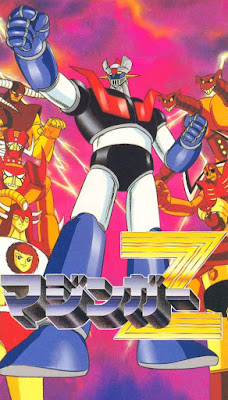
マジンガーZ / Mazinger Z


The archetype of Giant Robot Animpé
I am your father!


Hello fellow connoisseurs! No! I wasn't dead! (at least not yet) I was just too busy working from home 24/5. Now that I've adjusted to working through my computer from Monday to Friday, I feel healthy enough as to deliver a brand new post about another awesome Animé that everyone should watch based on its historical value alone.

Enter Mazinger Z, the archetype of giant robots Animé!

Background.


マジンガーZ, AKA Mazinger Z, (known briefly as Tranzor Z in the United States) is a Japanese super robot manga series written and illustrated by Go Nagai. The first manga version was serialized in Shueisha's Weekly Shōnen Jump from October 1972 to August 1973, and it later continued in Kodansha TV Magazine from October 1973 to September 1974. It was adapted into an anime television series which aired on Fuji TV from December 1972 to September 1974. A second manga series was released alongside the TV show, this one drawn by Gosaku Ota, which started and ended almost at the same time as the TV show. Mazinger Z has spawned several sequels and spinoff series, among them being Great Mazinger, UFO Robot Grendizer and Mazinkaiser. Mazinger Z: Infinity, a theatrical film sequel, taking place 10 years after the original series, was animated by Toei Animation and released in theaters on January 13, 2018.

Synopsis.

The villainous Dr. Hell has amassed an army of mechanical beasts in his secret hideaway, the island of Bardos located in the Aegean Sea. He is capable of controlling mechanized beasts with his cane, and instructs them to unleash devastating attacks. However, Dr. Hell doesn't do all the dirty work by himself; he has his loyal henchman Baron Ashura to carry out his devilish plans.

There are also those that will see to it that evil does not prevail. Kouji Kabuto is the young and feisty teenager with a score to settle: his goal is avenging the murder of his grandfather by Dr. Hell. And he might just be able to pull it off, as he is the pilot of Mazinger Z, a mighty giant robot made out of an indestructible metal known as Super-Alloy Z.

Mazinger Z boasts several powerful special attacks. By channeling Photonic Energy through its eyes, and unleashing the Koushiryoku Beam, it can cause great destruction. But things get really cool when Mazinger Z launches its Rocket Punch attack. Dr. Hell and his minions might have just found their match!


The magnificent blu-ray box artwork.

How many characters can you spot?


Review.


It’s hard to think of a clearer Japanese contribution to animation and science fiction than the creation of the giant robot genre. For the millions of kids that grew up outside Japan in the 80s and 90s, and were lucky enough to witness some classic Animé on the tele,  big robot shows were an introduction to a whole new style of "cartoon". Although there were American cartoons featuring robots, the storytelling was nothing like what kids had seen before. Moreover, a lot of fans, experts and forums across the internet (they can't be wrong) agree the origin of the genre can be traced to a single comic — Go Nagai’s Mazinger Z. By the time the series debuted in 1972, readers had already been dazzled by incredible robots like the remote-controlled Tetsujin 28 (another true legend) and especially the sentient Astroboy (Tetsu-Wan Atom). But those robots’ strength was always just out of the reader’s grasp. Mazinger Z was the first series to put a kid protagonist inside the cockpit of a giant robot, and Toei’s 1973 animated series became a huge hit domestically, both in terms of ratings and in merchandising revenue. Such hit would later come to Europe, South and North America.

But what made it so interesting? what makes it relevant today? The 48 year old series followed the adventures of Kouji Kabuto, the hot-headed, motorcycle-riding 16 year-old and pilot of the series’ namesake super robot. Mazinger Z is forged out of Super Alloy Z (whose critical component, Japanium, can only be found at the base of Mt. Fuji) by Kouji’s grandfather, Juuzou. The story more or less revolves around Kouji fighting off the evil Dr. Hell’s weekly mechanical beasts — ancient robot monsters from a pre-Grecian civilization. However, is not like the traditional "enemy of the week" type of show. Mazinger Z did have an ending and few surprises to keep viewers craving for more.

Blu ray matters.

A very young Go Nagai.

Design wise,  the art style is cartoonish by today's Anime standards. If you compare it to other classic shows from around the same time like Mobile Suit Gundam (Gundam 0079 for the uninitiated) or later entries like Super Dimension Fortress Macross or Armored Trooper V.O.T.O.M.S. you'll see the animation style moved on to a more industrially detailed mechanical design which still remains as the standard for Mecha/Robot animation. However, this is by no means a critique stating Mr. Go Nagai's designs were lacking. As a matter of fact, this particular "cartoonish" style was very prominent during the 70's, and you can see it in most of the other Giant Robot shows made in the same decade, and speaking of unique, Mazinger  Z featured two female robots, whose main weapon was missiles coming out of their breast, AKA the "boob missiles". An insult by today's politically correct standards, or an oddity from another time. Moreover, the show had a particular set of characteristics never seen before by an audience outside Japan: In the first episode, Kouji’s mother and grandfather are both killed in front of the viewer at the hand of Baron Ashura, a half-man half-woman character never seen before by the western crybabies. But, wait! there's more death! Dr. Hell burns to a crisp the rest of  Kouji's father research team alive in full detail. This idea of showing real death in kids’ cartoons may be old news today, but in the 70's (and 80's outside Japan) it was a groundbreaking concept. Have you ever heard someone call Animé "Dark & Gritty" or "Not kids stuff"? Well, there you have it! The concept of death & graphic violence in Japanese animation has been around for longer than you think. Despite this, Nagai’s creations became a hit in Europe and South America, because kids from all over the world wanted to see graphic violence, death and weaponized breasts!


The good guys.

The bad guys.

Nagai reportedly got his idea for piloting a robot from watching frustrated drivers in a traffic jam, imagining a car that could sprout arms and legs and walk over the other vehicles. “What I had in common with the children that were seeing robots was that I wanted to have this incredible power,” he told Web R25 in 2009. “I didn’t equate giant robots with weapons, I wanted to give a teenaged character a suit of armor that would turn him into a hero,” he added.

After the massive success Mazinger Z had (and still has) in Japan Go Nagai would continue to provide the world with more original stories. Although he did make more Giant Robot Manga (Getter Robo, Steel Jeeg, Grandizer, and a lot more) He didn't shy away from exploring other genres. As a matter of fact, Devilman, Devilman Lady, Violence Jack & Cutie Honey, some of his most popular creations, are not part of the robot genre he helped create. In addition, he even made one of the earliest Ecchi mangas! Harenchi Gakuen (Shameless School) in 1968. This dirty manga would later be adapted into Animé, live action film (4) & a television drama. This man has pretty much done everything there is to be done in the industry!

The action figure!

The statue!


By the way, did you know that Go Nagai is nothing but a pen name? The actual name behind this wonderful universe is Kiyoshi Nagai. If Osamu Tezuka is the father of manga, Go Nagai  is the cool uncle who lets the kids sneak sips of his beer and always tells the funniest dirty stories. The Roger Corman of manga and anime active since 1967, he has had a great influence on the world of Manga and Anime, as he effectively pioneered many of their most representative genres.

Nagai began his career after he fell sick in college and believed he had colon cancer, as he wished to leave something to be remembered for. By the time he found out he did not have cancer, he was set on his career. Ironically his first efforts at getting published were sabotaged by his own mother! Fortunately, he caught the attention of Shotaro Ishinomori, (creator of Cyborg 009) who helped him get started. Nagai eventually funded his own company called Dynamic Productions.

Nagai is known for intentionally breaking taboos. Even his milder material has a humorously deranged quality to it. His early works got him in trouble with the PTA, and even today some of them can contain controversial material. Nevertheless, most of his TV work is technically safe in the interest of placating censors even in Latin America and Europe (though not the US).


Vintage poster. Awesome!

Girl power.


Over the past 40 years, the author’s works have grown and multiplied. Mazinger Z was the jumping-off point for a raft of related material, including Great Mazinger, Z Mazinger, UFO Robo Grendizer, Getter Robo, Psycho Armor Govarian, and God Mazinger. Later, other series like Mobile Suit Gundam and Neon Genesis Evangelion were able to refine the giant robot formula by making their robots more realistic; having a limited supply of ammunition, and needing onscreen repairs after tough battles. In contrast, realism was never high on Nagai’s list of priorities. He tried to make his characters as outlandish as possible, and shunned writing long story arcs in advance, preferring to make things up as he went along. “Nowadays, the trend is for the characters to have complex personal relationships, but I think things should feel straighter. That’s why my robots are more fun than what they have now,” said Nagai in an interview with the Sankei Shinbun. It was never Nagai’s intention to teach the youth, just to give them the feeling of being big and powerful. “Kids want to turn into adults fast,” said Nagai. “I just wanted to take that feeling and turn it into a human riding inside a robot.”


Here's the Japanese opening:

Here's the Japanese ending:


Here's the Latin American opening:


Here's the Latin American ending:


Mazinger's Z theme live!


Nov 20, 2019

ベルサイユのばら / The Rose of Versailles / Lady Oscar

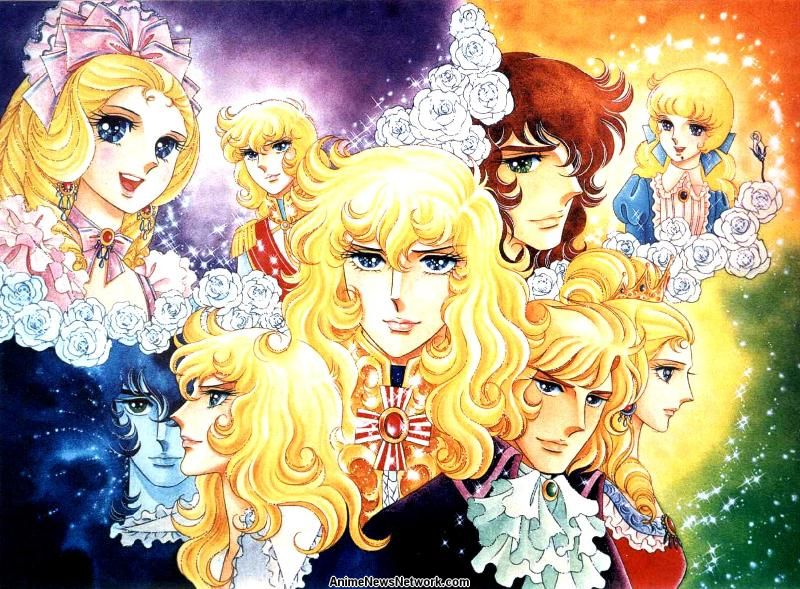
Beautiful art.
Making a review after Joker seemed like an impossible job for weeks. Obviously, that's not the main reason I was away from this blog. The social revolution that started in my home country, made me prioritize my duties, and yet I found the perfect excuse to return to our Animé reviews. 

The Rose of Versailles (ベルサイユのばら), also known as Lady Oscar, is a very popular Japanese shōjo manga series written and illustrated by Riyoko Ikeda. It has been adapted into several Takarazuka Revue musicals, as well an anime television series, produced by Tokyo Movie Shinsha and broadcast by the anime television network Nippon TV. The series remains incredibly popular in Italy and some countries of Latin America including Chile, my home country. 

Today's review will focus on the 40 episode Animé adaptation from 1979, which I for one, think is the most beautifully drawn series from the 70's. 


More astonishingly beautiful art.


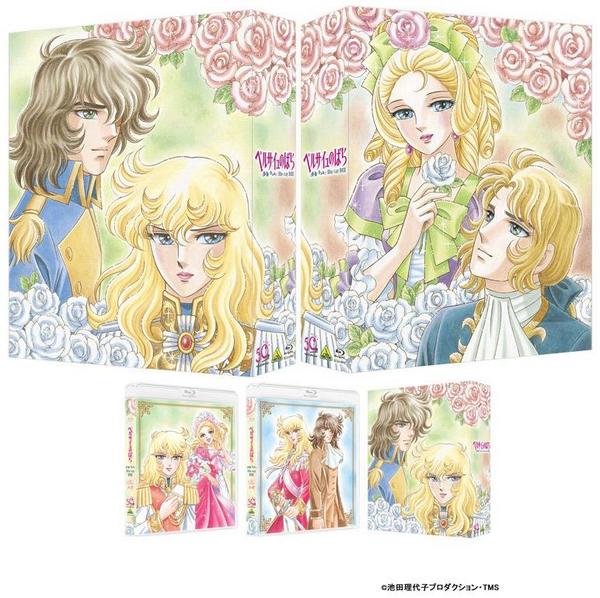
The Blu-Ray box. Go get it!


Background 

The Rose of Versailles focuses on Oscar François de Jarjayes, a girl raised as a man to become her father's successor as leader of the Palace Guards. A brilliant combatant with a strong sense of justice, Oscar is proud of the life she leads, but becomes torn between class loyalty and her desire to help the impoverished as revolution brews among the oppressed lower class. Also important to the story are her conflicting desires to live life as both a militant and a regular woman as well as her relationships with Marie Antoinette, Count Axel von Fersen, and servant and best friend André Grandier. 

It features elements of the yuri genre embodied in the relationship between Oscar and her protégée Rosalie Lamorlière, the secret daughter of the scheming Madame de Polignac. Rosalie refers to Oscar as her first love. Many of the court ladies also greatly adore Oscar, openly admiring her at parties and become very jealous when she brings female companions to them.

Rosalie.
Marie Antoinette.
In 1979, The Rose of Versailles was released in Japan as a 40-episode (and 1 recapitulation) animated television series, which ran from October 1979 to September 1980. Besides Japan, the series has also been broadcast in several other countries of Europe and Latin America under the title of Lady Oscar. The anime was directed by Tadao Nagahama (episodes 1-18) and Osamu Dezaki (episodes 19-40), who brought a cinematic approach to the series. Shingo Araki was the animation director and co-character designer along with Akio Sugino and Michi Himeno. Kōji Makaino was in charge of the soundtrack.
 
The production staff included the most recognized animation professionals then, who contributed in the making of the 40 episodes of the anime. In spite of the difficulties they had to go through, the staff could continue with their work and took advantage of the problems. The most important of said incidents was the change of direction at the middle of the project, which marked a notable difference between the first half of the anime (directed by Tadao Nagahama) and the second one (directed by Osamu Dezaki).
 
The anime was finally aired on October 10, 1979 in Japan on the channel Nippon TV. From this point on, the series would be aired every Wednesday until September 3, 1980, with the airing of the last episode. 

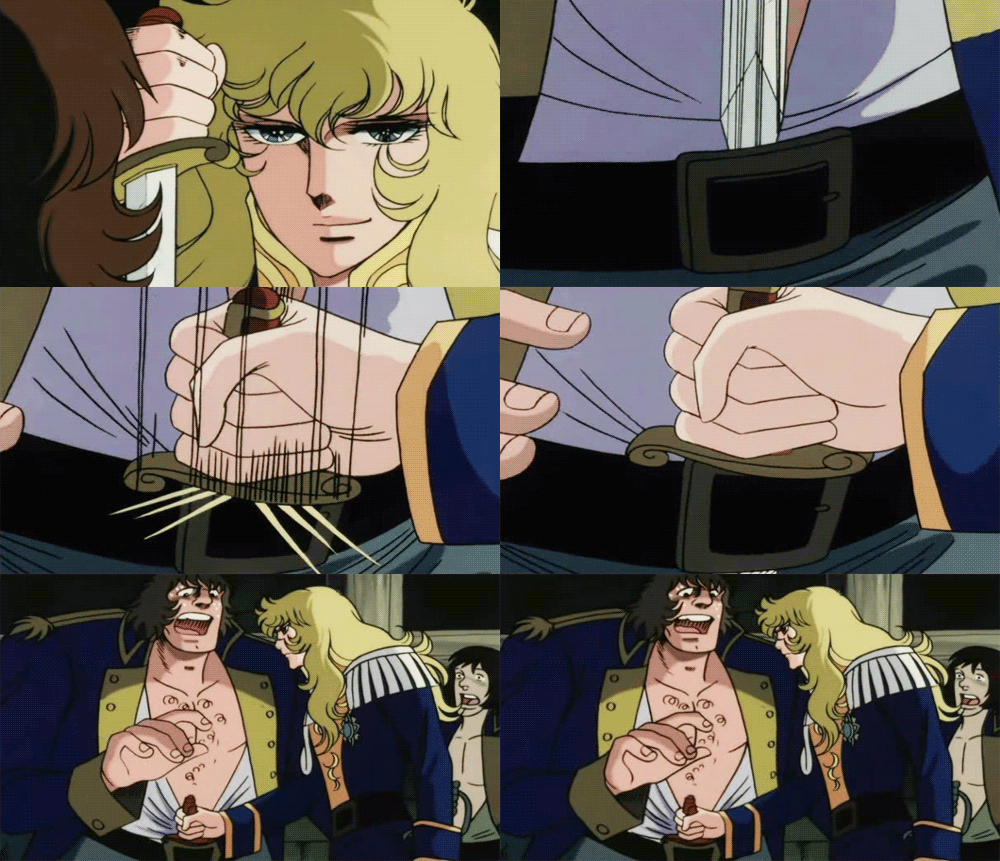
En garde!
Man up! loser!

Review

Do you need to be a history nerd to like The Rose of Versailles? The answer is both yes and no. Set during the french revolution, this Animé is more of a reflection of a certain type of society rather than a historical research. While it is based upon the French revolution, the main focus is on how the characters deal with what's going on from different social perspectives. Historical facts intertwine with fictional characters in such a natural manner, you'll find yourself believing Oscar was actually there when it all happened. 

The first thing  you  notice when you start watching Rose Of Versailles, are the marvelous character designs done by Shingo Araki. While his style may seem dated to modern Animé fans, I assure you, there's nothing dated with this man. As a matter of fact, I'd say his best work is right here in The Rose of Versailles. Later he'd go on to reprise his skills in Saint Seiya. In addition, the directing approach is top notch, and I'd say that some scenes are so well animated that they even defy the commodity of modern animation from these days. There's this dance scene early on, where every character on screen is doing independent moves!, Hard work at its best!. Unexpectly, Nagahama Tadao died early on in the making of the series and with him died some of the innovative aesthetics the series had in the first few episodes, because the acclaimed 70’s director Osamu Dezaki which came as substitute, didn’t follow that scheme but that's not saying the Animé lacked quality from there on. On the contrary, Dezaki fulfilled his duty with excellence and ended the decade in the highest note. I especially love how the shots of the camera are taken from various angles throughout the series. And a very special Dezaki watermark, the dramatic stills at the end of a scene. 


These are hard times.
Duty or truth?

History wise, there are some true events in a few episodes. Especially, the events that lead to the fall of the French monarchy & aristocracy. However, most of the action is seen from the perspective of the fictional characters. And, that's a good thing. The way reality meets fiction is hard to tell if you're not a history connoisseur.


Plot wise, we get to see a lot of what made humanity a miserable society. Poverty, exploitation, abuse, rapist priests, corruption, greed, arranged marriage, suicide, pedophile aristocrats, the rich getting richer and more powerful, etc. However, what makes The Rose of Versailles a unique Manga and Animé, is how it tells you the story though a varied set of characters that one way or another, end up having something to do with the french revolution, and how Oscar is the character that emotionally connects with each and every single issue taking place both inside and outside of the Versailles palace. How can Oscar serve her duties and at the same time, give a hand to those suffering in poverty? is that even possible? can she be Marie Antoinette's protector and a servant of the people? Those questions will obviously be answered by the time the Animé enters its final five episodes. 


Looks that kill.
Love is just around the bend.

The "bad guys" in the Animé are the aristocrats and monarchs. While the focus is more on the side of aristocrat wannabes manipulating their way into the palace of Versailles, they're still the bad guys, and I can think of a couple of key antagonists. First,  Madame Du Barry, who used to be a prostitute, and thanks to that she manages to enter into the court by becoming the lover of King Louis XV. When Marie Antoinette becomes princess of France, they become enemies.  Maria Theresa of Austria, queen of Austria and mother of Marie Antoinette, sends her advisor, Comte de Mercy, to France. Mercy advises the princess to stop fighting with Du Barry, but Marie Antoinette does not obey the warnings until King Louis XV shows his displeasure with her attitude towards the countess. Marie Antoinette finally speaks to Du Barry. Months later, King Louis XV gets smallpox. Before dying, the bishop, hearing Louis's confession, and orders the removal of the King's sin, that is to say, Madame Du Barry. King Louis XV dies and Du Barry is taken to a convent, where she remains until 1793, the year in which she is guillotined.

Second, Duchess of Polignac,  a singer of the Palace of Versailles, but she does not live there. Marie Antoinette listens to her and quickly makes her best friend. She impelled Marie Antoinette to bet in clandestine casinos, without the permission of Marie Antoinette's husband, King Louis XVI. She manipulated the queen for her own benefit and made the queen believe that lies would fix her difficult situations. Following her advice, Marie Antoinette lied and announced that the heir of France was on way. In order to remedy the situation, Polignac blamed the death of the heir on Lady Oscar. However, you can't say you despise Marie Antoinette, or Oscar's father, or some other minor characters working for the "bad guys". The producers not only did an excellent job in transferring the Manga to the screen, but also managed to go the extra mile and make you feel sorry for some of the antagonists, that at times look like innocent bystanders.


Who's the prettiest?
Rosalie, the innocent stereotype.
Interestingly enough, characters like Maximilien Robespierre, Louis Antoine de Saint-Just & Bernard Châtelet (fictional character, the Black Knight) are well represented as men of the people, carefully crafting the revolution, and opposite to Du Barry & Polignac greedy personal motivation, their struggle is for a better future, and that's quite clear whenever they show up in the final episodes, and there's no need for the viewer to do a full research on who these men were during the actual french revolution. The Animé producers wanted to make clear that all the antagonists in the series are the aristocrats & monarchs. Some of which try to sabotage their own kind in order to satisfy their greed.

On the other hand, the Animé does feature positive topics like love, friendship, loyalty and compassion. Oscar François de Jarjayes, André Grandier, Rosalie Lamorliére and every other good guy adds positive vibes in each episode. While Marie Antoinette starts as a naive princess, she ends up swallowed by her privileges and becomes the very thing the people hated with their guts.

Another interesting aspect (for a 1979 Animé) is how love is depicted as more a duty, than a choice. André Grandier has loved Oscar since day one but, since he's nothing but a servant, he can't marry her. On the other hand Oscar is secretly infatuated with Marie Antoinette's lover Hans Axel Von Fersen. Moreover, Oscar acts more like a man throughout the first half of the series, and only in the last episodes, she realizes she's loved André her whole life. In addition, but to a minor degree, Rosalie seems to be bisexual. The way she sees Oscar, clearly suggests she felt more than sister love for her. Obviously, nothing ecchi takes place on screen, since this is a classy work ladies &gentlemen!


The queen?, or the people?
Fearsome lady.

Overall, The Rose of Versailles is one classic Animé you don't want to miss. If you have any prejudices with Shoujo manga/animé watch this one and be cured!


Here's the opening:


Here's the (clean) ending:


The opening theme live with Yuki Nishio!


Another live version by Hiroko Moriguchi:


The live action film trailer: