Showing posts with label Nippon TV. Show all posts

Jul 29, 2021

超人ロック / Locke the Superman / El Superman de las Galaxias

The ultimate Animé superhero.

Background.

Locke the Superman (超人ロック, Chōjin Rokku) is a manga series created by Yuki Hijiri, which was later adapted into a movie and three OVA releases. The movie was given an obscure video release in the United States by Celebrity Home Entertainment as Locke the Superpower, which was rather heavily edited to 92 minutes, removing violence, nudity and any adult bits. Both it and the OVAs were later licensed and released by Central Park Media under the original name.

As of 2012, Discotek has licensed the original Locke the Superman film from 1984 and it was released on November 6. In November 2020, the original Locke the Superman film from 1984 was released on Blu-ray by Sentai Filmworks, and today's review will be about this wonderful 1980s animated movie.


The Japanese Blu-Ray set.

The Blu-Ray cover art.

Synopsis.

A quiet, polite, lonely immortal esper about which little is known, he is called "Locke the Superman", but often denies being so. It is not known where or when he was born, and if asked, Locke will say he does not remember. It is entirely possible this is true. However, when asked by Cornelia Prim in "Millennium of the Witch" which star he was from, Locke replied "Toa."

He has appeared at various times throughout the history of the galaxy, either as a direct influence, an indirect influence, or a simple observer. Using his esper abilities, Locke can learn and do most things more quickly than a normal human. His power also allows him to remain eternally young, or even turn himself into a child again to be adopted by kind-hearted families. It is speculated he remains youthful as an excuse not to take responsibility for whatever cause he is approached for, since no one expects youths to have such responsibilities. 

Masked men.

Innocent women.

Review.

Locke The Superman is an excellent  OVA. Regardless of the animation style that may upset newcomers, there's a solid story, great characters, lots of action and some early state-of-the-art 3D animation to show Japanese artists weren't fucking around when implementing this then new technology.

Produced by Nippon Animation, and directed by Fukutomi Hiroshi, who's known for his work on Captain Tsubasa, Doraemon, Fatal Fury,Gunnm & Lupin III, Locke The Superman is a movie that withstands time and could easily be seen as a "Superhero film" the likes we've seen in recent years. In a nutshell, Locke is an immortal super powered combination of Superman, Charles Xavier & a few other X-Men. Age wise, he's been around for centuries seeing how mankind has fallen for the vice of war time and time again. Obviously, the universe is on the brink of a new brutal war, only this time humanity won't stand a chance against it. Lady Kahn (the antagonist) has set out to train every Esper in the universe. Espers are humans with superhuman abilities. Most of them do what they do with their extremely developed mind powers, so if no regular John could stand a chance against one, imagine what it would be like standing against an army of enhanced superhumans. Ryu Yamaki (our heroes soon-to-be friend) knows this and starts a search for the legendary man that could turn the tables: Locke. 

Animation wise, the film is flawless. Key animation, layout, character design and mecha design look amazingly good, and that's because the movie animation department was in charge of the late Kigami Yoshiji, who's known for his work in Cat's Eye, Crayon Shin-Chan, Macross: Do You Remember Love?, Space Adventure  Cobra, among others. 

I'm not into warfare, not interested.

Love can be a deadly weapon.

While the super-powered being subject is frequently visited by the science fiction industry, the Espers (ESP as in extrasensory perception) are nothing like Gundam's Newtypes or comic book superheroes. Each Esper has a single special skill, and most of them were either brainwashed or fooled by Lady Kahn to join her school for the gifted. The only Esper that escapes that rule of one superpower only is Locke, which makes him virtually impossible to defeat, unless there's an Esper whose superpower is to disable other Espers skills. Enter Jessica Orin AKA Amelia. Her past is a bit blurry, but all she can remember comes in the form of nightmares depicting the murder of her parents by an unknown group of armed terrorists whose leader looks exactly like Locke. But did this really happen? 

Plot wise, I think writers were quite clever to allow more on screen time to the secondary characters rather than focusing only on Locke's vision throughout the two hours the film runs. An overpowered being like our protagonist may feel linear, and too far to reach, too distant to care about his destiny. Ryu and Jessica are obviously there to provide our hero with a sense of responsibility over the weak, but Locke doesn't just stop there, that's why I think his nickname fits perfectly. Like Superman, Locke understands the responsibility of his special skills. He knows he's unique and that many would love to see him fight alongside their cause. Locke's humanity is precisely what makes him a character worth rooting for. An example of this can be when he encounters Cornelia Prim and her teams of expert Espers ready to fight him to death. Instead of dealing with them permanently, he prefers to disable them temporarily so that they can see he means no harm, and that is them who've been fooled into leading a senseless war. He wants them to be set free.

Cornelia Prim and her team.

Esper training.

As for the main villain, Lady Khan is quite a mysterious character, and it's only until the very end of the movie that her true intentions are revealed. Is she an Esper? Has anyone seen her before? Is she even real? Who's the real villain anyway? Even Locke wonders if helping Earth's Federation is the right thing to do. Obviously, everything will be revealed by the end of the film. 

As above mentioned briefly, Locke The Superman was originally released in the USA as "Locke The Superpower" by Celebrity Home Entertainment. This version was heavily edited, and ran for 92 removing all scenes depicting graphic violence, nudity and adult themes. While we all like seeing films as they were originally intended, all the removed scenes from the original OVA, don't necessarily alter the overall feel of the story since there are very few violent scenes and only three mild nudity scenes that are not sex related at all. Fortunately, the reissued DVD and recently released Blu-Ray feature the entire film (2 hours) with the original Japanese audio track.
 

Amelia thinking about his parents murder.

Shower scenes are a classic Anime trope.
 
For being such and old OVA, the film presents some ambitious themes including a strident anti-war message. The main hero is drawn as a tragic figure, dedicated to peace but doomed to a lonely life mistrusted by enemies and allies alike. The engaging central theme stems from Locke's steadfast belief that the psychics' innate humanity can transcend their programming as war machines. To that end his emotional journey is repeatedly paralleled with that of Jessica/Amelia who also grows to despise life as a psychic killing machine.
 
The film also devotes a lot of screen time to Jessica/Amelia whose subplot incorporates elements like covert government testing, a psychic schoolgirl, dreamlike flashbacks where a protagonist misinterprets a key plot point, and slow-motion chase sequences in the Brian De Palma style. While Locke the Superman keeps curtailing promising subplots with strange left turns it still weaves an intricate story that leads to a satisfying pay-off. On a surface level the production oozes class all the way showcasing impeccable visuals, innovative editing, lavish futuristic design and a lush score by Goro Omi. All hallmarks of anime's golden age. The psychic action sequences where Locke does his thing prove suitably trippy and mind-blowing but the subtext is endearingly humane as Locke defuses Millennium's crypto-fascist pursuit of martyrdom and rekindles their humanity yet in a poignant coda finds no solace for himself. 

The future has no pubes.

Battle worn boobs.

While this is a movie based on manga from the 1970s, it feels like there was an effort made here to update the art style a little bit. To an extent the character design is trying to bridge the gap between the 70s and the 80s, and it looks pretty good. Meanwhile, there is some very dynamic camera work going on in this movie. Fast, sweeping pans were quite popular, as well as a chase scene from the eyes of one of the people running. It was interesting to see such experimentation, and some of it looked good, while other parts were quite jarring.

It’s also worth taking a moment to mention this film's soundtrack, as it is fairly enjoyable. The music is a blend of orchestral pieces, rock guitar, outer space electronic bits, and the occasional funky track. The varying types of music are vaguely reminiscent of series like Space Battleship Yamato that had a similar feel to its soundtrack. People probably won’t find themselves humming the melodies to songs here but the music is still quite enjoyable nonetheless.
 
Can there be love in space?

War is not the answer, and Locke knows it.

In a nutshell, Much of the story involves traveling from planet to planet, trying to find the bad guys, sometimes resulting in a psychic fight between Locke and one of Lady Khan's trained pets. The action and plot are pretty straight forward and the two hour runtime feels shorter. One funny thing, is how the fanservice is delivered here. There's that obvious shower scene where Jessica reflects on her past and future, and that seems quite normal. People do take showers and think about their lives. However, some of the action scenes are just hilarious! Whenever female Espers take a beating, their "battle worn" clothes tear off just in their boobs area. This doesn't happen with Esper men. Perhaps their suits were made of lasting fabric or something. Now, this isn't a complaint of any kind, I just find it hilarious. In the future, shows like Aika would exploit this trope to the max while building a genre around panties and T&A. In Locke these scenes are brief and not overly used, because the writers wanted to provide you with that "dark and gritty" feature a lot of people used when talking about Anime in the late 80s and early 90s.

Espers have been done to death in this day and age. We’ve had 40 or so years of these stories developing. As such, more recent anime with this sort of theme tends to have a much more interesting story. However, as a piece of history Locke the Superman is worth a look to see how these stories were told in the 70s and 80s, while enjoying the aesthetics that were prominent at the time.
 
 
Locke & Ryu.

Leave me alone!

Now, speaking of the Blu Ray set, Locke The Superman is presented in 1080p High Definition and the film was no doubt remastered as the series is vibrant and colorful, no scratches and while it retains its original cel drawn animation and beautiful backgrounds, the 3D scenes make it look like a more recent production.

The film is presented in Japanese DTS-HD MA 2.0. The soundtrack is front speaker driven and dialogue and action are crystal clear.  Subtitles are in English.No lame dubs are included. Enjoy the voices of the original seiyuu.

The Blu-ray features the original Japanese promo for special features.

I must say, seeing old school Anime remastered in high definition is an incredible experience, it feels like you're watching these stories for the first time in your life. And for those old enough to have been around in the VHS tapes decade, you know what I'm talking about. Not even syndicated TV looked as pristine as HD remasters do.

Space travel safely.

Solid designs.

The film was also nostalgic in the sense of how cel animation was used and the beauty of the painted backgrounds. But also the focus on storyline which I enjoyed.

This film has it all, action, romance, betrayal, violence, and also the common ’80s shower nudity that was prevalent in anime back in the day.

“Locke the Superman” is one of those titles that may have had a long run as a manga series, but unfortunately never had a long running anime series to go along with it.


Locke in action.

The bad guys in action.

When the film was released, many fans were thrilled, while those in the US who watched it on video for the first time were a bit dismayed of the censorship which removed all the nudity and violence from the film.

What you get with the Sentai Filmworks version of the “Locke the Superman” release is the best version of the animated film to date which is on Blu-ray, uncut, remastered and for those clamoring for old school anime, it’s a title that I highly recommend!

 Here's the US edition for movie trailer:


Here's the French trailer:


Nov 20, 2019

ベルサイユのばら / The Rose of Versailles / Lady Oscar

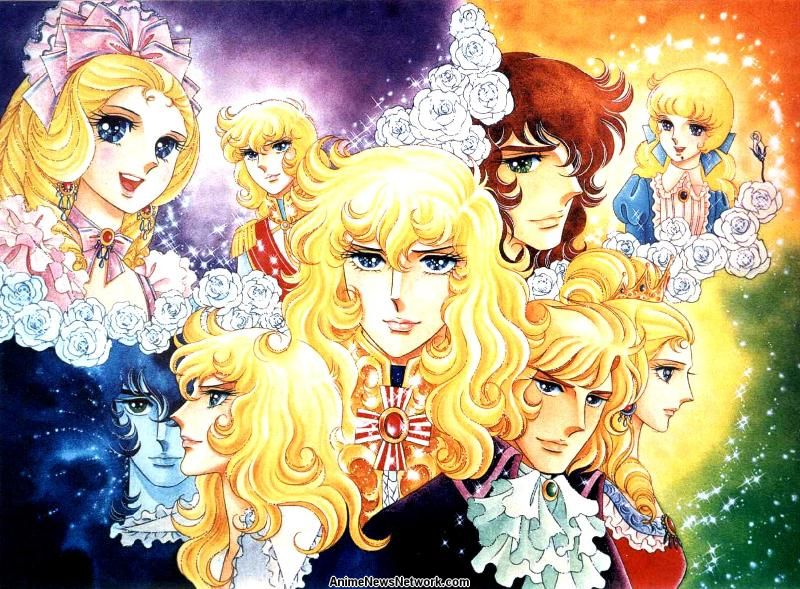
Beautiful art.
Making a review after Joker seemed like an impossible job for weeks. Obviously, that's not the main reason I was away from this blog. The social revolution that started in my home country, made me prioritize my duties, and yet I found the perfect excuse to return to our Animé reviews. 

The Rose of Versailles (ベルサイユのばら), also known as Lady Oscar, is a very popular Japanese shōjo manga series written and illustrated by Riyoko Ikeda. It has been adapted into several Takarazuka Revue musicals, as well an anime television series, produced by Tokyo Movie Shinsha and broadcast by the anime television network Nippon TV. The series remains incredibly popular in Italy and some countries of Latin America including Chile, my home country. 

Today's review will focus on the 40 episode Animé adaptation from 1979, which I for one, think is the most beautifully drawn series from the 70's. 


More astonishingly beautiful art.


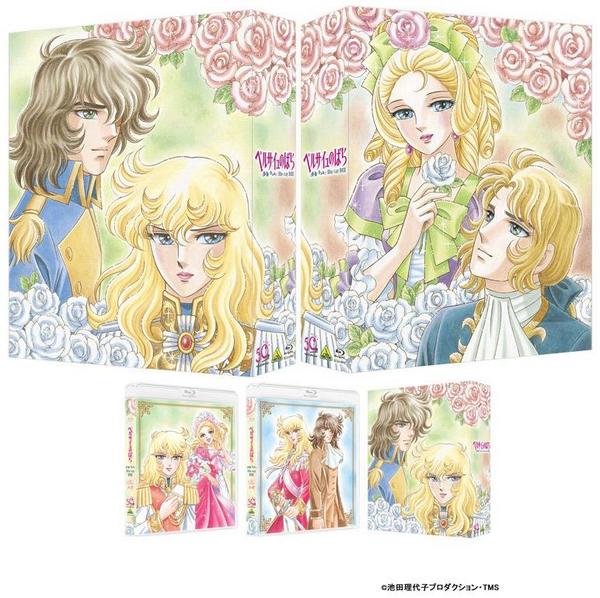
The Blu-Ray box. Go get it!


Background 

The Rose of Versailles focuses on Oscar François de Jarjayes, a girl raised as a man to become her father's successor as leader of the Palace Guards. A brilliant combatant with a strong sense of justice, Oscar is proud of the life she leads, but becomes torn between class loyalty and her desire to help the impoverished as revolution brews among the oppressed lower class. Also important to the story are her conflicting desires to live life as both a militant and a regular woman as well as her relationships with Marie Antoinette, Count Axel von Fersen, and servant and best friend André Grandier

It features elements of the yuri genre embodied in the relationship between Oscar and her protégée Rosalie Lamorlière, the secret daughter of the scheming Madame de Polignac. Rosalie refers to Oscar as her first love. Many of the court ladies also greatly adore Oscar, openly admiring her at parties and become very jealous when she brings female companions to them.

Rosalie.
Marie Antoinette.
In 1979, The Rose of Versailles was released in Japan as a 40-episode (and 1 recapitulation) animated television series, which ran from October 1979 to September 1980. Besides Japan, the series has also been broadcast in several other countries of Europe and Latin America under the title of Lady Oscar. The anime was directed by Tadao Nagahama (episodes 1-18) and Osamu Dezaki (episodes 19-40), who brought a cinematic approach to the series. Shingo Araki was the animation director and co-character designer along with Akio Sugino and Michi Himeno. Kōji Makaino was in charge of the soundtrack.
 
The production staff included the most recognized animation professionals then, who contributed in the making of the 40 episodes of the anime. In spite of the difficulties they had to go through, the staff could continue with their work and took advantage of the problems. The most important of said incidents was the change of direction at the middle of the project, which marked a notable difference between the first half of the anime (directed by Tadao Nagahama) and the second one (directed by Osamu Dezaki).
 
The anime was finally aired on October 10, 1979 in Japan on the channel Nippon TV. From this point on, the series would be aired every Wednesday until September 3, 1980, with the airing of the last episode. 

En garde!
Man up! loser!

Review

Do you need to be a history nerd to like The Rose of Versailles? The answer is both yes and no. Set during the french revolution, this Animé is more of a reflection of a certain type of society rather than a historical research. While it is based upon the French revolution, the main focus is on how the characters deal with what's going on from different social perspectives. Historical facts intertwine with fictional characters in such a natural manner, you'll find yourself believing Oscar was actually there when it all happened. 

The first thing  you  notice when you start watching Rose Of Versailles, are the marvelous character designs done by Shingo Araki. While his style may seem dated to modern Animé fans, I assure you, there's nothing dated with this man. As a matter of fact, I'd say his best work is right here in The Rose of Versailles. Later he'd go on to reprise his skills in Saint Seiya. In addition, the directing approach is top notch, and I'd say that some scenes are so well animated that they even defy the commodity of modern animation from these days. There's this dance scene early on, where every character on screen is doing independent moves!, Hard work at its best!. Unexpectly, Nagahama Tadao died early on in the making of the series and with him died some of the innovative aesthetics the series had in the first few episodes, because the acclaimed 70’s director Osamu Dezaki which came as substitute, didn’t follow that scheme but that's not saying the Animé lacked quality from there on. On the contrary, Dezaki fulfilled his duty with excellence and ended the decade in the highest note. I especially love how the shots of the camera are taken from various angles throughout the series. And a very special Dezaki watermark, the dramatic stills at the end of a scene. 


These are hard times.
Duty or truth?

History wise, there are some true events in a few episodes. Especially, the events that lead to the fall of the French monarchy & aristocracy. However, most of the action is seen from the perspective of the fictional characters. And, that's a good thing. The way reality meets fiction is hard to tell if you're not a history connoisseur.


Plot wise, we get to see a lot of what made humanity a miserable society. Poverty, exploitation, abuse, rapist priests, corruption, greed, arranged marriage, suicide, pedophile aristocrats, the rich getting richer and more powerful, etc. However, what makes The Rose of Versailles a unique Manga and Animé, is how it tells you the story though a varied set of characters that one way or another, end up having something to do with the french revolution, and how Oscar is the character that emotionally connects with each and every single issue taking place both inside and outside of the Versailles palace. How can Oscar serve her duties and at the same time, give a hand to those suffering in poverty? is that even possible? can she be Marie Antoinette's protector and a servant of the people? Those questions will obviously be answered by the time the Animé enters its final five episodes. 


Looks that kill.
Love is just around the bend.

The "bad guys" in the Animé are the aristocrats and monarchs. While the focus is more on the side of aristocrat wannabes manipulating their way into the palace of Versailles, they're still the bad guys, and I can think of a couple of key antagonists. First,  Madame Du Barry, who used to be a prostitute, and thanks to that she manages to enter into the court by becoming the lover of King Louis XV. When Marie Antoinette becomes princess of France, they become enemies.  Maria Theresa of Austria, queen of Austria and mother of Marie Antoinette, sends her advisor, Comte de Mercy, to France. Mercy advises the princess to stop fighting with Du Barry, but Marie Antoinette does not obey the warnings until King Louis XV shows his displeasure with her attitude towards the countess. Marie Antoinette finally speaks to Du Barry. Months later, King Louis XV gets smallpox. Before dying, the bishop, hearing Louis's confession, and orders the removal of the King's sin, that is to say, Madame Du Barry. King Louis XV dies and Du Barry is taken to a convent, where she remains until 1793, the year in which she is guillotined.

Second, Duchess of Polignaca singer of the Palace of Versailles, but she does not live there. Marie Antoinette listens to her and quickly makes her best friend. She impelled Marie Antoinette to bet in clandestine casinos, without the permission of Marie Antoinette's husband, King Louis XVI. She manipulated the queen for her own benefit and made the queen believe that lies would fix her difficult situations. Following her advice, Marie Antoinette lied and announced that the heir of France was on way. In order to remedy the situation, Polignac blamed the death of the heir on Lady Oscar. However, you can't say you despise Marie Antoinette, or Oscar's father, or some other minor characters working for the "bad guys". The producers not only did an excellent job in transferring the Manga to the screen, but also managed to go the extra mile and make you feel sorry for some of the antagonists, that at times look like innocent bystanders.


Who's the prettiest?
Rosalie, the innocent stereotype.
Interestingly enough, characters like Maximilien Robespierre, Louis Antoine de Saint-Just & Bernard Châtelet (fictional character, the Black Knight) are well represented as men of the people, carefully crafting the revolution, and opposite to Du Barry & Polignac greedy personal motivation, their struggle is for a better future, and that's quite clear whenever they show up in the final episodes, and there's no need for the viewer to do a full research on who these men were during the actual french revolution. The Animé producers wanted to make clear that all the antagonists in the series are the aristocrats & monarchs. Some of which try to sabotage their own kind in order to satisfy their greed.

On the other hand, the Animé does feature positive topics like love, friendship, loyalty and compassion. Oscar François de Jarjayes, André Grandier, Rosalie Lamorliére and every other good guy adds positive vibes in each episode. While Marie Antoinette starts as a naive princess, she ends up swallowed by her privileges and becomes the very thing the people hated with their guts.

Another interesting aspect (for a 1979 Animé) is how love is depicted as more a duty, than a choice. André Grandier has loved Oscar since day one but, since he's nothing but a servant, he can't marry her. On the other hand Oscar is secretly infatuated with Marie Antoinette's lover Hans Axel Von Fersen. Moreover, Oscar acts more like a man throughout the first half of the series, and only in the last episodes, she realizes she's loved André her whole life. In addition, but to a minor degree, Rosalie seems to be bisexual. The way she sees Oscar, clearly suggests she felt more than sister love for her. Obviously, nothing ecchi takes place on screen, since this is a classy work ladies &gentlemen!


The queen?, or the people?
Fearsome lady.

Overall, The Rose of Versailles is one classic Animé you don't want to miss. If you have any prejudices with Shoujo manga/animé watch this one and be cured!


Here's the opening:


Here's the (clean) ending:


The opening theme live with Yuki Nishio!


Another live version by Hiroko Moriguchi:


The live action film trailer: