Showing posts with label James McAvoy. Show all posts

Sep 12, 2019

It: Chapter Two

It ends.
Reviewing a film based upon my favorite horror book of all time can be a pretty tricky task. On the one hand, you have 1,138 pages of Stephen King's magnus opus, and on the other, a groundbreaking Argentinian filmmaker that hit the jackpot with It three years ago. Let's remember the author himself said "I wasn't prepared for how good it really was". In addition, if you were a fan of the made for TV It movies from 1990, you now know those two films were slayed to death with this fine update.

Although Stephen King's IT novel is more of back and forth from adult to kid and back and forth from adult to kid and so on, It: Chapter 2 should be looked at like it's the 2nd half of one big story, which is exactly what it is rather than a sequel. It's really not a sequel. Just like the 2nd half or "adult half" of the 1990 TV Miniseries/movie is not a sequel, it's just the 2nd half of one big story/movie. Let's face it, unless they're the Godfather Part 2, Aliens, Terminator 2: Judgement Day, The Dark Knight, The Empire Strikes Back, and maybe a couple of other big time hit sequels, the sequel almost always gets hated on, critiqued to death, disregarded as "unoriginal", "same old same old", "not very creative", treated like the "intruder", etc etc....it's the same for 90% of remakes..but people need to realize and understand that IT : Chapter 2 is not a sequel and that IT : Chapter 1 and IT : Chapter aren't remakes to the 1990 TV minseries/movie either.


The losers club is forever...
...after.
Secondly, almost every negative review on Rotten Tomatoes or YouTube or on the Internet somewhere have complaints about the runtime of 2 hours and 49 minutes and that it's "too long" and "there are no superheroes on it". I don't see how you can make this whole story put to film not be at least 5+ hours long (Chapter 1 and Chapter 2 combined)..at the VERY least. The novel is over 1,100 pages long ! 1,138 pages to be exact. "IT" should have been a 10-15 1 hour episode series on Netflix to be done properly, to be honest..but if you go the cinema route with it (and they did, obviously), between Chapter 1 and Chapter 2, it has to be, at the very least, 5 hours or so if the Director or Writers want to be even remotely faithful to King's novel and make fans of King and the novel at least somewhat satisfied. And you also have 7 protagonists..SEVEN..6 of which are main protagonists. That's A LOT character developing and character story arcs that have to be told and take place unless you want a lazily and poorly directed and written film with terrible story telling and bad or no/next to no character development.

This film delivers great character development and great character and story arcs for all of the main protagonists/characters of the film. This film is really entertaining overall. There are pacing issues but those really seem minor when you step back and look at this film as a whole. This film was really good on it's own and holds up very well on it's own. Yes, it relied on Chapter 1 some, obviously, because Chapter 1 is part of the overall story (Again, it's NOT a sequel. I'm really talking about how well Chapter 2 is made when saying "it's really good on it's own) but when you put Chapter 1 and Chapter 2 together and make it one big story/film like it should be, it's AWESOME. Pennywise is also at his most serious and gruesome in this one. This one doesn't cut away just as someone or a helpless kid is about to get bitten or eaten until after you see and hear plenty enough, if you know what I mean. More gore in this one. It definitely earns every bit of it's R rating. Bill Hader, Jessica Chastain, Bill Skarsgard, and James Mcavoy are excellent, especially Hader and Skarsgard. Nobody was bad though..everyone was, at least, good. The CGI was also much better in this one..of course it would be though because it had a much bigger budget to work with than Chapter 1 did.


Red balloons are coming.
I've missed you losers.

Horror wise, there really isn't much to scare a 37 year old adult. However, this film not only made me jump off my seat four times, but also made my brave wife get a few scares as well as everyone in the theater. Although these scenes rely on the unexpected, they seem to work pretty well for me. Especially in how they devised the concept of scary intertwined with universally disgusting special effects. Still, this film is more about personal fears than actual monsters from outer space. Which leads me to a confusing question, is the film better than the book? or is the film as good as the film? To me it's a difficult question to answer. On the one hand we have an already established world by Stephen King's immense talent. On the other, we have Andy Muschietti's bullseye visual realization of the earlier. I could go on for hours, but I'll just say that this is probably one of the few films where you get something new that is as good as the source material.  The losers club is obviously the best part of both the book and these films. I cannot help but to be transported back to the 80's where My friends and I lived some of the coolest adventures kid can live. We'd visit parks, build forts, walk under bridges to find treasures, hunt imaginary monsters in abandoned houses, ride bikes, believe we were more grown up than we actually were and more importantly, stick together and try to make each other's lives happier and complete. 


It chapter two, it's not really a horror movie. Like the book, it's about growing up and discovering that the monster under our beds, it's actually very real, very human made. Conquering our fears it's the most human task we face throughout our lives, and this film clearly has that love for what once made us innocent kids, and eventually for what made us grown ups who should remember what matters.


Clowns?, again?
Nope, nope, nope.
Plot wise, the movie takes place (just like the book does) 27 years later, and the losers club have all moved out of Derry to lead relatively successful lives. Mike's the only one who's stayed in town, and it's the one to make the phone call to bring back the team to finish what they started. Nevertheless, and like the in the book, Derry plays a key role in the film as well. Prejudice, stereotype and hate speech are the very foundations of this small town, and here's where the book deserves its masterpiece label: Don't we humans fear what we don't understand? Of course we do! And this is where both the film and novel bring their most important lesson: Conquer your fears or be consumed by them forever. If you're afraid, you'll never move on, you'll never be free. Once every losers club member returns to Derry, they have to perform the Ritual of Chüd.

Following the Losers’ Club reunion at the Jade of the Orient and their discovery that Stan has died, in a scene that diverges from the book, Mike takes Bill to the library in hopes of convincing him that it’s possible to defeat It once and for all. Once there, Mike drugs Bill’s drink with a hallucinogenic root that was given to him by a Native American tribe he visited to try to learn more about It. He goes on to reveal that he spent several years chasing down every possible lead on It, a search that led him to the descendants of the Native Americans who inhabited the future site of Derry at the time of It’s arrival.

Back in business.
Do you want a balloon?
Mike then pulls out a Native American artifact that he stole from the tribe, which is covered in markings that reveal the origins of It. What follows is a trippy animated sequence in which Bill sees a vision of It crash-landing on Earth in an event similar to an asteroid impact. Although It arrives in its true form of the Deadlights, Bill watches as It transforms into a bird before rapidly shifting between a number of grotesque forms while preying upon the ancestors of the Native American tribe that Mike sought out. The tribe is then shown standing around the artifact as a fire burns inside it, signifying that they are performing the Ritual of Chüd. Unfortunately, they are only able to trap It with the ceremony instead of killing It for good. (Or so Mike says — more on that later.)
Mike is convinced that if the Losers recreate the ritual, they will be able to stop It’s reign of terror forever. But to do this, they first need to each collect a token from their childhood that they can burn inside the artifact. These "tokens" are nothing but a symbol to what they held on for too long. In order to make it, they have to "let go" of these things. In a way, they're saying goodbye to a part of their childhood so that they can make room for newer adventures in the adult life. 

The scene from the movie in which Mike explains the Ritual of Chüd to Bill is based on a chapter in King’s book in which the child Losers decide to perform an “Indian ceremony” that involves filling up their clubhouse with smoke to create a “smoke-hole.” Once the others can no longer endure the smoke, Mike and Ritchie are left alone inside the clubhouse, and both experience a vision of It’s arrival on Earth. In the book, there are no Native Americans who teach Mike about the Ritual of Chüd. It’s only mentioned in passing that the idea for the smoke-hole came from a book about Native Americans that Ben was reading while researching It.

Cycling to the red carpet.
The ending sucked.
Now, if there's a couple of changes I didn't like, I'd say it'd be not having Audra & Tom. Audra's presence in the novel is key to portraying the way in which Bill never got over his childhood crush on Bev, to the point that Bill wondered if Audra's resemblance to Bev is why he married her. She was taken captive by the IT-controlled Tom, and her rescue guided Bill's increased compulsion to destroy the evil entity. Not to mention the novel's epilogue featured Audra being pulled out of her coma after Bill took her for a bike ride on Silver. In IT Chapter Two, Audra is shown during Adult Bill's intro, in which she poked fun at the endings of his books...and that's about it.


While Audra's absence can be justified for the live-action adaptation, it was a much bigger movie sin to chop out so much of Beverly's abusive husband Tom. Don't get me wrong, his intro scene was a disturbing slice of domestic anti-bliss that didn't need to be echoed ad nauseam, but removing him from the bulk of the adult characters' stories definitely weakened Bev's character development. Movie audiences aren't fully able to comprehend Bev's cyclical life choices, and why she would end up marrying someone whose barbaric actions so closely resemble those of her father Al. As well, Tom's absence waters down the importance behind Bev's choice to finally leave him behind to return to Derry.

Do you want a picture?
It through the looking glass of despair.
The other big change, somehow linked to the above mentioned absence of Audra is the little to no use of Silver the bike. The first film did a decent-if-not-great job at relaying Bill's dependence on the bike, and his belief in its overall power. However, even though IT Chapter Two sets up Bill rediscovering Silver at a pawn shop – which features one of Stephen King's most prominent film cameos – the bike is more of afterthought mode of transportation as opposed to being Bill's re-strengthened connection to the blinded imagination beliefs of childhood that were so vital to weakening IT's power. Plus, viewers also missed out on the novel's sweet visual scare when Bill and Mike were putting playing cards in Silver's spokes.

Throughout the film, there are a couple of references to Bill not knowing how to give  a proper ending to his novels. This, was one of the biggest critiques Stephen King received for It. The novel ending was somewhat bittersweet for its surviving protagonists, in that defeating IT did not stop everyone's Derry-related memories from fading away once they got farther from the disturbing small town. Ben and Bev became romantically involved, which was a win, but it was made clear that they would all once again forget about IT's reign of terror, as well as their once-in-a-lifetime friendships. Meaning there might not be anyone to mourn Eddie's death in the weeks and months that followed. That notion is avoided during IT Chapter Two, which sets up that the survivors maintained their memories in the time after everyone had moved on from Derry. After all, that's how Bill and Mike were able to grasp the importance of Stan's self-sacrifice, which would have been the most random letter to get had no one remembered who Stan was. Perhaps it's a shame that they all have to live with those supernatural traumas for the rest of their days, but hopefully they can find equal amounts of happiness knowing that their actions changed the world.

It's called toothpaste, have you heard of it before?
Unicron? never heard of her!
Overall, It Chapter Two is a more than welcomed closure to a successfully unexpected remake that brought Andy Muschietti into the world of the most interesting film makers, and let's not forget he never works alone. His sister Barbara, produced both It films. While the future of It is sealed. Muschietti's future looks bright as he's directing DC Comics long awaited & postponed The Flash live action film. Robotech? You know that can't happen, so let it die already.

Teaser:


First trailer:


Second trailer:


Mar 14, 2017

X-Men First Class

a new beginning.
By the time X-Men First Class hit theaters, your favorite mutants were no longer the blockbuster frenzy they once were with X-Men(2000) & X-Men 2: X-Men United(2003). You see, before today's entry, every major project related to Charles Xavier's gifted was somehow boycotted by the awful critics X-Men: The Last Stand (2006) & X-Men Origins: Wolverine (2009) received worldwide. However, the idea of making another origin movie remained intact despite commercial failure and a massive fandom disappointment backlash (Daredevil, Elektra, Hulk & The Fantastic 4 surely lent more than a hand on the inside job)

What was once supposed to be a Magneto solo movie became a whole X-Men origin film, rebooting the story to the early 60's where Charles Xavier & Erik Lensherr were basically shopping bricks to build a place for their kind.  

But why are we discussing this movie six years after its release? you may wonder, well, it just so happens we humbly believe it was, this film, that brought the X-Men back in shape. Thus allowing two great sequels and a couple of extra Wolverine movies, specially Logan!

The good guys.
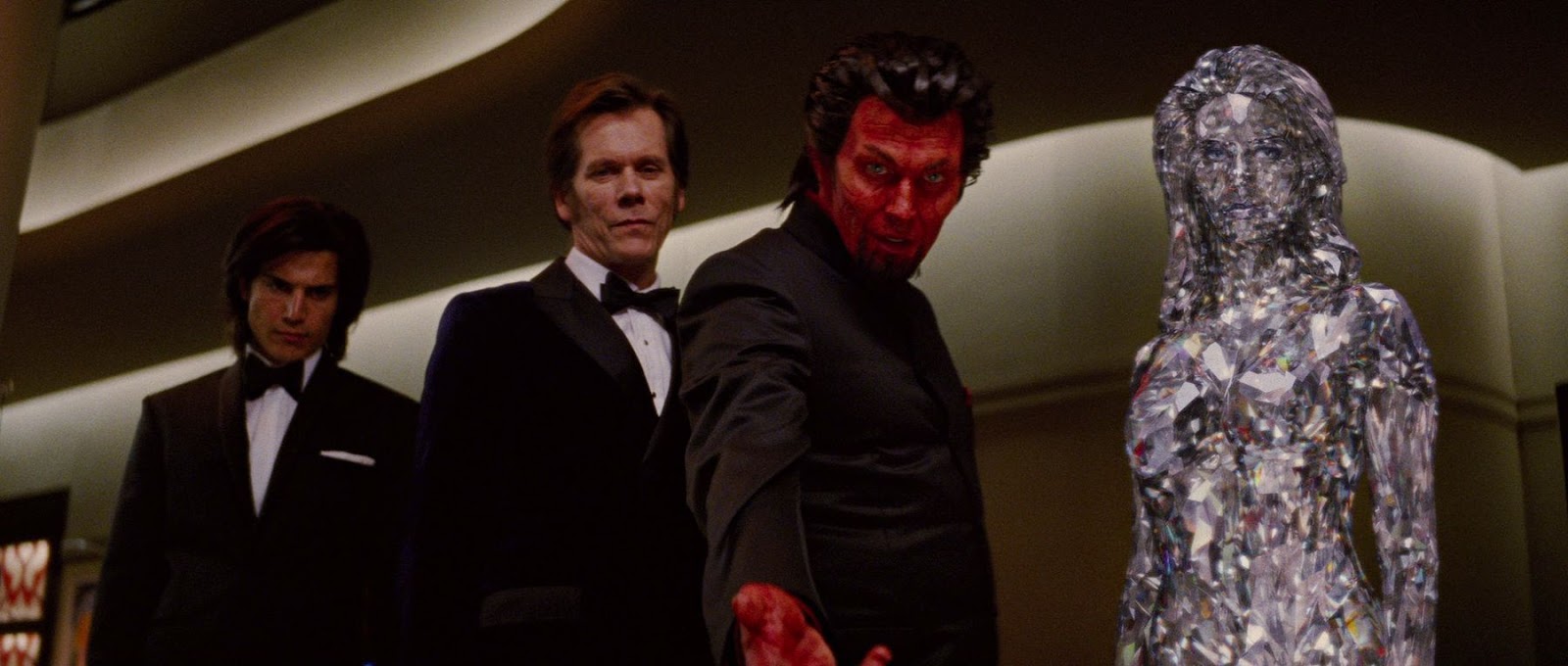
The bad guys.
Beginning with a crime-thriller and a fantasy film on his directorial résumé, it is safe to say that Matthew Vaughn may have already found his niche genre in the super-hero field despite only directing four films in seven years. His first super-hero project, Kick Ass, opened in 2010 to solid critical acclaim and a finalized gross of three times the film's ordinary $30 million dollar budget. And after only two years, Vaughn returned with 'X-Men: First Class,' an origin story to accompany the Bryan Singer/Brett Ratner X-Men trilogy released between 2000 and 2006. The film, is intelligent, enthralling, well-acted, stylishly directed, and most importantly by focusing heavily upon the relationship between the two central protagonists, it does not feel like a conventional super-hero film.

Set within the political context of the Cuban Missile Crisis in the early 1960's, Charles Xavier (James McAvoy) is an up-and-coming Professor whose life is drastically altered when he is introduced to the other members of society who also share the same mutant gene as himself that supplies them with super-human abilities and traits. After stumbling upon the shape-shifting Raven (Jennifer Lawrence) within his mansion, the telepathic Xavier then encounters Erik Lehnsherr (Michael Fassbender), the son of Jewish parents who were murdered during the holocaust by the narcissistic former Nazi scientist, Sebastian Shaw (Kevin Bacon). Erik, who can manipulate all metal objects around himself, wants retribution and nothing more from Sebastian who is now a successful and evil underground figurehead who commands a team of mutants (Azazel, Emma Frost and Riptide) to do his bidding for him. But, once his plan for world domination is revealed, they find that it far exceeds the constraints of humanity, and Xavier, Erik and a rag-tag band of young, hide-away mutants (Havok, Beast, Darwin, Angel and Banshee) who were discovered by Charles, must combine their powers in one last attempt to stop Shaw from destroying the planet and humanity as a whole.

Emma Frost...
...Or Mystique?
Instantly where 'X-Men: First Class' works is in regards to its two central characters; Charles Xavier played by an incredibly affluently sounding James McAvoy and a rage-fuelled Erik Lehnsherr played by a stern-faced Michael Fassbender. Their instant on-screen chemistry provides the drive and ammunition for the plot to carry itself forward. Both characters have differing ideologies and their constant clashes due to this aspect allow the script to be brought to life. Instead of simply infusing their relationship with formulaic violent clashes, Vaughn has instead opted for more articulated verbal battles between the two characters regarding their stance within the society they are now becoming a part of. Xavier is an intellectual being who believes that humans will eventually be accepted within society as equals alongside humans, while Lenhsherr believes that mutants will always be hunted and unable to live peacefully side-by-side with the human race, his evidence for this resides in the anti-Semitism and hatred he received at the hands of the Nazi party during the holocaust. This heavy-set contradiction in ideologies allows their relationship to be imbued with pessimism, while they may be shown as friends and fighting together initially, fans of the comic books and films in general know this does eventually turn into a bitter rivalry and it's this development which drives the plot forward.

Aside from the script, it would also be rude to not praise the action-sequences which take place within the confines of the 1960's X-Men universe. With a modest running time at two hours and ten minutes, there are more than a few well-choreographed action sequences that would adequately satisfy any of comic-book-to-film aficionado's wishing to see this film. Each character's power or ability is at some point represented in a destructive or defensive capacity, taking full advantage of the fact that while many super-hero movies tend to concentrate on the aesthetic nature of the artillery characters can be seen to withstand from governmental agencies or blindsided human opponents, here it is shown and constantly emphasized that human reaction would be futile due to the overwhelming power the mutants possess. These scenes also allow the less important characters to show their physical presence on-screen. For example, during the climactic fight sequence at the conclusion of the film, every mutant character that is identified to the audience is finally shown using their abilities to full capacity, most notably the henchmen of Shaw and the rag-tag team of Xavier and Lehnsherr. This therefore accounts slightly for the lack of depth that has been attempted in these secondary characters due to the time and story constraints.

Shall we go out and find more of our kind?
Fuck off!
While it is a very good and accessible comic-book/super-hero movie, 'X-Men' does also contain two central flaws. The first is superseded in a way by the strength of both McAvoy and Fassbenders performances, as Kevin Bacon is constantly overshadowed as the one-dimensional antagonist of the piece. His plot to ultimately destroy humanity becomes second fiddle to the ever intricate complex relationship between Xavier and Lehnsherr, and his appearance seems too modeled upon that of a James Bond villain. He has the slick hair, the beautiful women and the villainous underground Club to boot, but Bacon unfortunately doesn't have the charisma to be accepted as a worthy opponent to the protagonists. The other flaw has to do with a minor aspect of the production itself, as the non-diegetic music, most notably during the action sequences, begins to diminish in its impact as the film carries on, leading to it eventually becoming the generic, genre-related fanfare associated with the conventional comic-book films.

Though ostensibly a prequel to the entire "X-Men" film franchise, this movie deliberately ignores continuity points of X-Men: The Last Stand (2006) and X-Men Origins: Wolverine (2009). Matthew Vaughn explained his intention was to "make a good film that could stand on its own two feet regardless of all the other films" and also that could "reboot and start a whole new X-Men franchise". Writer Jane Goldman looked at the film as an "alternate history" for the X-Men - though a reboot, the writers did not want to go fully "against the canon of the X-Men trilogy", citing the various approaches the comic had in over fifty years of publication. 

it's morphing time!
This is the most unexpected scene of the movie.
The film was originally going to be a prequel about Magneto. Screenwriter Sheldon Turner wrote a treatment which he described as "X-Men (2000) meets The Pianist (2002)": the story focused on Magneto's early years as a prisoner of war in a Nazi concentration camp, until liberation by a squad of Allied Forces led by Charles Xavier. They later meet after the war and become friends, and later become rivals. The studio decided to change the film's direction to the early years of the X-Men, but incorporated aspects of Turner's script into the film.  

Matthew Vaughn wanted the film to resemble the productions of the 1960s, with "very traditional framing, and camera movement when it needs to move, not just throwing it around and whizz-bang", and using the anamorphic format "to create a widescreen experience, is emblematic of '60s movies". Vaughn had to hire five cinematographers - with sole credit being given to John Mathieson, who came halfway through the shoot and did half of the film - and four assistant directors to successfully convey the look he wanted for the film. 

An early version of the Black Bird.
Yes, Magneto's signature helmet!

Interestingly enough, this movie isn't based upon the 2006/2007 X-Men First Class comic book written by Jeff Parker & penciled by Roger Cruz, so in a way, this movie foresaw what the Marvel Cinematic universe films would do in the future: Name their flicks after one famous comic book story arc without actually being based upon it. Producers, suggested in early stages of the film, that the story should be brand new and based upon the cinematic universe already established in the previous 4 X-Men movies, and boy was that a bold move! Magneto a good guy? Mystique a good guy?, Charles Xavier's accident? Every liberty producers & writers took, clearly paid off as this film opened doors for an entirely new, yet connected to the earlier, trilogy of mutant movies.

At the time this film was in pre-production stage Bryan Singer (director of the first two X films, plus the two later X films) was offered the director chair but he was already busy in other projects. Nevertheless, he accepted the producer job. In 2006 he directed the god awful Superman Returns.
 
Hi, I'm Beast!
We want a reboot and we want it now!
Overall, X-Men: First Class, is not your typical comic-book movie, it may contain certain elements associated with the comic-book genre, but by placing a heavy emphasis upon the strength of the plot and the script at the film's core instead of the action-set-pieces taking place, Vaughn has intended, and succeeded, in transcending the stereotypical conventions of the genre and has created a film which will appeal to a wide range of audience members.

Although, it didn't become a blockbuster of proportions in 2011, watching this movie in retrospect, adds up to the more successful sequels from 2014 & 2016. 

Here's the movie trailer:


May 24, 2016

X-Men: Apocalypse

The apocalypse of the X-Men franchise is finally here.
I know I said we were kinda tired of posting about superhero films but here we are again, back at it for spammy reasons. People who bashed Terminator Genisys (one of our most popular reviews of last year) for its time travel alteration of a beloved time line will have no balls to complain about the same issue in today's entry. Superhero movies are still in the spotlight and posers love to brag about how up to date they're with the latest trends.  

Today's review, X-Men: Apocalypse has a lot in common with Terminator Genisys not just in a single way, but in many ways. The former was made to attract newer generations into the myth of a well known universe with a 30 something years old fan base. The original X-Men films date back as far as the year 2000, so updating things without messing up time lines can be a tricky task even for his original film maker.

Alright team, this time we'll get it right.
Singer trying to come up with superhero suits.
Bryan Singer is not a great film maker, he barely makes it as an average director and to put it in business terms, because superhero films are big business these days, watching a Bryan Singer film can be best described as line stretching. Line stretching (as defined by the Business Dictionary) is Increasing the number of products within an existing product range with similar products that have additional or different features. When a business already has a well established brand, it can use line stretching to expand its product line and help increase its market share without having to develop substantially new products. The final line sums up exactly what watching X-Men Apocalypse is.
 
Understanding the film industry is all about business, the line stretching concept justifies hiring people like Michael Bay and Bryan Singer as film makers. Their job is to put minimum effort into expanding a franchise without substantial matter at all. Boy aren't they lucky, are they? Getting paid for doing a terrible job!

Although the first two X-Men films did have a moderate impact in the early 2000's (spawning other superhero films like Daredevil, Hulk, The Fantastic Four & Ghost Rider) Calling these movies influential & ground breaking is a big fat lie.

The new meh villain.
Angel & Storm are bad guys now?
The X-Men universe Bryan Singer built in the early 2000's was that of a realistic take on racial discrimination against people with a unique origin, or shall I say quality? The cool looking superhero suits were all replaced by black leather, and some of the signature features of the characters were gone for the sake of a PG rating and selling a lot of ugly toys. 

Move things back to the future and by the second half of the 21st century superhero films are as big as yer momma's ass. 2014's X-Men Days of Future Past brought Singer back into action with your favorite mutants BUT as usual, his characters are his own creation, or as I'd prefer to put it, his X-Men are his own disrepectful as fuck creation. Everyone, or most of the comic book readers are clearly aware of the Days of Future Past story arc as one of the best X-Men comic books ever but, the guy who gave Superman Returns couldn't care less so he profited on the name of a serious legacy, he's the click bait bitch of Hollywood.

X-Men Apocalypse opens up with the origin story of Apocalypse and how he's been able to move from century to century until he's ready to conquer the world by finding the most powerful mutants and making them even more powerful. Once he does that, he's off to Charles  Xavier school to either convince him of joining forces or destroying him and his students. The obvious thing happens, hence the battle of good versus evil is on again. However, don't think this is a negative review, this is an honest review, we're neither official media nor have we been paid to advertise a certain point of view (it happens more frequently than you think, specially with the movie & music industry)

They completely ignored my earlier movie appearances!
Looks aren't everything Psylocke.
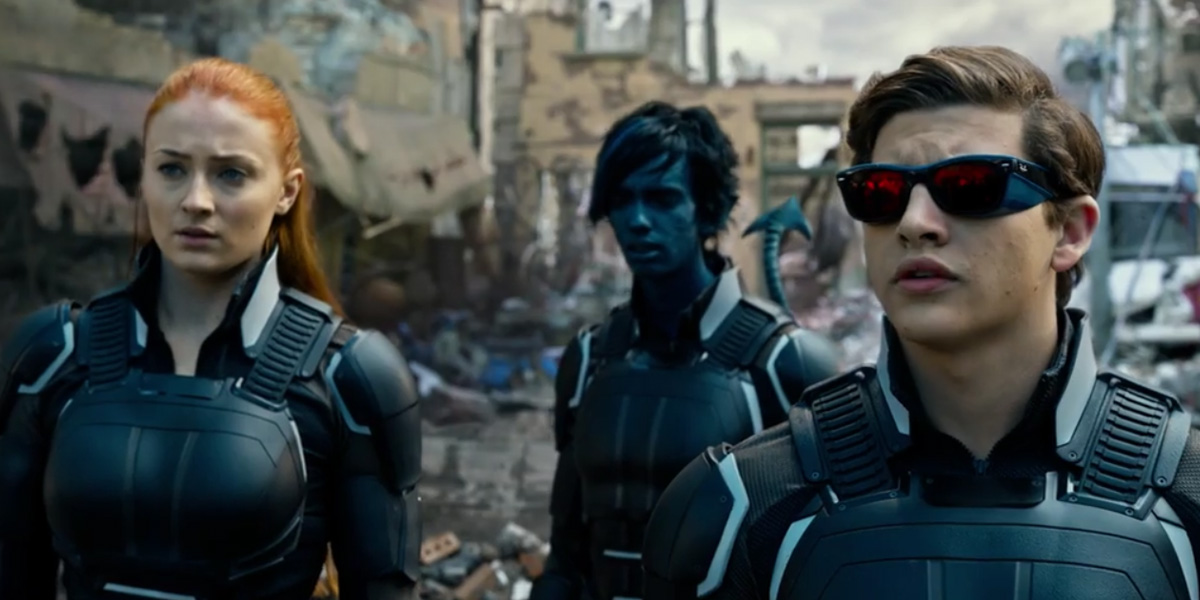
Anyways, X-Men Apocalypse, has its charms. Quicksilver being my favorite character from DOFP, returns with more on screen time, which is a clever move by Singer, as he delivers the most entertaining scenes with a light hearted character that enjoys his superpowers  and is always willing to help those in need with no hesitation. The other new additions are mediocre at most. Unless we're talking about the new takes on Jean Grey & Scott Summers which explain their origin story as well as finally making it up for the old Cyclops seen in the first two X-Men films. James McCvoy's Charles Xavier & Michael Fasbender's Magneto are the best written characters out of the two latest X-Men movies. These guys were made for the role, and it shows. The other strong character, although it resembles nothing the source material is Jennifer Lawrence's Mystique. She steals the show every time we see her in the emotional scenes. The rest of the characters, including the new additions and Apocalypse are simply meh! Their personalities are utterly derivative and will not stay in your mind for long. As for plot twists or original story telling, I'm afraid nope, there isn't anything surprising here. Still, there are a few references to previous X-Men films that work very well, you know, the flashback scenes, and those linking X-Men Apocalypse to characters from the original X-Men trilogy. 

Another charm the film has is references to pop culture, specially 80's pop culture. You have Quicksilver playing Ms. Pac-Man, watching Knight Rider and saving the day while the background song is the god awful 80's shit Sweet Dreams by the even shittier Eurythmics. In addition, there's a movie theater scene where Jubilee, Jean Grey, Nightcrawler (dressed with Michael Jackson's Thriller red leather jacket) & Cyclops have just finished watching Return of the Jedi. The comments about how sequels suck, specially a third sequel, are hilarious, until you're at the very end of the film and realize this scene also fits the movie you're watching. 

Thank god he's back!
Younger & better versions of beloved characters.
Now, let's get down to the real reason I compare Terminator Genesys, to the new Bryan Singer X-Men movies: Messing with timelines is always a big thing, and fan boys do not forgive (Unless, it's Back to the Future or Dr. Who, nonetheless) These new X-Men films, clearly have nothing to do with comic book X-Men, so set that aside, X-Men Apocalypse feels like a forced sequel that desperately tries to cover every plot hole and establish connections with the whole X-Men franchise (yes, even including Wolverine's solo films)  The simpler the plot, the better the experience. When things are this tangled up, the presence of Quicksilver feels like a creme brulee passing softly through your esophagus, because the main course is rusty nails! 

Out of all 2016 superhero films the ranking, if rankings are your thing, are all clear now. The first place it's taken by Captain America: Civil War, second place is Deadpool and nobody cares about third and fourth but, I'd say there's an honorable mention to Batman V Superman: Dawn of Justice for trying and that's 2016 for me.  Suicide Squad? ha! you've gotta be kidding! I'm sure that one will suck greasy balls.

Finally, a decent Cyclops!
I'm a bad guy just because.
All in all, everyone knows who the X-Men are, or at least have a tad of knowledge that is enough to watch this movie, even if you don't give a shit about comic books, or never read one just because you don't like reading. Is this essential viewing? no, not at all. In fact, if you don't watch it, you're not missing much. Fox studios have tried superhero films time after time and have failed time after time with Deadpool being the only exception (although the Deadpool movie feels like a one night stand, it's better than a lot of other superhero films around)

X-Men fans well, I'm sure they already know the only adaptation they consider nearly as good as the comic books is the 90's animated X-Men series, which despite not being that true to source, didn't drastically change the psyche of its characters, reason enough to praise it as a master piece. 
Verdict? X-Men Apocalypse is a mediocre derivative film at most, but everything that has the Bryan Singer signature on it, will inevitably be mediocre.

Here's the movie trailer, and no, I don't give a fuck about spoiler/no spoiler policies, you're all smart enough to wait. You'll find out the movie sucks sooner or later anyways. 

Trailer #1:


Trailer #2:


Trailer #3:


May 29, 2014

X-Men Days of Future Past

Entertaining masses with heavily altered stories.
Hello, fellow connoisseurs, today's entry, as our blog follows all sorts of exploitation films everywhere,  will  be about the recently premiered X-Men Days of Future Past Which would be the immediate sequel to 2011's X-Men First Class making it the fifth installment in the mutant franchise (that is without considering the two solo movies about Wolverine) but, before we get into the film review we'll start by posting the original Days of Future Past comic book story arc. The following list of facts is essentially a list of differences the film has with the original source and its intended to be a statement against film makers who are always trying to improve what's already perfect enough the way it is so, if you have read the comic book like me, you will find that the film is both entertaining and disappointing at the same time.

What really happened in Days of Future Past (The Uncanny X-Men #141, #142)

The original story arc.
The only hero in the movie.
Changing dates.

The Uncanny X-Men #141 shows the future as 2013 and they send Kitty Pryde back to the (then) present year of 1980 which is one year before the comic book was originally published.

Kitty Pryde is the Main Character.

Kitty Pryde, AKA, Katherine “Kitty” Pryde-Rasputin is the one whose mind travels back in time and into her younger body and boy that's the big main difference between comic book and movie.

Kitty Pryde never had Time-Travel Powers!

In the comic books, Rachel Summers, is the one who sends Kitty Pryde’s mind into the past.  And if that name sounds familiar, you’re right.  She is the future daughter of Jean Grey and Scott Summers whose mental powers run strong in the family.

Kitty Pryde is no longer a kid, she's a married woman.

I already gave this little factoid away.  In the comic books, the future Kitty Pryde is married to Piotr "Peter" Rasputin who saves the day under the alias of Colossus. 
X-men from the past and the future united!
Character who did make it out alive in the future.
  
Kitty Pryde, Wolverine, Storm, Colossus, Magneto, Franklin Richards, Rachel Summers (both absent from the film)

Characters who are dead in the comic book.

Charles Xavier, Cyclops, Nightcrawler, The Thing, Jeremy Storm, Angel, Mr. Fantastic, Beast, The Scarlet Witch, Iceman, Spider-Man, Dr. Doom, Captain America, The Hulk, Black Panther, The Human Torch, The Invisible Woman; in other words, lots of people are dead and the film obviously decided not to kill the underlined character and not to mess with other copyrighted characters (LOL)

Characters helping Kitty in 1980's original comic book story arc.

Charles Xavier, Storm, Nightcrawler, Colossus, Wolverine, Angel (Obviously, the underlined characters are not in the film to give the cinematic X-Men universe continuity)

Characters trying to get rid of Kitty in 1980's original comic book story arc.

Mystique, Pyro, Avalanche, Destiny, The Blob (not seen in the movie) In addition, the film has Magneto and the US government as the only people standing in the way of the X-Men.

X-Men, second or third class, who cares about them anyways?
Sentinels on fire in the future!
Who Killed Senator Kelly?

Kitty Pryde is sent back to prevent the assassination of Senator Kelly (not on this film but seen on X-Men & X-Men 2).  It’s also not known which of the New Brotherhood of Evil Mutants kills Senator Kelly. However, in the film Wolverine is sent back in time to prevent Mystique from killing Bolivar Trask.

There is No Bolivar Trask

The one in control of the Sentinels is an industrialist named Sebastian Shaw, a mutant, who also doesn’t make much of an appearance until the end.

Magneto is Not an Antagonist

In the comic story arc, Magneto, in a wheelchair, is only seen in 2013 assisting the X-Men.  He doesn’t play a part in the past.
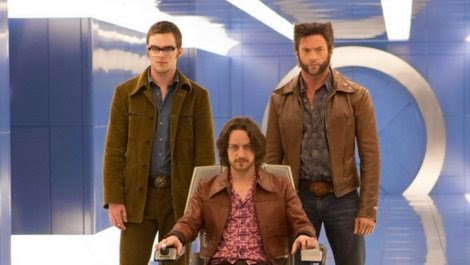
70's Dress code.
The Sentinels Talk!

Anyone who's read a storyline involving these giant mayhem of anti mutant robots knows for sure that Sentinels speak! and they do it very often. However, their movie edition don't utter a single sound.

An Impending Nuclear Strike

Kitty Pryde is sent back to prevent this timeline from ever happening.  The motivation is that this timeline leads to a nuclear strike which is neither seen nor mentioned in the film adaptation.

Mutants are Put in Concentration Camps

Mutants aren’t necessarily killed right off the bat.  They are classified and placed into concentration camps.  Mutants also wear a sort of governor around their necks to prevent them from using their abilities. This also is not happening in the movie, what a let down!

The end is near.
Nude Mystique my oh my.
No Sentinels in the Past

There are no Sentinels to fight in the past.  They were yet to be created in the future, yep this is like taking a shit and wiping your ass with the bible being Christian.

The Story is on a Smaller Scale

The story arc is contained in New York and Washington D.C. for both the future and past.  The fight between the X-Men and the New Brotherhood of Evil Mutants is contained on the Great Mall while on the movie the world is somehow under a black sky and every city of the world is under the Sentinels control.

The Ending is Unsure

When Kitty Pryde’s younger mind returns, we are unsure if the timeline has actually changed. Predictably, this is not seen in the film as we're expected to crave for more X-Men movies following the already established cinematic universe for our favorite mutants.

We Meet Sebastian Shaw

At the end of the comic (You can pretty much call this the post-credits scene.) we meet Sebastian Shaw and he meets is destiny.

The Sentinels live in the 70's.
Mystique steals the show.
The X-Men cinematic universe was born in the year 2000, that is 14 years ago with a lot of water under the bridge. First of all, the movies are only based in certain story arcs from the comic books, they're in no way faithful to the original source. Secondly, Bryan Singer returned to directing an X-Men movie because he wanted to re-organize what he had originally started. X-men (2000) only told us half the story, that is why it had a sequel X-Men 2: X-Men United (2003) 

By the time Singer chose to direct Superman Returns (what the fuck was he thinking about!) instead of another X-Men film things got a little out of hand. 2006's X-Men: The Last Stand, was heavily criticized despite the fact it was based on the popular Dark Phoenix Saga. Anyways, time went by and we had 2009's X-Men Origins: Wolverine, another big let down. Finally, in 2011 an excellent sequel was made: X-Men First Class, and today's entry is the direct sequel. In addition 2013's The Wolverine, had an after credit scene which lead directly into the events of X-Men Days of Future Past... 

Quicksilver, the coolest character of the film.
Confused? Well, in that case you can watch this illustrative video that explains the history of Wolverine (the main character of the franchise, c'mon!) 


Now, let's get down to business and see what the movie adaptation has to offer. 
Wolverine gets sent back to the 70's to prevent Trask from being assassinated so the future won't turn out so bleak for mutants and mutant supporters alike. In the immortal words of David Tennant's Doctor: it's a big ball of wibbly-wobbly timey-wimey...stuff. Original director of the first two X-movies, Bryan Singer, knows what this franchise is all about. It's not only nice to welcome back the original X-movie theme/DNA strand opening credits/Cerebro door closing bit, but also he who kick-started all this. Oh, what could have been if he had done the third movie. Speaking of, this film (to the gratefulness of many) remedies a good chunk of what transpired in The Last Stand and made so many unhappy. But don't fret, Singer has said he's not erasing the past movies and he believes in "multiverses" (let every film maker make money!)

After a beginning, where a handful of new X-Men characters who we don't give a fig about die, we learn it's a total "psyche!" moment and they're all good. This happens again near the end of the movie. It really doesn't have much effect, as all the new mutants are forgettable and the only ones we care about are from the previous films. Stewart and McKellen are what really grounds these future scenes. More of Ellen Page as Kitty Pryde, complete with potty mouth, is welcome after she was underutilized in Last Stand, but she's more just a means to an end here. It's Logan who gets to do all the time travel. His visit to the 70's allows for some nice/funny moments acknowledging the era he's in (lava lamps, water beds, the music!). Things are much more interesting in the past, with McAvoy as young Charles, Fassbender as young Erik and Jennifer Lawrence as young Mystique (sadly, she only really shares one moment with Hank/Beast). These actors are what made X-Men First Class so enjoyable/successful, so it's a good thing we spend the bulk of the movie with them. 

Hello Mystique!
Friend or foe?
McAvoy brings so many depths to Charles (who has found a serum that allows him to walk, but doing so takes away his abilities). He and Jackman play well off each other, and Charles gets to repay Logan for his telling him to fuck off in the last movie. Michael Fassbender, meanwhile, plays a much more angrier Magneto here. So much so that he's willing to kill Mystique, the one whom he brought over to his side last movie. What scenes the two of them share are really good, it's just a shame they were opposing each other. No disrespect to Rebecca Romijn, who was a welcome cameo in First Class and did a decent in the previous movies, but Jennifer Lawrence imbues her character with so much more nuance. One can understand her motivations/conflict, and the big moment between her and Trask has suitable weight to it, given what's at stake. Not to mention she's picked up a slew of kick-arse moves that she uses to take down large numbers of enemies all at once. Her fight scenes are some of the stand-outs in the film - they're so imaginative/creative and never boring. Describing her as quite flexible/bendy is an understatement.

Awesomeness! the past meets the future!
Hugh Jackman, as always, is easily likable in his most recognized role. He's gotten playing Logan down to an art by now. Despite the lack of 'snikt!' (as his past self's bone claws are adamantium-less), he still kicks a fair amount of arse. He shares some good scenes with Xavier, Lehnsherr and Hank. The past cast certainly elevates the movie. New character Peter/Quicksilver is mostly played for some funny visuals, though he does come in handy with his super speed. However, the scene in X2 when Nightcrawler attacks the White House remains the better of the two. Judging by my audience's reaction, this Quicksilver may indeed prove a hit with film goers, though I personally am more looking forward to seeing what Whedon and Aaron Taylor-Johnson do with the character in Avengers 2. I imagine/am hoping he'll have more character depth. Dinklage, who we all love, naturally makes the most of his role and does not feel like some cartoonish villain or anything. 

I'm here to end fear.
Stop doing drugs Charles, for god's sake!
The most note-worthy thing, cast-wise, is all the cameos we get of characters long-thought lost. It's an emotional/highly effective moment when we see Famke Janssen's Jean Grey again (Apparently, no longer the Phoenix but wearing a red dress that reminds of her), James Marsden's Cyclops (who's still got that great dynamic with Logan) and Anna Paquin's Rogue. While the first two prove that the events which made so many mad in The Last Stand have been corrected, the last one is a bit of a shame only because of how minuscule her screen time is. Sadly, Paquin's Rogue has always been criminally underused and (especially in Last Stand) done a disservice by the writing, but at least she and Bobby/Iceman (who finally does some ice-ramp forming/surfing in this film) get a happy ending. Actually, it seems almost everyone gets one, more or less (except for the poor X-Jet, which gets destroyed every movie), while the very end promises interesting things to come. While it's a shame Matthew Vaughn, who directed First Class (which I thought rejuvenated the series after it had gone stale), declined directing this one, Singer does a good job of bringing back the positive memories of the first two films. While I do prefer First Class and feel this film had some unnecessary characters/got a bit muddled, the good mostly outweighs the bad. This is an X-Men sequel right up there with X2 on the successful scale and should make most X-fans happy enough to crave for a sequel.Nevertheless, the X-Men from movies are very different from the ones in the comic books so I strongly, encourage you to read the comic book before watching the movie to have a more educated experience when watching this adaptations. Also, I'm thinking of calling all these superhero movies a part of a new exploitation sub-genre: Comixploitation!

Here's the movie trailer: