Showing posts with label Big West. Show all posts

Jul 11, 2019

マクロスΔ(デルタ) / Macross Delta

Macross Δ.
It's hard to start another Macross review without mentioning how much this franchise has grown despite the Harmony Gold (Tatsunoko & Big West?) blockade that has stopped Japan from exporting its wonderful series, movies and music. Anyway, fans don't give up so easily and thanks to the internet, there's a huge community built around Shoji Kawamori's gargantuan creation. It's not secret a few days ago Harmony Gold renewed or extended (it's not clear at this point) its license contract to profit from SDF Macross, SDC Southern Cross & Genesis Climber MOSPEADA, meaning things don't change for the avid fans. Expensive import box sets, bootlegs, fan subs, and E-Bay have been playing a crucial role in the expansion of the franchise outside Japan. 
Background
Today's entry is to celebrate the legacy of Macross with their latest series: 
マクロスΔ, AKA  Macross Delta, a space opera anime television series that aired on Tokyo MX in Japan from April 3, 2016 to September 25, 2016. The fourth television series set in the Macross universe, it is directed by Kenji Yasuda (Arata: The Legend, Noein) and written by Toshizo Nemoto (Log Horizon, Tokyo Majin) with Shōji Kawamori being the chief director and mechanical designer, while Chisato Mita handling the original character design. Kawamori is also credited as the original creator along Studio Nue.

A new (almost) love triangle.
Not one, but five idols!
Synopsis.

Macross Delta is about the Var Syndrome, a mysterious disease that drives people crazy to the point of losing their will and becoming extremely violent towards everyone around them. The consequences of the spread of the disease are well known across star systems and the only possible way of fighting back at it, is music. Yes, music, like in every other Macross series, only this time, there's a specialized team known as Walküre (Valkyrie in some Nordic language according to the series) This all female singing team seems pretty much like the animated version of a K-pop/J-pop band of teenagers, so if you're not into that kind of music be warned, the entire series features not one, but many songs in that style throughout its 26 episode run. Obviously, these girls are not alone in the battlefield. A full team of ace pilots is ready to aid the ladies while dogfighting the enemy's valks. Moreover, there's a bigger battle linked to the origin of protoculture and who's worthy of it in order to conquer the universe as the ultimate sentient being.

The main characters are Freiyja Wion & Hayate Immelman but, a Macross series isn't a Macross series without a love triangle, so the third main character is Mirage Farina Jenius. 

A news squadron of heroic micronians.
Massive transforming battle fortresses!
Review.

One thing that makes Macross, THE Macross, is that after 35 years of history, the “love conquers all” motto remains as relevant as ever. While there are obvious space wars taking place, the winning stroke of luck has always been brought by love, through music.


From SDF Macross to Macross Plus to Macross Frontier, Macross has always upped their game when it comes to aerial and mecha combat. The accompanying soundtrack has also been Macross' zeitgeist. Hence, some of the bad reviews that claim Macross Delta lacks depth, and that it was only made to cash in a piece of the J-Pop/K-Pop idol craze. Sadly, for old fans, the music industry is constantly changing. You can't expect the producers to bring the old 70's/early 80's hits back to life to a brand new population of Otakus. However, and as it's always been the Macross tradition, Delta features a lot of interesting connections to previous series, even in musical form. 

Fan service!
This is not what you think it is.

If some people didn't like Macross 7  for constantly  relying on music to defeat the space vampires, then Delta may not be your cup of tea. Walküre is not merely singing from afar; they are engaged in battle, often themselves at the epicenter of dogfights. And from start to finish, it is never any less ridiculous to watch the team assess combat, dodge bullets, and talk to each other all the while maintaining their harmonies!. OBVIOUSLY, this is science fiction, and liberties are taken for artistical purposes. As with Frontier before it, the premise of Delta gives the opportunity for an anime veteran to work along side a newcomer with Koshimizu Ami and Suzuki Minori fronting Walküre. The backing members are nothing to shake a stick at either with Yasuno Kiyono’s solo piece “Axia” being the most moving in the entire series. The incredible vocals extends equally impressive voice acting.Some people say, "if there's one good thing about the Macross franchise, it's the seiyuus (voice actors)".

Plotwise, the good guys v/s bad guys standard storytelling features a mild twist that will have the main characters question their views on the rising conflict between the U.N. forces and the Windermere. Interestingly, the series also spends time explaining the origins of protoculture, and how this ancient power is linked to music as the ultimate weapon. Unfortunately, other stories weren't fully explored: Walküre's group dynamics, the Windermere short lifespan, Mirage trying to live up to the legacy of her family, character development/growth, etc. Yet the series never takes advantage of them, preferring to remind the audience of plot and lore. Where previous incarnations were oddly unconcerned with mythology beyond pineapple related fanservice, Delta is smothered in it, leaving nary a moment to properly develop its characters. Walküre itself is a stock sentai even by stock sentai standards. Even at the forefront, Freyja experiences little drama outside small bouts of anxiety. Likewise, her relationship with Hayate is treated less as a budding romance and more of a foregone conclusion. Despite Macross’ reputation for love triangles, there is barely a token one, as Freyja’s supposed rival Mirage gives up on Hayate in the early episodes.

Idols are for kids!
I mean, Idols are for everyone!

It causes no shortage of frustration to think that in 26 episodes, Macross Delta invokes not an iota of pathos. Tantamount to the kind of pop songs presented here, beyond the high production value, the series isn’t really about anything new. Longtime Macross fans already know about the origin of protoculture (Macross Zero), the power of music (every Macross series, OVA and movie) and love triangles (same). The fact that now we have five singers instead of one, or two, doesn't really add to the overall plot of "let's defeat the bad guys through music and some dogfighting"

I know a lot of people bashed this new series, but don't get me wrong, Macross Delta is good for what it is. I don't think the producers were desperately looking for adding new elements to the well established franchise mythology. Besides, we all love to see a good story retold many, many times. Take a look at movie reboots, or the MCU, where, honestly, a lot of stories have been retold, yet people frigging loved them. However, if you're looking for something fresh, please feel free to answer who is Lady M?

A familiar face.
Could Lynn Minmay be "Lady M"?
Apparently this is the greatest mystery Macross Delta has to offer us. As for the choices above:

Mikumo - It would be too obvious. besides she's got a mystery to solve on her own. The dreams?

Mirage - She's only a pilot, related to some great pilots, but only a pilot. I can't see how she can have some authority in the Government.

Makina - No need to say anything.

Minmay & Misa & Milia - They would be like sixty, respectively seventy and hardly can I image getting involved. Besides, I'm not sure of how much Kawamori and the other creators would like to bring past characters. Maybe from the more recent series yes, but the SDF series is far too old to stand a chance.

Myung - Don't think so. Macross Plus isn't one of the most popular and most beloved series in the franchise, besides being just a four-episode OVA, and bringing Myung would shock the fanbase, but not necessarily in a good way.


Mylene - She's a singer. Despite being related to the army (pilots), I'm not sure how much interest she could have gotten over time in politics, so that she would end up as some really important person in the Government. Not probable... at all.

Miranda - She would bring from the previous appearances little to nothing. It would be easier to bring her back than Mylene, Minmay, Misa, Myung, from the other series. And also all these characters had already had their stories. Miranda stands a chance of being brought back just because she wasn't part of the story before appearing just in 2 or 3 episodes, and can finally get some action for herself. She may be just an idol as well, but somehow she stands this chance.

Mao Nome - because M; Because of that weird thing Gramia and Heinz say: Rudanjal Rom Mayan, and Sara Nome was a Mayan priestess - which kind of connects things;
- Because The Song of the Wind - thing appears in MZero as well, and is connected to Mao herself;
- Because it wouldn't anyway be the first time Macross Zero proved to actually be important to more recent events.

However, Berger Stone (the Arabian businessman in the series) said
there is a rumor that connects Lynn Minmay to a backer of Xaos known as "Lady M".

The Windermere shall rise and conquer!
Now, we're in trouble!
The finale has the… unenviable position of having to tie up so many loose ends at once, making it clear the production crew was on a deadline. Delta, especially in its second half, suffered from weak pacing, underdeveloped characters and excessive subplots and the finale has to ignore for the sake of the main plot. Still, Delta Squadron has saved Ragna and Hayate and Freyja get their happy ending, but the Windemereans make it clear the war is not over and the death toll numbers in the millions. Also, poor Mirage got her Love Confession rejected.

For the Windemerians’ case, their future doesn’t look bright for them. Though Heinz is willing to establish peace talks and at the same time, wants the UN Government to pay for their sins, it might not go very well and his kingdom will suffer a lot of backlash from the intergalactic community for their actions. Likewise, Heinz is slowly dying after his singing affected his health and his brother who is the strongest pilot in the air force died which not only left the Aerial Knights in a vulnerable position but also leave no successors to take the Windemerian leadership once Heinz kicks the bucket.

The power of music will be back!
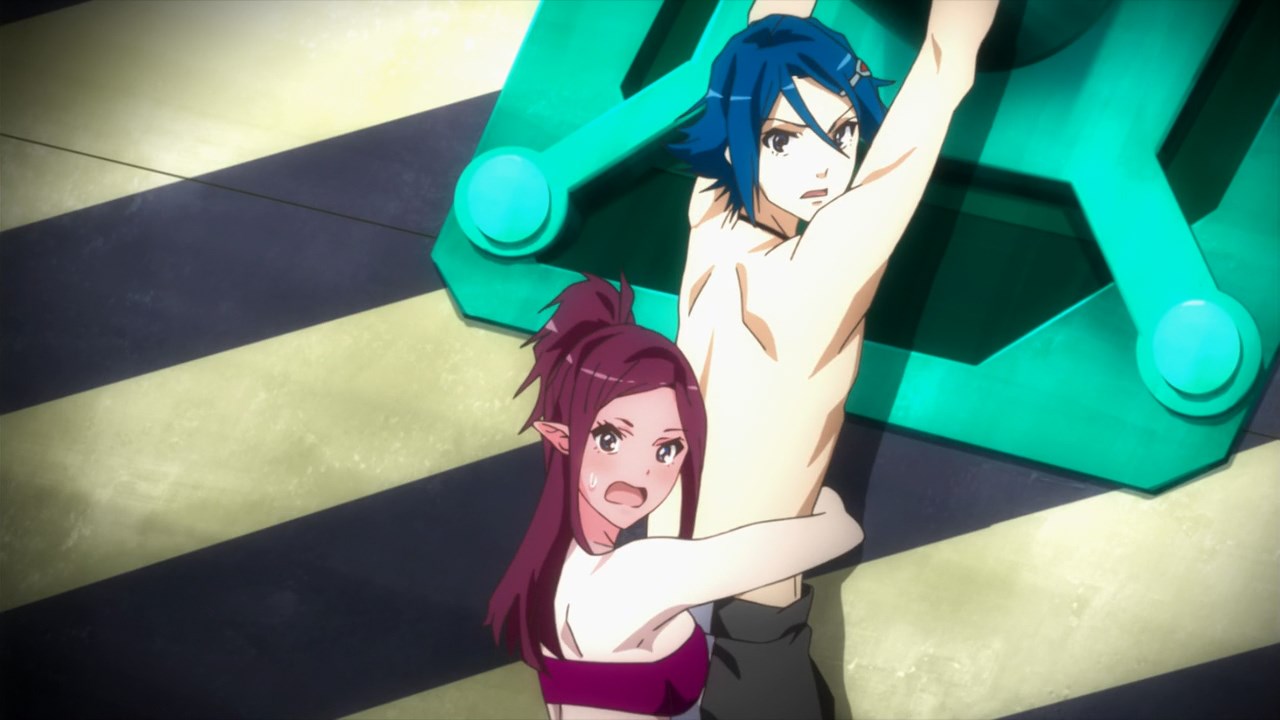
Certain songs get you naked in space.

Anyway, the show did spawn the now, usual movie (and there's another on the way, suggesting a new Walküre member), an excellent soundtrack and even with all the divisive fans, I still recommend watching it for both Macross and casual fans of good quality Animé. The only thing I didn't like it was how the love triangle was handled so weakly, and according to some websites Shoji Kawamori didn't want the story to feature a love triangle but pressure from producers pushed him to do so ultimately. The movie version is focused mainly on Walküre instead of the love triangle and the raging war. Maybe that's an indication of what went on behind the scenes. 

Overall, while not as appealing as Macross Frontier, Macross Delta is another interesting installment in the hopefully, ever-going franchise. Maybe it's about time Mr. Kawamori & Co, take Macross to new frontiers (no pun intended) where the formulaic scheme is no longer needed by viewers to realize they're watching a new Macross product. After 37 years of songs and transforming Mecha, we could use some fresh air. Macross Delta tried, but according to some, (not me) it didn't try hard enough.

Here's the 1st opening:


Here's the 2nd opening:


Here's the 1st ending:


Here's the 2nd ending:


Walküre live 2018:


Mikumo & Freiyja in the studio:


Japan Expo 2017 featuring Macross music from different decades as "performed" by cosplayers:


 Walküre backstage:


May 15, 2019

マクロスF(フロンティア)/ Macross Frontier

Idols & space robots return!
A few days ago in the magical world of Japan, NHK (Japan's national public broadcasting organization) celebrated the "Ultimate Macross Poll", a feast like no other for Macross fans. The celebration included the participation of Macross celebrities, creators (Shoji Kawamori, the God himself) and if you want to know more about it, you can totally open this link were educated people compiled every bit of information and translated it to English right here. Now, what does this have to do with today's entry? EVERYTHING!! マクロスF (フロンティア) was voted as the number 1 all time Macross Animé!

Taking place 47 years (story-wise) after the original series, Super Dimension Fortress Macross, Macross Frontier is everything old & new fans can expect from a franchise that has proven time after time, to be larger than life!


New Valkyries!
New idols!
Background

Macross Frontier is the twelfth installment (yes, twelfth!)* in the space opera franchise, with Macross Zero being the previous OVA series and Macross Delta being the latest entry in the saga to date.

The macross chronology (not including Manga, novels, video-games and musicals) is as follows:


  1. Super Dimension Fortress Macross (1982)
  2. Macross: Do You Remember Love? (1984)
  3. Macross: Flashback 2012 (1987)
  4. Macross II: Lovers Again (1992)
  5. Macross Plus (1994)
  6. Macross 7 (1994)
  7. Macross Plus Movie Edition (1995)
  8. Macross 7 The Movie: The Galaxy Is Calling Me! (1995)
  9. Macross 7: Encore (1995)
  10. Macross Dynamite 7 (1997)
  11. Macross Zero (2002)
  12. Macross Frontier (2007)
  13. Macross Frontier The Movie: The False Songstress (2009)
  14. Macross Frontier: The Wings Of Good-Bye (2011)
  15. Macross FB 7: Ore No Uta O Kike! (2012)
  16. Macross Delta (2016)

*While Macross F is the 12th official release in the franchise, it's the actual third Macross series, so in terms of story continuity it'd be the direct sequel of the Macross 7 series made in 1994.

Written and directed by Shoji Kawamori & Yasuhito Kikushi, the third full series entry in the popular Macross franchise, which aired in Japan from April 3, 2008 to September 24, 2008. The series began airing during Macross' 25th anniversary and has proven immensely popular (its Blu-ray release was the single best selling HD release in the entire Japanese marketplace in 2008, and one of its soundtracks sold as many in its first week as a Neon Genesis Evangelion soundtrack - a decade-old record). It even spawned two movies.
 
Zentradi boobs.
Very large micronian boobs.
The story is set in 2059 aboard (and in the space surrounding) the titular Macross Frontier, one of the many colonization fleets heading from Earth towards the centre of the galaxy in search of a new home to settle. However, Frontier's mission is suddenly disrupted when it comes under attack from a bug-like alien race known as the "Vajra".
 
There are three main characters: Alto Saotome, an ex-kabuki actor turned pilot who feels oppressed by the domed skies of Macross Frontier but also an obligation to protect them; Ranka Lee, a spunky young girl with a severe case of post-traumatic stress disorder and a dream of becoming an Idol Singer; and Sheryl Nome, a popular and headstrong Idol Singer from the neighbouring Macross Galaxy fleet who is known as "The Galactic Fairy".

Friends will be friends.
Brunch, Macross style!
The stories of these three intertwine amidst the Vajra attacks on the Macross Frontier, slowly revealing dark conspiracies that seem destined to determine which direction mankind will move forward into the stars.

A movie version was announced at the airing of the last episode of the series. It was initially expected that it would largely be a clip show of the series with some new scenes, similar to Macross Plus, but as the project developed it eventually became more of an Alternate Continuity retelling that was split into two movies. The first, The False Songstress, was released in November 2009 and covers the range of episodes 1-7 in the series, including numerous new and altered scenes as well as several new songs. Some scenes were altered quite drastically. For instance, Sheryl Nome's fall during her first concert in episode one was caused by Alto accidentally knocking her off during a stunt, while in The Movie she jumps off the stage by her own free will. The second movie, The Wings of Goodbye, was released on February 26, 2011 which resolves the Love Triangle that has hounded the show since the first episode.

With the release of the TV series, several PSP and PS3 games were released consisting of Ace, Ultimate and Triangle Frontier. Trial and Last Frontier were bundled with the two movies when they released to the public, and a PS3 crossover game (done in the style of the PSP games), Macross 30: The Voice that Connects the Galaxy was released in February 2013. A few mangas/light novels/drama CDs were also released, contributing to the storyline of the show.
The Macross 7 crossover movie, Macross FB7: Listen to My Song!, premiered October 20, 2012 and is set in the middle of the TV series.

Sheryl Nome and her hope & dreams.
You must feel the music flow.
Due to a current legal dispute over the distribution rights of the Macross franchise, involving Studio Nue and Big West against Harmony Gold, much of the Macross merchandise post 1999, including Macross Frontier, has not received an international release. However, there are still ways to get your hands on official DVD/Blu-ray sets from the Macross franchise. The only problem, is shipping is a bitch, and you need to know Japanese in order to understand what's going on because there are neither English dubs nor subtitles available in the Japanese official editions. 

Unfortunately, for the Harmony Gold corporate greedy pigs, Macross is really big outside Japan, and fans around the globe, have always found ways to watch every new entry in the saga, and hopefully by 2021 Harmony Gold finally loses the outside-Japan-merchandising-rights to Macross, and finally, fans will move on from black market fan-subbed copies, to official merchandise from once and for all.

Review

Macross F isn’t merely another sci-fi space opera. Despite incorporating just about every anime cliché in the book (some of them established by the original series) Macross Frontier manages to create something that is simultaneously the maximum fulfillment of its genre’s capacity and also the complete and utter subversion of its viewer’s expectations. It’s been hailed as 'the SDF-Macross of the 21st Century', and there’s no doubt about that; even for viewers unfamiliar with the original Macross series, Macross F plays as a standalone series of its own. Moreover, it manages to explain the origin of its world in a single episode by re-telling the Macross Zero story. Years earlier, Macross 7 did the same thing while explaining the events that took place in the Macross: Do You Remember Love? movie. A clever move that was masterfully reprised on Macross F as to allow new fans to understand what makes music & technology so relevant to warfare matters.

The directing is a combination of what made SDF Macross a classic and updated techniques that take advantage of the new animation technologies available. The signature tracking shots of dog-fighters have been given extraordinary retrofits with wonderful CGI integration, and immediately call to any Macross fan’s mind the meticulously drawn epic battles of the original series and its companion film, yet they still manage to remain largely unique. This lies in the masterful art direction and consistently top-notch quality found throughout the whole series, giving the impression of absolute relevancy yet remaining “Macross” enough to justify just enough nostalgia to appeal to any fan.


Ranka Lee, the new rising star.
Oops! no undies!
Macross has always being popular for featuring some of the coolest songs in Animé history, and while old school fans like you and I, may find it a bit hard to get used to the 'new sounds of Japanese animation' Macross F's soundtrack is easily one of the series’ highlights. The ballads from the original series, and the alternative rock from Macross 7 have been somehow merged and updated into a more J-Pop/K-Pop feel that may not be every old school fan's cup of tea, but believe you me, there is a high quality product here. Yoko Kanno provides the perfect musical accompaniment to the lovely vocals of Megumi Nakajima and May Nakabayashi. The climax of the whole show provides one of the most interesting medley collages of music I’ve ever encountered, and pretty much reestablishes (or at least adds credence to) Yoko Kanno’s position as one of the greatest soundtrack composers of all time.

"1st Anime Album in 11 Years to Rank in Japan's Top 3"

"Two Macross Frontier Singles in Japan's Weekly Top 10"

"All four of the Macross Frontier singles that have been released have debuted at #5 or higher."

How does that sound for starter? The Macross series were largely famous for its music as they all played an integral part in every single Macross title. However, one can say Macross Frontier have taken the anime song industry to a whole new golden era! Both the singer and seiyu responsible for singing the second OP won awards for their fabulous works.


Pick your favorite idol.
Music & space fights: Classic Macross!
And then there’s the story. Classic Macross! We have a group of daring Valkyrie pilots, transforming space fortresses, not one, but two singers that have the ability to disturb the enemy while the fight is taking place. We also have the classic love triangle figure, an mysterious alien race that wants mankind dead, and a lot of interesting characters that play key roles as the series reaches its climax. Oh! boobs! we have boobs! Moderate fanservice, but yes, there is a little here and there.

Its seemingly simplistic plot allows for character development (at least the main characters) in leaps and bounds, to the point that just about every character in the series is fleshed out enough to be a well-rounded and three-dimensional device. Despite this, Macross Frontier remains a heavily plot-driven show, as much of the conflict created between the characters—masterfully handled as it is—remains largely unresolved through interactions and relies on plot-driven consequences in order to keep the whole narrative flowing. At times this peeks through as a detriment, but for the most part the show manages to balance itself out. To its credit, it never fully lapses into ungrounded melodrama and angst in order to illustrate character interaction, and seems to be acutely aware of the fine line between well-executed drama and baseless moaning. In compensation for its shortcomings with overall character drive, the plot takes advantage of allegory and an abundant use of vague foreshadowing to create an ever-shifting storyline that never really has a chance to congeal into a set routine. 


a familiar view.
Alto Saotome,  our hero.
Now, let's take a look at the main characters:

Alto Saotome

Alto's a high school student in the Mihoshi Academy, studying its "Pilot Training" course. As a result of his fine, feminine features and long, blue hair, he's often mistaken for a girl at first glance, even receiving the In-Series Nickname "Hime" (Princess). Otherwise, Alto's your Ordinary High-School Student, though somewhat aloof and standoff-ish. Born into a well-known Kabuki family, his persistent yearning for the skies has made a thorny relationship with his father Ranzou Saotome. He constantly frets having to live aboard the Macross Frontier fleet, due to the lack of a "true sky". After getting the chance to pilot a VF-25 Messiah variable fighter (due to its original pilot, Henry Gilliam, being killed by a Vajra space mecha-drone) and seeing the destruction brought upon by the Vajra, he makes it a point to serve the S.M.S., a private military corporation, to protect those around him and fulfill his dreams of taking to the skies. Under the designation "Skull-4", Alto serves under Major Ozma Lee of the S.M.S. Skull Squadron.

Throughout the series, Alto balances both school and military life, being called into service when the Vajra attack. He also develops emotional bonds with Ranka Lee, a young girl who aspires to be a singer and shares Alto's similar drive to achieve his dreams, and Sheryl Nome, the Idol Singer from the Macross Galaxy fleet.

Ranka Lee

One of two female protagonists, Ranka's a petite, lively and cheerful (although naive) teenage girl with green hair and one-quarter Zentradi, which gives her a unique ability to have her hair move on its own according to her feelings, including an above-average resistance to the vacuum of space. Ranka suffers a mild form of amnesia due to having witnessed the destruction of the 117th Long Distance Research Fleet where her biological family perished. As the adopted younger sister of Ozma Lee, she initially attends an all-girl's high school at the urging of her brother while working part-time at the Chinese restaurant "Nyan-Nyan", but later transfers to Mihoshi Academy to facilitate her singing career after being discovered at the Miss Macross Contest and an ensuing movie. Ranka started off as a huge fan of Sheryl Nome as she loved singing since her childhood and had dreamt of becoming a singer. She develops a crush on Alto, especially after being rescued by him when the Vajra first attacked the Macross Frontier fleet.

Idol panties are a galactic collectible.
"Is it true you saw Sheryl naked?".
Sheryl Nome

The second of two female protagonists, Sheryl's known as the "Galactic Fairy", a pop idol from the Macross Galaxy fleet who constantly topped the music charts, leading people to say it was impossible not to hear her songs if you lived in the Milky Way. Her popularity was soaring just as high in the Galaxy's sister fleet, Macross Frontier. Due to her beauty and singing talent, she's a very proud and self-assured person. Sheryl recognizes the singing talent of Ranka and often offers to help her "behind the scenes" to realize her dream. Sheryl's first encounter with Alto was when he served as a backup stunt performer at her first concert in the Frontier, leading her into the series' archtypical Love Triangle.


Now, the secondary characters, are what some reviewers have called as the major weakness Macross F has. Mostly due to a lack of development in their personalities. Allegedly, these characters "don't grow" enough by the end of the series. Moreover, some people have called Alto Saotome, the weakest main character of the series, as he seems to behave the same throughout the whole series, while Ranka & Sheryl clearly change their personalities, due to the issues they face. Fair?, Unfair? You decide. I for one, think the series features a fair amount of secondary characters serving a purpose, while avoiding to stay one-dimensional. You can't deny how relevant Ozma Lee is to the series! Moreover, Mikhail Blanc & Klan Klein's love story is hilarious!. Catherine Glass is the updated version of Claudia La Salle & Misa Hayase! How can't you not find that good enough! (psst, there's a love triangle going on there too), and let's not forget about Grace O'Connor and the mysterious Brera Stern, both characters very relevant to the story so I'll leave their story for you to find out.

But what about that lame ending? 

To a lot of Animé fans, the ending of the series felt incomplete as Alto never made a choice between Ranka & Sheryl. Fan theories, fake interviews, and fake info all over the web may or may have not influenced producers to offer a clear ending in the Macross F: The Wings of Good-Bye movie. If you ask me, and considering I'm an old fart, since I became a "fully functional adult" years ago, I sorta stopped enjoying the romantic stories offered in most Animé because they simply felt 'too childish' for me to actually relate to them. Honestly, I feel there are a lot of interesting things happening on this Animé besides who's Alto going to put a ring on it. However, if you're interested, I'd say he clearly chose to keep on flying, and to my limited understanding, he chose that over the two girls. Obviously, the second movie settles it very clearly. If I was Alto, I'd choose Sheryl simply because she's an adult woman!.

Are you talking to me?
Massive space battles!

Overall, Macross Frontier is a series that will have both new & old fans of the franchise craving for more as soon as the 25 episodes are over. 25 episodes because the series was made for the 25th Anniversary of Macross! Be sure to watch the series and find a lot of extra number 25 related themes, like Ranka being a quarter Zentradi and more! What are you waiting for? go watch it now!


Here's opening 1:


Here's opening 2:


Episode 17's special opening:


Here's Ending 1:


The ending featuring the "Aimo" song:


 Ending 3:


The Blu-Ray reissue ad:


The PS3 Blu-Ray box trailer:


Macross Frontier Galaxy Tour:


Oct 6, 2018

超時空要塞マクロス / Super Dimension(al) Fortress Macross

Blu Ray box cover art.
The industry of Anime started very differently as to what it is today. For every piece of Anime that wanted to expand outside Japan, international production companies would buy the series and made every change they felt was necessary to appeal to the western audiences. Character name changes, soundtrack changes, cut scenes, cut characters, story line changes and even linking one series with another randomly was how most of the original western Animé fans started. That is, people in their late 30's, and 40's going 50's.  Why Am I bringing this up? Because today's review is about one of the most popular series outside Japan that also suffered from that old practice. Enter, Super Dimensional Fortress Macross!

Aired from Oct 3, 1982 to Jun 26, 1983 (just two years after the end of Mobile Suit Gundam, a show which defined the mecha/space genre in anime) Macross takes the 'humans attacked and on the run in a super ship' template and blazes forward a new path of its own.

Directed by Noburo Ishiguro with the script from Hiroyuki Oshiyama, and episode direction by Fumihiko Takayama & Katsuhito Akiyama, SDF Macross opens right after
a mysterious spaceship crashes into Earth, Making humanity realize that they are not alone anymore. Fearing a potential threat from space, the world pushes aside their nationalism, conflicting interests, and cultural differences, unifying under the banner of the United Nations. The newly formed UN forces decide to repurpose the alien spacecraft, naming it SDF-1 Macross. Unfortunately, on the day of its maiden voyage, a fleet of spaceships belonging to a race of aliens known as Zentradi descend upon Earth, and the SDF-1 Macross, acting of its own accord, shoots down the incoming squadron, sparking an intergalactic war.

This is how Macross was originally promoted.
A show like no other.
The show's production history was a turbulent one: Originally proposed in 1979 after the success of Gundam, the show was sponsored by a group called the "Wiz" corporation, who were prepared to fund a 48-episode run. However, by 1981, Wiz had gone out of business, and the Macross seemed to be in permanent hiatus. Big West, an advertising agency looking to branch out into animation sponsorship, approached Studio Nue about the project, and sponsored it. However, they insisted on a leaner budget, not convinced that the show would pan out as profitable. Big West pared the episode count to 23 episodes (meaning the show would have ended with the battle against Bodolza). Even then, Big West found that the show was going to run more expensive than they had bargained for, and to secure more money, entered into a partnership with Tatsunoko Productions which included international distribution (hence "Robotech" (1985)). When Macross debuted in October, 1982, the stunning success convinced Big West to green light an extension to 36 episodes, allowing the staff to end with the "two years after" story arc. 

The series title uses the name of the main spacecraft (which is usually shortened to SDF-1 Macross as it is Earth's first Super Dimension Fortress). The original name for the Macross project was Battle City Megaload (or Battle City Megaroad, as the Japanese transliteration to either ⟨l⟩ or ⟨r⟩ gives the title a double meaning in reference to the story line: Megaload, referring to the spacecraft containing an entire city of people; and Megaroad, referring to the long journey through space back to Earth). However, the director of Big West, one of the later sponsors of the project, was a fan of Shakespeare and wanted the series and the spacecraft to be named Macbeth (Makubesu (マクベス)). A compromise was made with the title Macross (Makurosu (マクロス)) due to its similar pronunciation to Macbeth in Japanese and because it still contained connotations to the original title. The word Macross also comes from a wordplay combination of the prefix "macro" in reference to its massive size (though when compared with the alien ships in the series, it is only a relatively small capital ship) and the distance they must cross.

The VF-1J, my personal favorite valkyrie.
What does the self-destruct button do?
The other side of the story is the fact that most western audiences got the first glimpse of the Anime as "The Macross Saga", the first part/generation of Harmony Gold's Robotech in 1985. Although it wasn't heavily edited as to be unrecognizable from the original source, the American version, changed names, music, the plot partially and cut most of the graphic violence scenes and those giving hints to the viewers that this new sensational series was somebody else's work. Obviously, the American version was a huge hit, and unintentionally allowed fans to get their hands on VHS tapes from the original series plus the fantastic movie version "Macross: Do You Remember Love?"which we will review right after this post is ready to be online. Also, Macross is the first series in the "Super Dimension" saga that also includes Super Dimension Century Orguss & Super Dimension Cavalry Southern Cross. Both released in 1983 & 1984 respectively.

In North America, it was prevented from being released properly for a very long time because Harmony Gold wanted only Robotech to be available. For some time, Harmony Gold continued to block efforts to bring anything Macross-related to North America and was happy to file lawsuits against anything that even looked like it such as BattleTech, directly contradicting decisions made in Japanese legal courts. However Streamline Pictures and AnimEigo were able to release subtitled editions of the series to VHS and DVD in North America, as well as Madman in Australia, and ADV Films produced an uncut English dub in the early 2000s. These releases are now out-of-print though. In 2014, Harmony Gold themselves (alongside partners A&E and Lionsgate) released Vol. 1 of a new DVD series featuring unedited Macross episodes (in Japanese and English) alongside the Robotech versions. However, this was a manufacture-on-demand release and Vol. 2 has yet to be solicited. In 2016, the series, in subbed form, was released on Amazon Prime Video.

Personally, I grew up as a huge Robotech fan (I'm still a fan), and I even co-admin the facebook "Robotech Freedom" group, but as time goes by, it keeps on being harder for me to watch Robotech knowing everything Macross means to the world of Animé fans and seeing in disgust how Harmony Gold has made it really hard for us to access the many sequels this franchise now has.

Keep 'em flyin'!
There's always time for enjoying a little rain.
But, what is Macross about?

In an attempt to escape, the Macross tries to launch itself into the Moon's orbit, but the ship—as well as the city was in—is teleported to the far reaches of space. Caught up in this mess are Hikaru Ichijo, a free-spirited acrobatic pilot, and Minmay Lynn, an aspiring idol. These two, alongside Misa Hayase and the remaining Macross' crew & civilians, experience an epic journey rife with grief and drama, coming face-to-face with the cruelties of war along the way...

Macross is filled with amazing action sequences. Amazing simply, for the year it was aired in, the effort and skill of the animators to bring us visually excellent setpieces, featuring awesome-but-underused-in-anime fighter jets, is admirable indeed. The major highlight I can think of, is an early scene involving Hikaru's falling VF racing to catch up with a falling Minmay, the camera revolving around the pair seamlessly. The scene, being from the first episode, is indicative of the ambition of the show.

While Gundam has a more childish drive (the one with the more power wins) Macross on the other hand, is about love. The quintessential emotion that can bring peoples of all race, color and creed together. Of course these anime are about other things too, but these aspects are at the core.

Macross focuses on other things that mecha fans will have missed in Gundam, such as the affect of media and celebrity in wartime, the clash of two different cultures, and as mentioned before, the society that exists within a ship on the run.

Hikaru Ichijo.
Misa Hayase by Waeba Yuusee.
Macross is probably more famous now for its music than its war hijinks, and this first series shows that it was all part of the master plan from the beginning rather than something that evolved later on in other parts of the franchise. The character of Lynn Minmay will probably annoy most viewers with her witless selfish ways, but she is the epitome of a teen idol and acts like one. Her cousin Kaifun is the one most deserving of your unbridled hatred, one of the biggest scumbags in all of anime! But anyway, back to Minmay. The role she plays in the story is important despite her ditzy manner, and alongside Hikaru, a main character in a mecha show who is more average and easier to relate to than most others.

Amazingly enough Hikaru is not the best pilot in the story either, and neither is one of the manliest characters in the anime medium: Roy Focker. A man who lives up to his name, let’s just leave it at that. Genre stereotypes are subtly subverted in Macross. For example there’s a staple bespectacled ace character, Maximilian Genius, but he's not a cliché, he’s not unapproachable and coldly analytical. He actually has a normal personality and is even a hit with the ladies. Macross characters are a genuine treat, much like everything else with this show, always keeping you on your toes. And a disclaimer: half the cast aren't killed off in the last episode, how refreshing! Not only do characters unexpectedly die in this show, they unexpectedly live too!

Blu-Ray exclusive artwork.
Whenever you see good Macross art, you know it's not Robotech.
You don't wanna mess with Focker!
What is great about Macross is that it doesn’t heap misery on its characters constantly, but when it does, the characters move on quickly. It never feels like a copout, they're still affected by the changes around them, whenever comrades die for example, but we're thankfully spared five episodes of them moping around like stroppy teens.

Instead we get a ship populated by a rather young and inexperienced group of women who belong more on a training school than the most important part of a warship. These women gossip away and yell out "yada!" when things don’t go their way. At one point the ship gets a new barrier system, called Pinpoint Barrier and it consists of a room somewhere in the ship operated by a couple women who have to roll balls (a nod to some Atari videogames?) around their table in order to move a mobile barrier around the ship's exterior to absorb enemy attacks. Yes, it really is as ridiculous as it sounds, you can only laugh at the image of cute girls rolling balls furiously in the middle of an attack, yelling "yada!"

Macross is entertainment through and through. It's not going for weighty philosophy, but at the same time, it decorates its carefree nature with worthy topics and doesn’t so much explore them as it acknowledges them. Midway through the show displays the ugliness of politics, discrimination and the sacrifices that must be made rears its head leading to dramatic, yet ultimately always uplifting stuff.

Bodolza, the son of a bitch.
Excedol, the Zentraedi advisor.
Lord Kamzin.
The love triangle between Hikaru, Minmay and officer Misa Hayase heats up by the second arc (from episode 28 to 36) and leads to an excellent climax, and it’s all the more beautiful because the anime doesn’t manipulate you into rooting for one person by making the other a complete bitch, you can see why Hikaru would want to be with either of them. However, the series doesn't take itself too seriously, and there are plenty of moments where laughter & fun take the lead, even in the most unexpected times. For instance, when the crew of the Macross try to use the antigravity generators to lift off. Except it turns out that someone failed to properly secure the things, which leads to a hilarious scene of the gravity generators ripping through the bulkheads and flying off into the sky on their own, or when The Zentraedi intercept Minmei's kung fu movie Shao Pai Long, and, naturally mistake it for combat records. One of the scenes shows Kaifun killing a giant with a Ki Attack, which completely freaks Breetai and Exedol out. Not to mention Kamjin's very first scene. Right after Breetai informed us that he had called him as reinforcement due his competence and Exedore cried in horror due his Blood Knight tendencies, Kamjin's squadron arrives, accidentally rams some of Breetai's ships (including his flagship!), and then, as he reports for duty, Kamjin's aide demands he pays their bet on what unit would get more ships hit in the ramming. And let's not forget the classic "old lady" line Hikaru tosses at the very first episode of the series.

SDF Macross also features some moments that still require explanation:

Where does the "If mice could swim..." poem comes from, or who wrote it? Well, if you look close enough (screencap below) you'll see a piece of the poem, and while not in the picture here, the Animation cel features an ISBN code (ISBN0 905478 509) from an actual book! "If Mice Could Fly" by John Cameron, a children book whose relation to Macross I have no idea. Maybe it was an inside joke of the animators, a random occurrence, or a dark nod to something Macross fans have still yet to discover. I promise I'll ask some of the most educated Macross fans I can go to and update this review with an answer.

At least the book is real, and you can order it here.

In episode 9 Lynn orders Irish coffee. Why does no one bat an eye at a young teen ordering a cocktail? or is it a thing from the future we still haven't quite comprehended? 

Did Roy grossly miscalculate the seriousness of his injuries and thus caused his own death, or did he correctly assess that his time was almost up and deliberately choose to hide the gravity of his injuries so he could see Claudia one last time?

In episode 18, Hikaru was not only assigned Roy's Valkyrie, but command of Skull Squadron. Why was he not promoted to major then and there? Or was it death a quicker promoting means in the U.N. Spacy?

If the residents of South Ataria Island could just reconstruct their entire city—down to the buildings, parks, and streets—inside of Macross and fit thousands of people comfortably inside, why didn't they just build the city (or at least the shelters) in there to begin with?


Weird poem from the "Bye Bye Mars" episode.


Macross features a set of strong women in charge of the fortress.

The art and animation is pretty cool thanks to the creator Shoji Kawamori. This guy is just the man and a well respectable name in the world of robot anime. I wouldn't say the animation was years ahead of its time, but it still stood out. The design of the Macross is very deep and complex and captivating. It had a great sense of size and the way they showed camera angles of it made you wonder how big it was and it was amazing that it was supposed to be the size of a city. 

Although the series is about "love in the times of war"(paraphrasing maestro Kawamori) , there is plenty of room to develop the stories of secondary characters rather than focusing all attention on the Hikaru/Minmay/Misa love triangle. As a matter of fact, we even get an interesting dose of explaining why the bad guys do what they do, the way they do it. Both the Zentraedi & Meltrandi were originally together living in a long gone society that is somehow mirrored by that of the human society. While these aliens, apparently only live for warfare purposes, as the series approaches his first story arc climax, we discover they're actually more human than we think, and that some of them are willing to go against the big Bodolza to stand for the protection of "protoculture" and the human kind. 

Secondary characters prove to be quite necessary throughout the series. For instance, Maximillian Genius is not just the best pilot that keeps on giving, but also the first human to connect emotionally with Milia Fallyna, the enemy's very own ace pilot. Their marriage opens the door to negotiations between the two factions as they discover they may have more similarities than they think. Other characters play similar relevant roles, like Claudia LaSalle that becomes the advisor Misa would go to whenever she was in trouble due to Hikaru's indecision. Moreover, Roy Focker short run, proves to be empowering enough to help Hikaru become a military pilot and uplift the spirits of most of the SDF crew. His death was certainly a low blow. However, as above mentioned, the series doesn't take itself too seriously and comic relief characters are also abundant in both factions (Hayao Kakisaki, Vanessa, Kim, Shammi, Warera, Rori & Konda). Macross also features one of the earliest troll characters in existence, Lynn Minmay's cousin Kayfun.

 
Milia Fallyna, the beauty of the enemy.
The future of Macross.

Seeing how many characters are involved in the Macross series, this is a huge leap for the Space Opera genre, where the one dimensional characters plus villain of the day formula was the norm for years. How many super robot animé
featured a reckless hero that had to yell some gratuitous English phrase to form and/or transform into a robot? How many of them had actual love affairs? How many convinced the enemy to join their side? How many died and truly meant something for other characters? How many showed that war was actually a horrible thing to go through? How many characters were shaped by sad personal experiences? Macross had it all. Macross has it all.

Why was Misa so obsessed with duty and nothing else? Well, probably because Misa's found out her first love and victorious childhood Friend Riber's died in mars. When Misa finds out what happened to Riber, the poor woman emotionally collapses and Hikaru has to pretty much pull her away by force!.

 
Wait until the after credits scene Hikaru!
The first volume of a legendary soundtrack.


The music is obviously awesome, and I'm not even talking about Minmay's pop ditties, but the actual score soundtrack is very memorable and funky. Kentaro Haneda's work as composer is well known in the Anime industry, but as far as Macross territory is concerned he provided enough music for four volumes, plus the DYRL soundtrack and a couple of extra releases. Most of the albums are somehow easy to find with today's Vinyl craze. Now, Lynn Minmay songs are also very good, because the talented voice of Mari Iijima, an actual singer, is just priceless! The good thing is that she still goes to conventions and sings timeless hits from time to time. Unfortunately, the "other" Minmay cannot say the same thing. Actress Reba West was rushed into the job and had both to act and sing with very little preparation. Hence, the awful singing and even uglier lip sync issues you'd see whenever she sang in Robotech.

What more can I say? As an 80's kids, being introduced to a brand new world of Anime that could actually take itself seriously and offer more human like drama, I was thrilled since day one. And that's the true magic Macross has to offer. As a kid you fell in love with the Mecha & action, as a teenager you related to characters struggling to grow up, and as an adult, you can only realize that even in hard times, there will be people to make you laugh, there will be people that will fight your battles, and ultimately, there will be love and friendship.


The following is the original Japanese air date of Macross in Japan. In addition, it has the Robotech adaptation titles for every episode. Notice how little the name differences are when comparing the original with Harmony Gold's version.

 
Original Japanese
Air Date
The Super Dimensional Fortress Macross
Episode
Robotech: The Macross Saga
Episode*
3 October 1982
1. Booby Trap (ブービー・トラップ Būbī Torappu)
1. Boobytrap
10 October 1982
2. Countdown (カウント・ダウン Kaunto Daun)
2. Countdown
17 October 1982
3. Space Fold (スペース・フォールド Supēsu Fōrudo)
3. Space Fold
24 October 1982
4. Lynn Minmay (リン・ミンメイ Rin Minmei)
4. The Long Wait
31 October 1982
5. Transformation (トランス・フォーメーション Toransu Fōmēshon)
5. Transformation
14 November 1982
6. Daedalus Attack (ダイダロス・アタック Daidarosu Atakku)
6. Blitzkrieg
21 November 1982
7. Bye Bye Mars (バイバイ・マルス Baibai Marusu)
7. Bye-Bye Mars
28 November 1982
8. Longest Birthday (ロンゲスト・バースデー Rongesuto Bāsudē)
8. Sweet Sixteen
5 December 1982
9. Miss Macross (ミス・マクロス Misu Makurosu)
9. Miss Macross
12 December 1982
10. Blind Game (ブラインド・ゲーム Buraindo Gēmu)
10. Blind Game
19 December 1982
11. First Contact (ファースト・コンタクト Fāsuto Kontakuto)
11. First Contact
26 December 1982
12. Big Escape (ビッグ・エスケープ Biggu Esukēpu)
12. The Big Escape
9 January 1983
13. Blue Wind (ブルー・ウインド Burū Uindo)
13. Blue Wind
16 January 1983
14. Global Report (グローバル・レポート Gurōbaru Repōto)
14. Gloval's Report
23 January 1983
15. Chinatown (チャイナ・タウン Chaina Taun)
15. Homecoming
30 January 1983
16. Kung Fu Dandy (カンフー・ダンディ Kanfū Dandi)
16. Battle Cry
13 February 1983
17. Phantasm (ファンタズム Fantazumu)
17. Phantasm
20 February 1983
18. Pineapple Salad (パイン・サラダ Pain Sarada)
18. Farewell, Big Brother
27 February 1983
19. Burst Point (バースト・ポイント Bāsuto Pointo)
19. Bursting Point
6 March 1983
20. Paradise Lost (パラダイス・ロスト Paradaisu Rosuto)
20. Paradise Lost
13 March 1983
21. Micro Cosmos (ミクロ・コスモス Mikuro Kosumosu)
21. A New Dawn
20 March 1983
22. Love Concert (ラブ・コンサート Rabu Konsāto)
22. Battle Hymn
27 March 1983
23. Drop Out (ドロップ・アウト Doroppu Auto)
23. Reckless
3 April 1983
24. Good-bye Girl (グッバイ・ガール Gubbai Gāru)
24. Showdown
10 April 1983
25. Virgin Road (バージン・ロード Bājin Rōdo)
25. Wedding Bells
17 April 1983
26. Messenger (メッセンジャー Messenjā)
26. The Messenger
24 April 1983
27. Love Flows By (愛は流れる Ai wa Nagareru)
27. Force of Arms
1 May 1983
28. Myon  Album (マイ・アルバム Mai Arubamu)
28. Reconstruction Blues
8 May 1983
29. Lonely Song (ロンリー・ソング Ronrī Songu)
29. The Robotech Masters
15 May 1983
30. Viva Maria (ビバ・マリア Biba Maria)
30. Viva Miriya
22 May 1983
31. Satan Dolls (サタン・ドール Satan Dōru)
31. Khyron's Revenge
29 May 1983
32. Broken Heart (ブロークン・ハート Burōkun Hāto)
32. Broken Heart
5 June 1983
33. Rainy Night (レイニー・ナイト Reinī Naito)
33. A Rainy Night
12 June 1983
34. Private Time (プライベート・タイム Puraibēto Taimu)
34. Private Time
19 June 1983
35. Romanesque (ロマネスク Romanesuku)
35. Season's Greetings
26 June 1983
36. Farewell To Tenderness (やさしさサヨナラ Yasashisa Sayonara)
36. To the Stars


*Robotech premiered on March, 4th, 1985.


Now, why haven't I talked about that "recently restored/remastered newly animated Macross/Robotech opening and/or teaser"? Simply because there is no such thing. All the material ignorant Youtubers are referring to as "new" is what's inside the Macross Pachinko game. 

Don't believe me?

Here's a quick video about the Pachinko game:


Moreover, here's the official Pachinko promo video:


Another Pachinko game video with most of the scenes some idiots have uploaded as being new Macross/Robotech material:


If you'd like to expand your Macross experience to an episode by episode detail, you can visit Gubaba's Blog The Great Macross Rewatch. a very detailed work highlighting the obscure and relevant moments each episode had. This man is also doing a The Great Orguss Rewatch in case you're into the other super dimension series.


Now, if you're interested in buying the SDF Macross Blu ray set, I'm afraid is out of print. The original price in US currency was around $350,99. E-Bay has a lot of bootleg editions for cheaper prices but not the real thing.


Last but not least, the video section of Today's review:


Here's the opening:


Here's the ending:


A very old Valkyrie ad:


A compilation of TV ads from their cool toys:


Macross Fever videogame ad:


The weird Korean Space Gundam V bootleg Anime from 1983:


Stay tuned, for next time Sleazy Pictures Muggy Archive will continue to review some of the greatest Anime and OVA of all time, plus obscure gems that need to be rediscovered by new and old fans of the genre.


Until then, Yak! Deculture!