Showing posts with label Manimé. Show all posts

Dec 7, 2022

Violence Jack

A man of action.


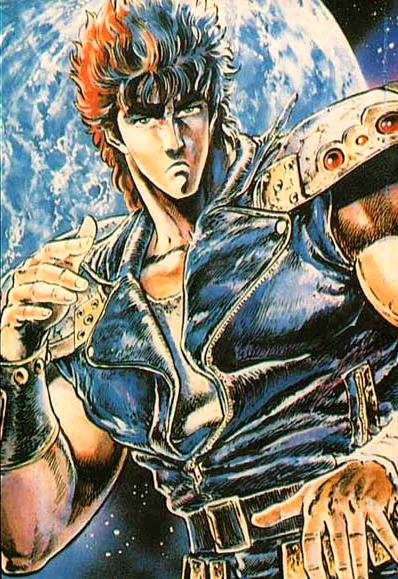
Now that the end of the year festivities are around the corner, nothing screams family entertainment like バイオレンスジャック , AKA, Violence Jack. Today's entry is based upon a certain manga, co-written and co-illustrated by legend Go Nagai since 1973, all the way to 2008. Considering how long its run has been, it's quite obvious to agree this is the Manga responsible for creating the post-apocalyptic setting that became a genre of its own. It's funny though, because Hokuto No Ken , which came years later, is  usually deemed as the ultimate representation of Manimé and post nuclear war storytelling. Perhaps, making it less graphic and sexist, allowed Kenshiro to grow into the franchise it is today.

A set of sagas from the manga were adapted in three independent OVAs released in 1986, 1988 and 1990. These OVAs have been released in the USA, Italy, France, the UK, Australia, and New Zealand. In some of these countries, the contents of the OVAs have caused censorship issues, while in Australia the second OVA was banned altogether. If you’re familiar with Go Nagai you know that he's known for having eroticism and violence in many of his works. Besides that though, he did end up creating some influential and creative titles like Cutey Honey and Mazinger Z just to name two of his works.

A Hero has to smile sometimes.

Not good.


Anyway, this is an 80’s adult themed OVA and is known as one of the most grotesque, sadistic and cruel anime made in the 80s, and believe you me, there were many of those made in the 80s, and we have covered a few of them here in the past. As you can imagine, the story takes place in a grim post apocalyptic setting. after a massive earthquake (which in the OVAs was triggered by a Comet strike) dubbed 'The Great Kanto Hellquake'. Cut off from the rest of the world, the survivors of the disaster are divided between the strong and the weak, and the land becomes a haven for criminals and renegades from around the world. Violence Jack is uncovered among the rubble and demolished granite by the inhabitants of a ruined city, asking him to help the weak people and helping them destroy what, in most cases, are the strong groups commanded by killers and rapists (this is the story line of "Violence Jack: Evil Town"). In the three OVAs, Jack is requested to help different groups, such as the Zone A (later he ends up helping Zone C women) or a small town, as shown in "Hell's Wind". As for the manga, the stories change drastically, the first being the story of Violence Jack helping a group of female models in a tropical forest in Kanto by possessing a boy living in said forest in order to fight off a roving tribe of bandits. Although Jack maintains a ruthless facade, he often helps the weak, and expects nothing in return. However, Jack's unpredictable nature means that bystanders get injured or even killed on occasion as a consequence of his vicious fighting style.

Jack himself is some sort of Giant who always happens to be in the neighborhood during these attrocities. He's quite obviously very strong and he always sides with the weak, but it doesn’t seem like he really wants to. It just looks like he’s doing them a favor or something. Even though I guess he has some sense of justice in him. Besides that though, he’s just a bland heavy dude as far as the anime is concerned because we don’t even find out who he is, since this is an incomplete adaption of the source material. Besides, he doesn't talk much, so the mystery remains.

The rest of the characters are either just there to die and for you to feel sorry for, or completely evil and sadistic people you’re gonna hope to see die miserably. There’s not much else, really. Most of them don’t have any back-story (with an exception or two) and none of them are particularly focused on, or alive long enough to develop so there’s no point in talking about them much. 

This isn't your Saturday morning Jem.

Size matters.


But, who is Violence Jack?

He is a complete mystery to those who have encountered him. He is often described being 7 to 10 feet tall with the muscles of a gorilla, the fangs of a wolf, and having burning primordial eyes. The man called Violence Jack had his name given to him for his unpredictable, violent nature and for his signature weapon, a large foldout jack-knife that he conceals and sometimes brandishes whenever necessary.
Having appeared out of nowhere after the Great Kanto Hell Quake, Jack wanders throughout Kanto, often picking street fights with those he sees as a threat to Kanto. He often helps those who are weaker than him who are preyed upon by violent nomads and criminals who scour Kanto. Although Jack is described as human, he is often the focal point of strange phenomena that occurs in Kanto. Often when he is finished helping the weak, he will suddenly vanish without a trace of him ever actually being there.

Many of the towns he visits are often subjected to mysterious earthquakes that occur during or after his arrival. His presence alone sometimes incites those he is around to become violent and seek to attack him.
 
This isn't what it looks like.

While Jack is a man of a few words, he uses violence to solve problems caused by violence. After all, it's a futuristic world with no rules. If you want to go philosophical about it, Violence Jack is once again another Animé dealing with sexist culture and its grotesque results if left unsupervised. Everything you see in the three OVAs is seen from a sexist perspective where men are the leads, and women are mere diversions. While it's true the last chapter features a stronger woman seeking revenge, she still has to rely on a man to get the job done, and get humiliated by men in doing so. My point is, don't take it too seriously if you plan to watch it for the first time, or rewatch it after a long time. Most of these made for home videos were made in a time where it was cheap & profitable to make them. The shock value was intentionally added, to separate them from your usual Saturday morning cartoons. They wanted to get your attention. And they did. Now, if you insist on trying to find some value in Violence Jack, I'd say it pretty much describes how society has been for decades. 

This is how Violence Jack was promoted.

Shut up! you little shit!


Much like what we'd seen years before on the Fist Of The North Star animé.  Each OVA revolves around the aftermath of some disastrous event in Japan and as a result, the strong people take advantage of the situation and persecute the weak. And we (the audience) get to witness that, with all the Gory details. Sure, it involves themes like anarchy, lawlessness, corrupt politicians and policemen, and how some people might behave in such situations, their presence is merely to justify what comes next with all the damage they cause, and how only a mysterious over powered man can turn the tables and bring bloody violent, yet fair, revenge in favor of the weak and the abused.

Production values are somewhat good for its time. The soundtrack is a combination of what now has been dubbed as "City Pop" and some hard rock songs very much in the line of what was trending in Japan those days. but it’s quite creepy and fitting most of the time. Sound effects and seiyu acting are great examples of the decade where the OVAs were made, meaning they're great. The character designs aren’t very pretty and neither are the colors, but they are mostly detailed. Character and background animation are the standard for the genre. The three OVAs were released on Blu-ray Disc some time ago, and I highly recommend it. The HD work makes it look brand new, and it comes with a lot of supplemental material.

Kids love violence!

An eye stab?


Now let's got for  quick review of each episode:

Volume 1: Harlem Bomber (1986)- This one has an earthquake, after which, a man kidnaps women and turns them in to sex slaves in addition to going after our hero, Violence Jack. Did I mention that this is the tamer one of the three? Yep, at this point the violence seems pretty basic for an 80’s gore OVA. Besides nudity and sex, there’s nothing here you haven’t seen somewhere else. The story was both meh and also paced badly, it seems messy and rushed, although I'm sure some people might have liked it enough for the producers to continue with two extra volumes.
 
The story is basically about a wasteland ruled by bike gangs and a sociopath anti-hero that brutally kills them all. Jack is causing trouble for a gang called The Slum Lords and the boss is obsessed with killing Jack. One the gang's enforcers helps gather up young women to force into sexual slavery, but he suddenly grows a conscience when one of the girls is his ex-girlfriend. He tries to free the girl, but is caught by the boss of the Slum Lords. The boss will only let him go if he can, of course, kill Violence Jack. 
 
Violence Jack is here!

 
Volume 2: Evil Town (1988)- Now this is the story that made Violence Jack as infamous as it still is. After another natural disaster, people go underground and separate in to 3 groups. One group consists of people who just want to find a way to survive, another group has women only (from fear of getting raped) and the third is a group of vicious thugs lead by a transvestite and his Giant lover. As you can probably guess, this is the volume that gave Violence Jack the reputation it still has. Both men group are equally grotesque and perverted. While some women can defend themselves, they're outnumbered and most of them end up raped and dead. While there are worse graphic examples of this in other Animé, these scenes are unnecessarily long, not to mention the graphic violence that women and even children face on screen. 
 
Like the previous OVA, Evil Town excels at showing carnage and intestines. The blood and gore is far more realistic than most other old anime. People are actually filled with organs, guts, and bone fragments instead of just red paint. One thing I found hilarious was that the artist really loves to draw tits, but sucks at drawing them. The nipples are placed at random locations that seem to change in every shot. It would be easier to predict the exact location of an electron orbiting an atom (and its momentum) than predict where the nipple is going to show up next. At least Heisenberg would enjoy this anime, because it would give him the excuse to make another long math formula. If you didn't get that last joke...go take a physics course.
 
The future is evil.

 
Volume 3: Hell's Wind (1990)- It takes place in a peaceful town somewhere in the wastelands and its quickly attacked by a motorcycle gang. This one is basically like an average HnK episode. But wait, there’s actually a notable character in this one that has some background and a proper motivation (hurray!). The character is a muscular chick with scars on her face and body (she’s really hot btw, they rarely make anime chicks like this nowadays) and we witness her lover being torn to pieces in front of her in the beginning of the episode. As a result she’s out for revenge. Not as insane as Vol’ 2 but still very gruesome at points.
 
If you happen to live in a poorer and under-served portion of the wasteland, you get officer Jack as your defender. Unfortunately, Jack's response time is the worst. He will never get there in time to prevent a rape or a murder. However, he will at least brutally stab the assailants to death with his Jack Knife. Sure he always stops to get that cheeseburger rather than getting to the crime scene on time, but at least he only kills criminals that committed a serious crime. Every person that Jack kills is armed at the time he kills them. Jack doesn't kill petty criminals who run in fear of his manly sideburns by lazily shooting them because he doesn't feel like giving chase, or breaking their cervical spines. Jack would never accidentally choke a man to death for selling loose cigarettes on the street because he wanted to "show off" to his drinking buddies.

What were they thinking in Evil Town?

Sex & violence always sell.


Overall, Violence Jack suffers from not having enough time to develop good story telling. Three OVAs that run for two hours and a half are nowhere near decades of Manga publications. However, the essentials are here and you can clearly understand why his name is Violence. Made in a decade that wanted to make as much money as possible, all these crazy OVAs are a reflection of the 1980s fear of the future based on the cold war and cyberpunk ultra violence. Definitely not for the faint of the heart, or for those who can't see this is a fictional work.


Aug 10, 2020

忍者龍剣伝 / Ninja Gaiden

From NES to Animé.


Context:

On a dark, late night in New York City, Ryu Hayabusa is chased and attacked by assassins. After disposing of them, he finds an I.D. card for the Friedman Company. The next day, it is announced that Dr. Ned Friedman has discovered a cure for cancer. But after providing no information at his press conference, a reporter named Sarah decides to investigate with the help of her friends Robert and Jeff. When passing by Dr. Friedman's house one day, Ryu hears the voice of a young girl calling for help. When Sarah and her entourage investigate the house as well, they run into their colleague, Ryu. Upon that, they discover Dr. Friedman has been conducting experiments on live humans using biotechnology, and that it may have something to do with the power of the Evil Gods, whom Ryu had defeated in the past. But when Ryu's friend, Irene, is kidnapped, he must dawn his role as a Dragon Ninja once again to defeat this new enemy and save her...


"Of course you are excited by battle! We all love violence! We all love getting drunk! We all love sleeping with women! Some of us even enjoy sleeping with men! The point is that we are manly men and that is nothing to be ashamed of! Now lets go kill some fucking demons and celebrate with some fucking beer!"
- Robert Sturgeon from Ninja Gaiden: The anime


Evil rises.


...And so does good.


Overview:

Ninja Gaiden (NINJA 外伝) is a series of video games by Tecmo featuring the ninja Ryu Hayabusa as its protagonist. The series was originally known as Ninja Ryukenden (忍者龍剣伝, Ninja Ryūkenden, "Legend of the Ninja Dragon Sword") in Japan. The word "Gaiden" in the North American Ninja Gaiden title means "side-story" in Japanese, though the Ninja Gaiden series is not a spinoff of a previous series. The original arcade version, first two Nintendo Entertainment System (NES) games and Game Boy game were released as Shadow Warriors in PAL regions.

The series gained popularity on the 8-bit NES for its tight action-platform gameplay, catchy music and, according to G4's X-Play, for being the first console game to have the story presented in cinematic cutscenes. The 8-bit trilogy was enhanced for the 16-bit Super Nintendo (SNES) in 1995. Sega also released two Ninja Gaiden games for the Game Gear and Master System, the latter only for PAL regions. A new game, titled Ninja Gaiden, was released in 2004 as a 3D action game on the Xbox, developed by Team Ninja, the makers of Dead or Alive. The Ninja Gaiden franchise is known for its high degree of difficulty, particularly the original NES version and the Xbox revival.
 

You better hide Irene!


A tad bloodier than the original game.


Story:

This is a direct sequel to the original Ninja Gaiden game from 1988. The world is constantly under threat by demons, who are held at bay by the ninjas of the Hayabusa Clan. Our hero is Ryu Hayabusa, who currently lives in New York City and does...uh...ninja things. His girlfriend is a Chinese American named Irene who runs a Chinese antique shop. In my head canon, it's the rival shop to Uncle's from Jackie Chan Adventures. Suddenly, a pair of mad scientists want to summon demons and bring chaos to the world. One of them also kidnaps Irene, so now its up to Ryu and his 2 American mercenary friends to save the day! The plot is simple, but it works. This is an adaptation of a game where the main plot is that you keep getting knocked into holes by birds, LOL.

Nah, the actual game story is about a  ninja named Ryu Hayabusa who finds a letter by his recently missing father, Ken, telling him to go to America and meet with an archaeologist Dr. Smith. Dr. Smith tells Ryu that two statues hidden by Ryu's father and the doctor have the power to end the world if united. Ryu ends up in South America and battles Jaquio, an evil cult leader bent on reviving the ancient demon called "Jashin" and responsible for the attack on Ken Hayabusa.


Friends are always welcomed.


Suit up!


Characters:

Ryu is a stoic, badass ninja who kills people in awesome ways. This anime doesn't try to force a tragic backstory or shoehorn in some forced character moments. It knows it only has 40 minutes to tell its story and those 40 minutes should be filled with cool Ninja stuff. Honestly though it is Ryu's mercenary pals that steal the show. The character Robert Sturgeon is voiced by the incomparable Norio Wakamoto and it just shows how a great actor can take a cheesy speech and make it GLORIOUS. Think Raul Julia in the Street Fighter movie and that's like Wakamoto in this anime. This is the guy who voiced Cell, Alexander Anderson, Oskar von Reuenthal, Vicious, M Bison, and everyone's favorite, the floating cat from Azumanga Daioh. His charisma is off the scales and here he is allowed to ham it up as much as he wants. 

Animation:

This anime was made in 1991. Considering all that, it looks pretty damn good for what it is. The action scenes are plentiful and the blood is heavy. It has an annoying habit of often being lit really dark to hide the limited animation, but besides that I have no complaints. Studio Junio, the team behind the production of this OVA has made a few other Anime. The most popular being Saber Marionette J, 3x3 Eyes: Seima Densetsu and Amada  Anime Series: Super Mario Bros. The animation style resembles that of Macross II  and other Anime from the early 90s.


Experimenting with bio-engineering.    


...But you must save the world.


Review:

So this an adaptation of a video game with a 3 sentence plot, made on a limited budget by a nothing studio. This has NO right to be a decent anime, and yet it honestly is. Who directed this beautiful schlock? Mamoru Kanbe. Of COURSE it was Kanbe. I have never seen an anime director so good at salvaging the worst possible situations. This dude is like The Wolf from Pulp Fiction. Why do I say Kanbe is underrated? Just ask the internet what it thinks of Elfen Lied. "Ugh..it's overrated crap for casual fags just like Sword Art Online, Attack on Titan, Tokyo Ghoul, and Code Gayass!" Is there a difference between Elfen Lied and those others? Why yes there is. All of the other "casual trash" anime had budgets 40 times higher, were made by A-tier studios, and were based on red hot properties. Anybody could have directed Attack on Titan or Tokyo Ghoul and it would still be a hit. Kanbe was able to take a frankly horrendous manga and with a terrible studio and limited budget, craft one of the most beloved anime of its decade in countries around the world. The man has some SERIOUS talent.

I just had to watch this OVA after spending years playing the NES/Famicom trilogy which is famous for how hard it is. So I am biased about this one as a fan.


I don't remember this scene from the games but...


a manly statement.


In a nutshell, The OVA is a direct sequel to the first game picking up some time after the final battle against Jaqiuo. By the time this premiered, the Ninja Gaiden NES trilogy was already completed. However, the Sega Game Gear and Nintendo Game Boy were released on 1991, and the next year the Sega Master System version was made, so this little 45 minute film was made while the NES videogame trilogy was still selling like hotcakes. I mean, it made sense to work in an animated direct to video movie based upon this Nintendo hard blockbuster.

In order to make the Animé appealing to fans, there were some minor changes to the story and characters, like Irene not being a special agent or making Robert an "ex" soldier. They still do their jobs pretty well. Irene being a damsel in distress and Robert being a rad dude. And Robert has a few more buddies to hang out with.

All sorts of mutant monsters are on the way of justice...


...Before facing the final enemy.


Overall it is a great fanservice to me as a fan of the franchise. It is not the best but it is still a good watch even today.


Since there are no trailers, I'll finish this long overdue review with a picture of my Ninja Gaiden NES cartridge:


 That's a wrap for today, hope to post more often, stay home! wear a mask!


Aug 2, 2019

北斗の拳 / Fist Of The North Star

Manliness.
Today we'll take a look at what's probably the manliest Animé of all time:

北斗の拳 AKA Fist Of The North Star is a Japanese manga series written by Buronson and illustrated by Tetsuo Hara. Serialized in Weekly Shōnen Jump from 1983 to 1988, the 245 chapters were initially collected in 27 tankōbon volumes by Shueisha. Fist of the North Star was adapted into two anime television series produced by Toei Animation, which together aired on Fuji TV and its affiliates from 1984 through 1988, comprising a combined total of 152 episodes. It has since expanded into a media franchise, including several anime films, an American live-action film, OVAs, video games, and a series of spin-offs centering on other characters from the original story. It also has a number of video games and pachinko machines produced by Sega Sammy. As of this year, Fist of the North Star is one of the top twenty highest-grossing media franchises of all time, estimated to have generated more than $20 billion in total franchise revenue. 

The original manga was published in English by Viz Communications as a monthly comic book, and later by Gutsoon! Entertainment as a series of colorized graphic novels, although neither translation was completed. English adaptations of other Fist of the North Star media have been licensed to other companies, including the TV series and the 1986 film. 


Manga to the left, Anime to the right.
Best Anime quote of all time.
Background.
Hokuto no Ken was first adapted into a weekly anime series by Toei Animation. The series aired on Fuji Television from October 11, 1984 to March 5, 1987, lasting 109 episodes. It was immediately followed by a sequel series, titled Hokuto no Ken 2, which aired from March 13, 1987 to February 18, 1988, lasting for 43 additional episodes (a combined total of 152 episodes between both series).The full series was never released on VHS in Japan, although three hour-long compilation movies were produced by Toei Video covering the first, second and fourth story arcs in that order. On July 24, 2002, Universal Music released a Region 2 DVD box set containing all 152 episodes spread across 26 discs. These discs were later released as individual volumes from May 21, 2003 through January 21, 2004. Three "best of" DVD compilations were also released in 2005, each featuring seven key episodes from the series. On March 28, 2008, Avex released a 25th anniversary edition box set featuring new video transfers of all 152 episodes remastered in high definition, once again spread across 26 discs. This set also features two additional discs of bonus content (including the aforementioned compilation movies).
 
This show aired with English subtitles on Nippon Golden Network in the late 1980s. The first 36 episodes of the first series were translated and dubbed by Manga Entertainment in 1999, although only 24 episodes were released on VHS (spread across eight tapes). All 36 episodes of the dub version were aired on Showtime Beyond in the United States and on Sci-Fi Channel in the United Kingdom, and were later released on DVD in 2003 (spread across six individual volumes). In 2008, the US subsidiary of Toei Animation produced an official subtitle-only translation of all 152 episodes, which were released on various paid download and streaming websites available only for North American customers. Discotek Media announced on October 2, 2009 that they have licensed the entire Fist of the North Star TV series. The first two boxsets were released in that year, and the latter two in 2011. The episodes use the same transfers from the 2008 DVD box set in Japan, although it did not contain any of the special features. The first set featured the first 36 episodes along with Manga Entertainment's English dub, and a Japanese audio option with English subtitles; these subtitles were adjusted from the translation of Toei's streaming episodes. Discotek later released all discs from all four boxsets (a total of 21 discs) together in one set, Fist of the North Star: The Series - The Complete Series Collection, on March 25, 2014. They were released on a Standard Definition Blu Ray set (with a total of 3 discs) with the same name on October 31, 2017. 


Rey.
Toki.
Review.
 
What can be said that hasn't been said before about one of the most important franchises to ever come out of the Japanese industry? The answer: Not enough.
109 episodes of manliness, an OVA claiming to be the most violent ever, a second series, more OVAs, a movie made in the USA (yes, you read that right), and the list goes on, and on forever.  Usually overlooked for its super powered characters, this Animé has a lot more heart and feelings than others that claim to have been made as tearjerkers for stinking otakus hiding in their parents basement.  In a nutshell, the world has been turned to shit after the final nuclear assault in 19XX (yes, that's the exact date). The military, the cops and any form of government have been entirely erased from existence.  The only reason to go on living, is essentially rebuiliding the planet from scratch, so a lot of abandoned cities and farms have been inhabited by the survivors who strive to find water and seeds to grow their food and well, survive! However, there's one motherfucking catch: Since the resources are so limited, every town has been enslaved by powerful sons of bitches who don't give a shit about how many children, men and women they have to rape, torture and murder in order to build their newfound kingdoms of ultraviolence. And that's pretty much the setting to the first story arc. 

Kenshiro, a mysterious loner who is the heir of the hokuto shin ken martial art, happens to be walking by, until his mission (to recover his girlfriend Yuria from the hands of his motherfucker brother Shin) is delayed due to a bunch of fucktards abusing the innocent. Kenshiro will not take your shit. He's a man of good feelings, and wants the world to be the peaceful place people deserve. In his world, scumbags have no place.

Fuck you scumbag!
Talk to my fist!
Contrary to popular belief, Kenshiro is not a violent man. In fact, he always gives his enemies the chance to quit their evil ways and leave in peace. Obviously, our hero is exceptional to this world of brutality, so even when they know they don't stand a chance against him, thugs won't surrender, and so the legend of the fist of the North star is born. 

Like most Animé from the early 80's, the episodes are organized in "story arcs" that usually last from 10 to 20 episodes. My strong suggestion to newcomers is to endure the first 22 episodes, because once Shin's arc is over the series really becomes interesting, as a set of very  interesting characters is added to Kenshiro's life.  On the contrary, if you've only seen the first story arc, you may be disappointed to find out  that THAT story arc is the least interesting out of the whole series. And that's a big problem for FOTNS' reputation, since many reviewers have only seen the first story arc and based their opinions only on that single portion of the series. Others have stated that the Animé is based upon the 1986 animated movie, and that the entire series is from the 1990's plus and unsatisfying finale (based on the limited amount of episodes available back then, not today, and certainly not yesterday). So, whenever you want to check the quality of an Animé/OVA you should definitely try it yourself first as the internet is filled with wrong information. Especially, when it comes to old series like today's Animé in review.

Revelations.
Lin & Bat. Kenshiro's protegees.
Moving on to the main characters, the following paragraphs can be of help:

Kenshiro: The hero of the series. Heart of gold. Doesn't like violence. Likes children, women, hardworking men. Hates thugs, bullies and injustice. His fighting technique is the hokuto shin ken.

Bat: Pink haired little fella that becomes Kenshiro's driver during the first story arc. He's a kid with good intentions but too weak to start fighting like our main character does.

Lin: The little girl that is rescued by Kenshiro in the first episode. She portrays the lost innocence of the world, and likes flowers. She's not as weak as she seems. In fact, she grows stronger with the cause of freedom and is willing to sacrifice herself for the sake of others.

Rei: Kenshiro's coolest brother. His technique is a visual spectacle as he fucking chops the shit out of his enemies mercilessly. He's a good man and sees there's good in Kenshiro so he joins him on his quest for peace and justice. His fighting technique is the nanto suicho ken.

Toki: He's the second of the four Hokuto brothers. He is a pacifist who seeks to use Hokuto Shinken as a healing art. Toki's self-made technique, Hokuto Ujoken , is an art that is capable of healing or destroying that which it is used on. When fatally wounded with this style, the victim experiences feelings of euphoria and compassion, instead of horrific pain. He sustained severe Radiation sickness while protecting Kenshiro, Yuria and a large group of children. His illness precluded him from becoming the Hokuto Shinken successor and remained with him for the rest of his life. 

Mamiya: She's a female village leader who bears resemblance to Kenshiro's fiancée, Yuria. She has limited skill in the martial arts, and uses weapons such as bladed yo-yos, bow and arrows, and emeici in combat. In the past, Yuda slaughtered Mamiya's parents and kidnapped her with the intent to make her his concubine, branding her with the "UD" mark on her back. She eventually managed to escape, and in her humiliation, renounced her womanhood and became a warrior. Mamiya recruits Ken and Rei as guardians of her village and later accompanies the two for several arcs of the story. 

Family portrait.
Powerful men & woman.
Plot wise, the 109 episodes are divided into four untitled story arcs:

  1. First Story Arc (episodes 1-22)  This part of the series focuses on the introduction of Kenshiro and his meeting with two orphans, Bat and Lin, who follow him throughout the series. It follows Ken's journey to save his fiancée, Yuria, who was kidnapped by his old rival Shin who calls himself "King". He fights the top lieutenants in Shin's empire in order to find his whereabouts. Kenshiro then goes to Shin's capital city of Southern Cross, leading to his final battle against Shin in an attempt to save Yuria.
  2. Second Story Arc (episodes 23-57) This part features Kenshiro's encounter with Rei, their developing friendship and Rei's relationship with Mamiya. It also introduces Kenshiro's fellow Hokuto brothers, Jagi, Toki and Raoh.
  3. Third Story Arc (episodes 58-82) This part follows Kenshiro as he tracks down his surviving Hokuto Shinken brothers-at-arms: Shu, a selfless man who once saved the young Kenshiro; Toki, who has dedicated his life to healing; Souther, the self-proclaimed Holy Emperor of Nanto.  
  4. Fourth Story Arc (episodes 83- 109) which chronicles the actions of Kenshiro and the South Dipper Five Chariot Stars in their efforts to protect Yuria, the Last General of Nanto and prevent Raoh (Ken-Oh) becoming the ruler of the post-apocalyptic world. 
 
Kick some seeds pal!
As long as it works.
The visuals, which I've read online to be "dated" are nothing but spectacular. From characters, to backgrounds, to vehicles to fight scenes, everything is fantastic and respectful of the Manga. Even at moments where Kenshiro cries, you see he's uber manly in doing so. On the other hand, the fighting techniques and the hundreds of deaths look really cool too. Exploding heads, torsos, twisted hands, and massive bleeding add a lot of spices to the spectacle. Besides, the hair styles are also quite cool. The overall character & vehicle design goes in line with some of the Cyberpunk style other Animé and films have mastered.

Music wise, fuck! this series features one of the best opening songs of all time!
"Ai wo Torimodose!!" by Crystal King (eps 1-82) the hard rocking guitars would make Iron Maiden jealous! Not to mention the accurate lyrics that sum up the entire series in one song. "Silent Survivor" by Kodomo Band (eps 83-109) is the second opening song in a more eightish pop rock fashion than the earlier but also, super cool, and manly because this show is all about being manly.Still, it's kinda hard to let go of "You wa shock!" after 82 episodes. 

"Yuria... Eien ni" by Crystal King (eps 1-82) and "Dry Your Tears" by Kodomo Band (eps 83-109) are the fantastic ending theme songs.

Awesome manly art.
You are already dead!
Another satisfactory feature this Animé has is how bad guys are finished. 100% of them are killed in the most violent, gruesome and cool looking ways. Fist of the North Star is not a show where bad guys go to jail or face a sentence. They're beyond saving, so death by martial arts is the only way. Obviously,
What makes this show great is the fighting. Ken normally goes up against a group of people that think they are tough and then get killed in one hit. Which is funny and badass, but makes for quick fights. Another great part is comedy/badassness. Ken hits someone, and they think its nothing. Ken says they are already dead. Then they die. Other parts are when he'll hit them and tell them they have a few seconds to live. Then a counter will pop up. Or when he tells them they are not worthy of knowing his name. Then there is when he does a rapid fire kick or punch and goes "a ta ta ta ta ta ta ta!". Eventually you might find yourself doing it with him. One great part was when a bad guy thought he knew Hokuto. He went up to Ken and hit him. Ken stood there said he was dead in a few seconds. The bad guy counted off then died. It isn't limited to Ken everyone else kills just as quick. There has never been a character as awesome as Kenshiro and their probably never will. In addition, all characters are actual adults (save for Bat & Lin) so for people that are sick and tired of teenage characters playing adult roles, this is the Animé you're looking for. As a matter of fact, the Manga is sold with the "adults only" warning. In FOTNS you won't find any of that stupid teenage shy love that is resolved by the final episode, or any kind of over sexualization of underage characters, which is usual in most recent Animé.


Kenshiro sports a beard in the film version.
And there's actual red colored blood in there too.
Overall, Hokuto No Ken is so badass it makes your beard sprout biceps it's like Dragonball Z, Jojo's bizarre adventure, and One Punch Man before those even existed. The Mad Max setting, you know, the Australian films from 1979 & 1981, only adds to the coolness factor along with very badass villain designs like Raoh or Jagi if you wanna watch Manimé watch the one that started it all, the archetype that brought you Jo Jo's Bizarre Adventure, Berzerk & Toriko. Moreover, I really recommend reading the Manga because it's simply magnificent. There's a recent "Ultimate Edition" (available in many languages) that is printed in high quality paper featuring some colored pages and extra info to read on each of the 18 volumes from such collection.

Be warned though, if you watch this Animé you may end up being a manlier man. Please! do not watch with your girlfriend, as it's highly likely Kenshiro will steal your girl and make you look like a weak crybaby.

Last but not least, let's take a look at our video section for this month's Manly review:

 Here's opening 1:


Here's opening 2:


Here's ending 1:


Here's ending 2:


Cristal King playing "Ai Wo Torimodose" Live!


Kodomo Band's original "Silent Survivor" videoclip:


Cristal King "Yuria...Eien Ni" Live!


Fist of the North Star movie trailer:


Fist of the North Star movie trailer (Streamline VHS):


Fist of the North Star Japanese movie trailer:


Fist of the North Star's 1995 Live Action Movie trailer:


Fist of the North Star Nintendo NES gameplay:


Fist of the North Star 6 Super Famicom gameplay:


Fist of the North Star 7 Super Famicom gameplay:


The Sega Master System videogame:


The Sega Mega Drive videogame:


Fist of the North Star Playstation 4 videogame trailer:


A collection of Japanese TV videogame ads:


The NES/FamiCom videogame TV ad:


The Pachinko slot game TV ad:


Another Pachinko TV ad:


The official body wash TV ads: