プロジェクトA子3 シンデレララプソディ AKA Project A-Ko 3: Cinderella Rhapsody is the third installment in the “Project A-Ko”
franchise, and while it improves the production values from its
prequel, the story suffers from the sequel Star Wars trilogy syndrome: it's a "Somehow Palpatine returned" plot twist not many people liked. I for one, enjoyed it anyway. Released in 1988, and now available on Blu-Ray, here's our review:
Synopsis:
In the middle of another break from school, A-Ko dreams of finding the
perfect boyfriend. Because of this, she and C-Ko get into an argument
that leads to C-Ko running away and nearly getting hit by a motorcyclist
named Kei. While working part-time at a fast-food restaurant to raise
money for a party dress, A-Ko meets Kei and immediately falls in love
with him. B-Ko happens to like him as well; however, both A-Ko and B-Ko
are unaware that C-Ko is the apple of Kei's eyes.
Disclaimer: While I spent some time googling for screen-caps from the fantastic blu-ray set, I found none, so the pictures I'm using do not mirror the HD quality, of the recently released OVA by Discotek Media. Get it on Blu-Ray retro animé remastered on high definition looks and sounds fantastic when producers do the the job right. On the other hand, I'm too lazy to take pictures directly on my TV and then post them here.
Now with more Mecha power!
...And superhero poses!
Anyway, the third part tries to shift focus from the apparent Lesbian love triangle A-Ko & B-Ko share with C-Ko. If you've watched the previous volumes with attention you'll notice this is only teased at certain moments. We never hear B-Ko saying "I'm in love with C-Ko" Neither we hear it from A-Ko. Their interest for C-Ko could be easily understood as "I want to win her friendship, so that you're no longer her best friend". A pretty childish concept, but you know this is a fictional work where comedy and fiction get along despite what reality might dictate. Let's remember that the Yuri genre in Manga and Animé is not always about depicting gay relationships. Sometimes rivalry, strong friendship and women as lead characters is all it takes. Moreover, characters are not always coming out, or revealing their sexuality. There's a thin line where the viewer has to decide how to interpret these characters relationships when they're not explicit. Such is the case of Project A-Ko, hence why a lot of people didn't like volume 3.
Example from the HD remaster. Worth every penny.
Not an actual screenshot from the Blu-Ray disc.
This OVA introduces a new character named Kei (nothing to do with Super Dimension Century Orguss), a motorcyclist who almost
runs over annoying C-Ko and is subsequently run over by A-Ko. Kei hardly speaks,
and he doesn’t do that much, but A-Ko and later B-Ko fall for him
immediately for no reason. I realize it’s part of the humor of the OVA
to have the two girls fall head-over-heels for a guy with seemingly no
personality, but after both of them spent so much
time fighting for/over C-Ko
in the past two installments, it seems a bit out of character for them
to suddenly be boy-crazy. C-Ko is also even more annoying here than in
the previous stories, especially in how she treats A-Ko. Meanwhile,
B-Ko’s minions get a little more screen time here, which is nice.
Setting the plot aside, I'd like to detour a tad to mention the opening dream scene where A-Ko is playing billiard with other people. The scene, has nothing to with the story at all. However, the animation style is clearly a homage to Megazone 23 Part II. While animation director Moriyama Yuuji didn't work in any of the Megazone films, it seems he asked episode director/key animation Masuo Shouichi who did work on the first one, to upgrade character designs to bring that high quality vibe the Megazone trilogy is known for (well, maybe not part 3). This could also explain why Kei is a motorcyclist, and how the overall look of Graviton City and A-Ko's job at McDonalds mirrors that of Shogo Yahagi in the above mentioned legendary trilogy of animation.
C-Ko is more annoying than ever here.
A-ko wants to grow up. Get a job, buy dresses.
Going back to Graviton City, the former alien invaders led by captain Napolipolita had devised a new commercial strategy to rebuild what's left of their spaceship in hopes of returing to wherever they come from in outer space. The latest attraction is Space-Ship Land, and it's opening day! Hotels, restaurants, shopiing mall, movie theaters, playland and their own Disney castle are ready to receive citizens under the professional surveillance of Graviton's policemen, and their secretly placed agents just in case.
So, for some reason A-Ko thinks Kei is in love with her, while at the same time B-Ko thinks she's best looking and could easily have him as her boyfriend instead. What both don't know until the climax, is that Kei's interest lies somewhere else. Somewhere unexpected it seems. The battle between A-Ko & B-Ko is to be won with different weapons this time. On the one hand, A-Ko is tired of being a school student with no money, so she decides to find a part-time job at a local Mc-Donald's. Why did the Japanese think working for a fast food joint was cool in the 80s? it beats me. Besides, you won't make a lot of money. Anyway, this also has an effect on C-Ko who disagrees with A-Ko leading a more adult life and having less time to spend with her. This premise seems quite promising but it's sadly underdeveloped to give way to the comedic tone of the franchise. On the other hand, B-Ko is still a rich annoying bitch, so the first thing on her to do-list is buying the dress A-Ko is saving money for. B-Ko's dad is nowhere to be found in part 3. Perhaps, he's in jail? Nah! it's Project A-Ko! one of the craziest 1980s Animé sagas! there's no time for serious business here. Real life begone!
The recently opened new battle ground.
Thankfully the Blu-Ray has subtitles here.
Speaking of real life, Project A-Ko 3 features a lot of Easter eggs and nods to other animé properties. Now, this is reason #1 you should collect the A-Ko saga on Blu-Ray. The guys at Discotek went the extra mile here. Each disc comes packed with extras! One of them being a Trivia section that explains every single Easter egg and nod on screen. A-Ko 3 features a scene in the school where our ladies are in class, most of the stuff written in the classroom and their notes are obviously in Japanese. The trivia section explains most of them. Not to mention if you didn't catch the nods, they also explain them. I won't spoil them so that you're pleased when enjoying them yourselves.
While the OVA may seem slow-paced to some, the crazy cartoonish destruction the franchise is known for, comes at the end with one of the craziest montage that leads nowhere! The police department won't let another spaceship disaster happen. Not on their watch! So the above mentioned hidden agents are called by the city major, and this is probably the most comedic Animé moment ever in the franchise. Agents have been secretly placed all over Graviton city, and while most of them have Sentai transformation scenes with their own cool mecha and battle poses, nothing happens! I fucking laughed my ass out at this scene. The final battle scene, as it has always been in Project A-Ko's world, is decided once again with A-Ko facing B-Ko while mayhem unleashes, and yes, Captain Napolipolita is probably going bankrupt for good this time.
Will these three ever have peace?
A-Ko thinks she's fat. Really?
Regarding fanservice, the producers have toned it down more and more with every volume. You still get a crazy scene where some men are at a porn movie theater, and the alarm that calls for all the secret agents, literally "interrupt" them from enjoying "themselves".
Overall, this OVA is a downgrade from the previous two installments of
the franchise, but it is still somewhat watchable and further explores
the zany characters of Graviton City. I recommend watching this only if
you have seen the movie and the first OVA, but I advise that you keep
your expectations low.
Making a review after Joker seemed like an impossible job for weeks. Obviously, that's not the main reason I was away from this blog. The social revolution that started in my home country, made me prioritize my duties, and yet I found the perfect excuse to return to our Animé reviews.
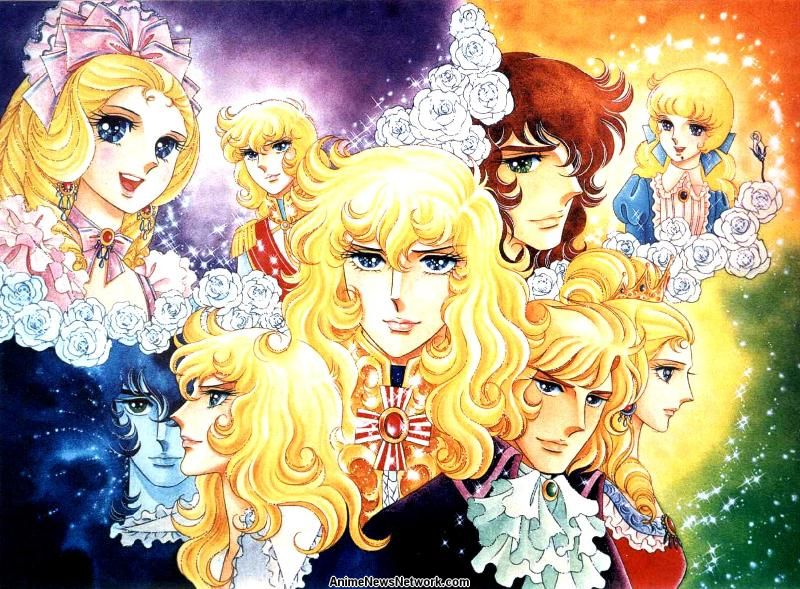
The Rose of Versailles (ベルサイユのばら), also known as Lady Oscar, is a very popular Japanese shōjo manga series written and illustrated by Riyoko Ikeda. It has been adapted into several Takarazuka Revue musicals, as well an anime television series, produced by Tokyo Movie Shinsha and broadcast by the anime television network Nippon TV. The series remains incredibly popular in Italy and some countries of Latin America including Chile, my home country.
Today's
review will focus on the 40 episode Animé adaptation from 1979, which I
for one, think is the most beautifully drawn series from the 70's.
More astonishingly beautiful art.
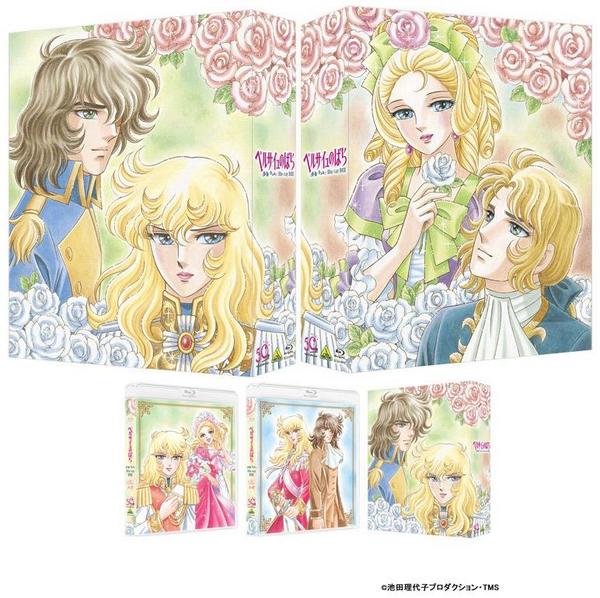
The Blu-Ray box. Go get it!
Background
The Rose of Versailles focuses on Oscar François de Jarjayes,
a girl raised as a man to become her father's successor as leader of
the Palace Guards. A brilliant combatant with a strong sense of justice,
Oscar is proud of the life she leads, but becomes torn between class
loyalty and her desire to help the impoverished as revolution brews
among the oppressed lower class. Also important to the story are her
conflicting desires to live life as both a militant and a regular woman
as well as her relationships with Marie Antoinette, Count Axel von Fersen, and servant and best friend André Grandier.
It features elements of the yuri genre embodied in the relationship between Oscar and her protégée Rosalie Lamorlière, the secret daughter of the scheming Madame de Polignac. Rosalie refers to Oscar as her first love.
Many of the court ladies also greatly adore Oscar, openly admiring her
at parties and become very jealous when she brings female companions to
them.
Rosalie.
Marie Antoinette.
In 1979, The Rose of Versailles was released in Japan as a 40-episode (and 1 recapitulation) animated television series,
which ran from October 1979 to September 1980. Besides Japan, the
series has also been broadcast in several other countries of Europe and Latin America under the title of Lady Oscar. The anime was directed by Tadao Nagahama (episodes 1-18) and Osamu Dezaki (episodes 19-40), who brought a cinematic approach to the series. Shingo Araki was the animation director and co-character designer along with Akio Sugino and Michi Himeno. Kōji Makaino was in charge of the soundtrack. The production staff
included the most recognized animation professionals then, who
contributed in the making of the 40 episodes of the anime. In spite of
the difficulties they had to go through, the staff could continue with
their work and took advantage of the problems. The most important of
said incidents was the change of direction at the middle of the project,
which marked a notable difference between the first half of the anime
(directed by Tadao Nagahama) and the second one (directed by Osamu Dezaki). The anime was finally aired on October 10, 1979 in Japan on the channel Nippon TV. From this point on, the series would be aired every Wednesday until September 3, 1980, with the airing of the last episode.
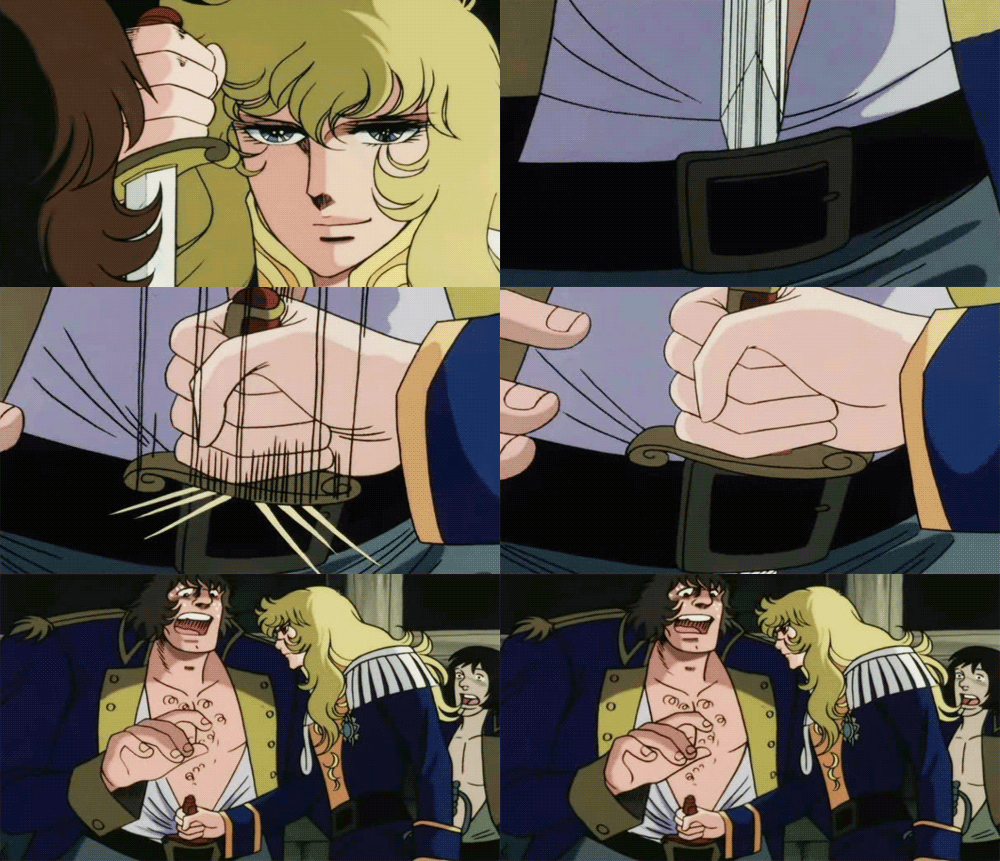
En garde!
Man up! loser!
Review
Do you need to be a history nerd to like The Rose of Versailles? The answer is both yes and no. Set during the french revolution, this Animé is more of a reflection of a certain type of society rather than a historical research. While it is based upon the French revolution, the main focus is on how the characters deal with what's going on from different social perspectives. Historical facts intertwine with fictional characters in such a natural manner, you'll find yourself believing Oscar was actually there when it all happened. The first thing you notice when you start watching Rose
Of Versailles, are the marvelous character designs done by Shingo
Araki. While his style may seem dated to modern Animé fans, I assure you, there's nothing dated with this man. As a matter of fact, I'd say his best work is right here in The Rose of Versailles. Later he'd go on to reprise his skills in Saint Seiya. In addition, the
directing approach is top notch, and I'd say that some scenes are so
well animated that they even defy the commodity of
modern animation from these days. There's this dance scene early on, where every character on screen is doing independent moves!, Hard work at its best!. Unexpectly, Nagahama Tadao died early on in the making of the series
and with him died some of the innovative aesthetics the series had in the
first few episodes, because the acclaimed 70’s director Osamu Dezaki
which came as substitute, didn’t follow that scheme but that's not saying the Animé lacked quality from there on. On the contrary, Dezaki fulfilled his duty with excellence and ended the decade in the
highest note. I especially love how the shots of the camera are taken
from various angles throughout the series. And a very special Dezaki
watermark, the dramatic stills at the end of a scene.
These are hard times.
Duty or truth?
History wise, there are some true events in a few episodes. Especially, the events that lead to the fall of the French monarchy & aristocracy. However, most of the action is seen from the perspective of the fictional characters. And, that's a good thing. The way reality meets fiction is hard to tell if you're not a history connoisseur. Plot wise, we get to see a lot of what made humanity a miserable society. Poverty, exploitation, abuse, rapist priests, corruption, greed, arranged marriage, suicide, pedophile aristocrats, the rich getting richer and more powerful, etc. However, what makes The Rose of Versailles a unique Manga and Animé, is how it tells you the story though a varied set of characters that one way or another, end up having something to do with the french revolution, and how Oscar is the character that emotionally connects with each and every single issue taking place both inside and outside of the Versailles palace. How can Oscar serve her duties and at the same time, give a hand to those suffering in poverty? is that even possible? can she be Marie Antoinette's protector and a servant of the people? Those questions will obviously be answered by the time the Animé enters its final five episodes.
Looks that kill.
Love is just around the bend.
The "bad guys" in the Animé are the aristocrats and monarchs. While the focus is more on the side of aristocrat wannabes manipulating their way into the palace of Versailles, they're still the bad guys, and I can think of a couple of key antagonists. First, Madame Du Barry, who used to be a prostitute,
and thanks to that she manages to enter into the court by becoming the
lover of King Louis XV. When Marie Antoinette becomes princess of France, they become enemies. Maria Theresa of Austria, queen of Austria and mother of Marie Antoinette, sends her advisor, Comte de Mercy,
to France. Mercy advises the princess to stop fighting with Du Barry,
but Marie Antoinette does not obey the warnings until King Louis XV
shows his displeasure with her attitude towards the countess. Marie Antoinette finally speaks to Du Barry. Months later, King Louis XV gets smallpox. Before dying, the bishop,
hearing Louis's confession, and orders the removal of the King's sin,
that is to say, Madame Du Barry. King Louis XV dies and Du Barry is
taken to a convent, where she remains until 1793, the year in which she is guillotined.
Second, Duchess of Polignac, a singer
of the Palace of Versailles, but she does not live there. Marie
Antoinette listens to her and quickly makes her best friend. She
impelled Marie Antoinette to bet in clandestine casinos, without the
permission of Marie Antoinette's husband, King Louis XVI. She
manipulated the queen for her own benefit and made the queen believe
that lies would fix her difficult situations. Following her advice,
Marie Antoinette lied and announced that the heir of France was on way.
In order to remedy the situation, Polignac blamed the death of the heir
on Lady Oscar. However, you can't say you despise Marie Antoinette, or Oscar's father, or some other minor characters working for the "bad guys". The producers not only did an excellent job in transferring the Manga to the screen, but also managed to go the extra mile and make you feel sorry for some of the antagonists, that at times look like innocent bystanders.
Who's the prettiest?
Rosalie, the innocent stereotype.
Interestingly enough, characters like Maximilien Robespierre, Louis Antoine de Saint-Just & Bernard Châtelet (fictional character, the Black Knight) are well represented as men of the people, carefully crafting the revolution, and opposite to Du Barry & Polignac greedy personal motivation, their struggle is for a better future, and that's quite clear whenever they show up in the final episodes, and there's no need for the viewer to do a full research on who these men were during the actual french revolution. The Animé producers wanted to make clear that all the antagonists in the series are the aristocrats & monarchs. Some of which try to sabotage their own kind in order to satisfy their greed.
On the other hand, the Animé does feature positive topics like love, friendship, loyalty and compassion. Oscar François de Jarjayes, André Grandier, RosalieLamorliére and every other good guy adds positive vibes in each episode. While Marie Antoinette starts as a naive princess, she ends up swallowed by her privileges and becomes the very thing the people hated with their guts. Another interesting aspect (for a 1979 Animé) is how love is depicted as more a duty, than a choice. AndréGrandier has loved Oscar since day one but, since he's nothing but a servant, he can't marry her. On the other hand Oscar is secretly infatuated with Marie Antoinette's lover Hans Axel Von Fersen. Moreover, Oscar acts more like a man throughout the first half of the series, and only in the last episodes, she realizes she's loved André her whole life. In addition, but to a minor degree, Rosalie seems to be bisexual. The way she sees Oscar, clearly suggests she felt more than sister love for her. Obviously, nothing ecchi takes place on screen, since this is a classy work ladies &gentlemen!
The queen?, or the people?
Fearsome lady.
Overall, The Rose of Versailles is one classic Animé you don't want to miss. If you have any prejudices with Shoujo manga/animé watch this one and be cured! Here's the opening: Here's the (clean) ending: The opening theme live with Yuki Nishio! Another live version by Hiroko Moriguchi: The live action film trailer:
Before we get into today's review let me give you my humble opinion on the two nerd dissappointments of the year:
1. Mortal Kombat 11, pricy, micro transactions and lack of new meaningful content and/or gameplay.
2.Avengers Endgame, predictable, childish, horrible fake science framework and covered in deux ex machina "creativity".
Now, let's move on with our lives to a place that never fails to entertain: The world of Animé! Despite the fact we usually cover classic (old) Animé, we sometimes listen to the younger generations and take a look at what's going on in more recent decades from the 21st century. Today's entry was a recommendation by Gubaba, a wise man that knows his Animé, and even though it isn't a 2019 release, it's a 2014 release that makes it pretty new in my book: クロスアンジュ 天使と竜の輪舞〈ロンドAKA Cross Ange, Rondo of Angel and Dragon, also known as simply Cross Ange is a Japanese mecha anime television series that follows the "you can't judge a book by its cover" premise.
When dragons attack...
...a dedicated team of women goes beyond the call of duty.
Background.
The anime series was produced by Sunrise with Fukuda Mitsuo (producer) and Ashino Yoshiharu (director). The script was adapted by KatelynBarr who worked as the ADR and also voiced a minor character in the series. Cross Ange aired between October 5, 2014 and March 29, 2015 on Tokyo MX, MBS, TVA, BS11.
The first opening theme is "Kindan no Resistance" (禁断のレジスタンスKindan no Rejisutansu, lit. "Forbidden Resistance") by Nana Mizuki (she also voices Ange), and the first ending theme is "Rinrei" (凛麗, lit. "Cold Beauty") by Eri Kitamura. The second opening theme is "Shinjitsu no Mokushiroku" (真実の黙示録, lit. "Apocalypse of Truth" or "Revelations of Reality") by Yoko Takahashi, and the second ending theme is "Shūmatsu no Love Song" (終末のラブソングShūmatsu no Rabu Songu, lit. "Love Song of the End") by Mizuki. The insert song featured in episodes five, nine, and twenty-two is "Necessary" also performed by Nana Mizuki.
The series was licensed by Sentai Filmworks for a digital and home media release in North America (get the blu ray box, it's excellent). Madman Entertainment also licensed the series for streaming in Australia and New Zealand. The series was picked up by Crunchyroll for streaming in North America and other select parts of the world.
Former soon-to-be princess.
Fomer soon-to-be favorite pilot.
Plot.
Through the development of groundbreaking information transfer and
material generation technology called "Mana", various problems, such as
pollution and war have disappeared, and days of peace have arrived in
the world. However, the people who receive the benefit of the Mana live
in a false peace. Those who cannot use the Mana, referred to by the
derogatory term "Norma", who are seen as an opposition to structures of
society, live in oppression. Because this is the norm,
the people who use Mana do not question it. The first princess of the
Misurugi Empire, Angelise Ikaruga Misurugi, was convinced of the belief
of exterminating the Norma. But when she turned 16, and was baptized,
her elder brother Julio, exposed her as a Norma to the public. Angelise,
who is bewildered by the revelation that she herself was a Norma all
along, turns into a target of hate of the people in the blink of an eye.
Ange is exiled to Arzenal, an isolated military base where Norma are
conscripted into service, and then starts her new life as a Norma
soldier. As she struggles to adjust to her new identity, Ange's now
stormy life takes one surprising turn after another and she embarks on
her quest to correct the world she lives in.
Naked duty.
Naked catch!
Review.
Before a wise men suggested I should watch this Animé I had no idea about it. Obviously, I haven't followed a "new" Animé since Inu Yasha, and that is nineteen years ago! Since I call myself a "seasoned" fan I'm only into Animé from before the 21st century. The 70s, 80s & 90s provided me with enough series and OVAs to watch for a lifetime. Moreover, I'm still tracking a lot of "rare" Animé I've only heard of through friends or seen in mags and in old VHS tapes. Yes, I'm THAT years old.
Anyway, Cross Ange has a lot of elements that can instantly turn an old fart into a fan. Despite what you've heard about it, the series offers a very interesting story with a lot of interesting characters and hidden plots and/or revelations that allowed me to understand why this Animé is named Cross Ange, and ultimately, why a lot more people should be watching it from start to finish.
Dangerous Red head.
Family friendly characters.
Cross Ange could be classified as many things. It could be a magical
princess show about knights and dragons, it could be a prison drama, it could be a mean girls show, and it most certainly could be a borderline yuri hentai. However, one thing Cross
Ange is not, it's a colecction of random fanservice with no plot whatsoever. And believe you me, I've seen that kind of Animé too.
The actual premise of the story is that a pampered princess named
Angelise, a thoroughly awful person, is thrown out of her castle and put
in an all-ladies jail when it's found out that she's not a user of Mana (something like the force). She's
then forced to pilot a Ragna-Mail (transforming mecha from flying bike to winged robot) and fight dragons, because of reasons we won't find out until half the series has passed. And then she's
bullied, molested, and raped until she decides to let go of her royal past and become simply "Ange",
the greatest dragon killer pilot Arzenal has ever seen.
Then the story becomes about rebellion, alternate timelines and
dimensions, fighting god, virtual realities, and some clever fanservice. As the
story progresses, we witness plot twists, evil villainous acts, and lesbian sex scenes. It's certainly not boring,
but you'll need to pass the fifth episode mark in order to fully enjoy this little gem.
The Villkiss.
And her brave pilot.
For reasons I won't reveal, Arsenal is frequently attacked by giant Dragons from another dimension. But these dragons are not actual dragons, they're D.R.A.G.O.N.s, and they're called that because the name stands for Dimensional Rift Attuned Gargantuan Organic Neototypes. Ahhh!, the Japanese never dissappoint with their gratuitious English.
But really, the one character that steals the show is Ange. Ange
is amazing. She's logical, pessimistic, she cheats, she'll insult you
and everything you stand for, disarm you and then shoot you through the
face, twice. She doesn't want harmony, she wants destruction. She wants
to demolish everything that's wronged her. She's not a victim.
The rest of the cast is surprisingly good too. Cross Ange does a
competent job at giving you multifaceted, developing characters to feel
things about, even if those feelings are mostly hatred and/or pity. The
other central females are almost all emotionally damaged in some way or
another, and are in contrast to Ange, very fragile people. I thought
this was very interesting, because not only is Ange a strong,
domineering, unbreakable character on her own, but those qualities shine
even more when you slowly see the deep-seated problems with everyone
around her.
Sometimes you'll fight naked.
Sometimes you'll have fun naked.
This series only has like two male characters. One of them is Tusk a completely useless man in a world of empowered women. If you're ever worried about Ange being
overshadowed or saved by her boyfriend, don't worry, he's the bottom in
the relationship. This was also refreshing. Except for near the end
where he actually starts doing things, that was lame and subverted a lot
of the good things about his character and the show as a whole. Moreover, the only thing I didn't like about Cross Ange is how the "teenage first love" story develops between Tusk and Ange. I found it annoying, and ridiculously childish, considering all these characters have been through, it's plain idiotic to see them afraid of a good old fuck when you're horny.
The other major male character is the central villain, Embryo, who
is also the most self-aware jab at otaku I've ever seen. The whole
premise of his character is that he's his own OC, and is looking for the
perfect waifu. It's insulting and hilarious at the same time, just like
the rest of the series. And boy is he powerful!
The supporting cast, Jill, Salia, Hilda, Ersha, Vivian, Momoka and others I won't spoil here, play their part. Captain Jill hides a secret or two, but she's the boss until a revelation. Salia hates Ange. Hilda wants to fuck Ange. Ersha is like the mother of the girls, Vivian has a secret and Momoka is Ange's former servant from when she was royalty, and is the only character that can use Mana in Arzenal because she's not a Norma.
Hilda.
Vivian.
Moving on to a more general opinion, I'd say this series nails a lot of interesting concepts that for some reason still resonate strongly in our society. The first one that comes to mind is racial discrimination. If you have the power to use Mana, you're an evolved human, or as the series puts it, you're a human. If you're born defective, you're a "norma", less than human, an aberration of nature that has to be taken away from the perfect society. Interstingly enough, Normas are only women! so they're take away to Arzenal and treated like garbage until they die fighting dragons. The cool thing is, "Mana" is not quite a power humans have but more of an illusion that we're in control. Does that sound too real for you? I for one, think we live comfortable lives where nothing really harmful ever happens, and yet we're never aware of our real "Normas" dying in poor countries, or working for a dollar a month to get you, your new shoes half-priced at the shopping mall. Moreover, Normas are the only kind of people destined to fight wars and protect the world. So, just like our brave soldiers, they have to fight, and die for the rich fat bastards that own the world, and still want more. In addition, how can you tell you're on the right side? Ange is faced with this question not once, but many times, as the series progresses into wider, more darker territories.
Revelations and broken hearts also play an important role in Cross Ange. There are episodes, and moments where you can really feel the pain some characters have to go through but, I want you to see this Animé, so I won't dig any deeper.
This isn't what it lookslike.
This isn't what it lookslike 2.
Animation-wise, it depends on what you like or on what you're used to. Personally, I think the character designs, mecha designs and locations are superb. Each character has unique features (Ange even calls Salia "small tits") and the mecha are more than OK in my book. I'm a big Macross & mecha Animé fan in general so I really dug the 3D battles and fast transformation sequences. Plus, you could feel when the Ragna-Mail shaked while firing their giant machine guns.
The audio's good enough for me. Since I'm mostly a fan of old Animé (Macross sequels being the only "new" animé I'm eager to watch) I found the background music really good. It had this medieval touch I think was consistent for a series with dragons. Mizuki Nana sings two or three songs, and they're not bad. Especially, when it's Ange singing a capela. Moreover, music plays an important role as the series progresses towards its grand finale, so being a Macross fan, truly allowed me to enjoy that too.
Embryo, the son of a bitch.
Ange's team.
Now, if you google Cross Ange for reviews, you'll find a lot, and I mean A LOT, of bad reviews calling this show a sexploitation show covered in violence and brutality, and that we should all run away from it. Nonsense! Unless, you're one of those fucking turds signing off the internet to avoid Avengers' spoilers, this series has a few graphic moments here and there but believe me, they're justified. These days a lot of people download stream Animé episodes skipping the important, and looking for the key scenes only. And after they've only seen five minutes, they run to their computers/smartphones to bash the Animé because they couldn't get the plot in less than ten minutes. Cross Ange requires your attention, and demands you watch the 25 episodes because, only then will you find what you were looking for in the first place: Quality entertainment.
Trivia.
What Could Have Been:
In the Blu Ray extras, it's revealed that there were plans for Momoka to
betray Ange and be revealed as being in on Julio's plan when they
returned to Misurugi, however it was felt that there should at least be
one pure-hearted character in the show.
According to the staff, Zola was supposed to die during the defense of Arzenal, however Michiko Neya had other plans so she couldn't stay long for the show.
Ange was supposed to have been The Captain
of the First Troop, though that would have made her overshadow everyone
even more, so they decided at first with Hilda, but went with Salia.
The second half of episode 14 was supposed to be a flashback episode
where it depicts both of Tusk's parents and both would have been voiced
by Miyano and Mizuki.
Salamandinay was supposed to show up on episode 7, however they had to delay it because Eri Kitamura at the time was trying to promote her album so they made it a Salia episode.
Ersha was originally going to have a somewhat darker complexion at first (as her design was based upon an unknown Indian woman). But was changed at the last minute.
The Design Works
book also reveals that several other characters were to look different
from their finalized counterparts. Some of these changes were minor,
like Salia and Momoka having different hair colors and styles or Emma
having a different outfit. Others drastic, like Tusk having a more
disheveled look, or a clean-shaven, older-looking Jurai.
The end of the series would have had Aura returning to her human form.
But the idea was nixed by Fukuda, who thought it went against the story.
Fly high Ange!
They may be Normas, but they're clean.
Creator Backlash:
Creative Producer Mitsuo Fukuda has apologized for episode 13's opening.
Though not a full backlash, he's wondering why Tusk's death was censored when the rest of the deaths in episode 21 wasn't even censored.
There's also the criticism Fukuda made when Sumire Uesaka was asked on a radio show about Momoka's fate is that she only said that "I would really like to think she was still alive." It wasn't even much of a spoiler comment but then he went on a rant and temporarily locked his Twitter account. Which then convinced some fans that Momoka would survive.They were right.
Enforced Method Acting:
According to Nana Mizuki, she was pinching Toshihiko Seki's hand when Ange stabbed Embryo's hand in episode 20.
According to Mamoru Miyano, he was slapping Mizuki's stomach for the crotch diving scenes.
Fan Nickname:
The Japanese fandom's nickname for Tusk is "Kirito", because he looks like Kira Yamato but acts like Rito Yuuki.
Also "Super Kira," owing to Mamoru Miyano's other notable role.
Tuskete on the other side.
Tusk F. Yamato for another. Not only does Tusk look like Kira, but he is also voiced by Mamoru Miyano who voiced another Gundam protagonist named Setsuna F. Seiei.
On the English side for some, Fluttershy for Ersha. Out of strange
coincidence, Ersha looks almost indentical to a humanized Fluttershy,
merely lacking the yellow turtleneck.
Angelise for Ange, pre-Characterization Marches On where she rejected Normas and wishes to eradicate all of them. Some also use Hitlerina.
Stripper vision guy for Embryo, thanks the opening where he stares at Ange who's running and somehow strips her clothes. Alternatively, he also garnered "Fetus-kun", in relation to his name.
Twitter bird for the bird that latches on Embryo in his first scene since the bird looks like the same logo from the Twitter website.
Top Meido for Momoka.
Love.
Censorship (not in the Blu Ray edition)
He Also Did:
Director Yoshiharu Ashino, who also did D.Gray-Man Hallow, Tweeny Witches, Justice League: The Flashpoint Paradox and served as an animation director for Buzz Lightyear of Star Command.
Para-Mail designer Junichi Akutsu served as Mechanical designer for Code Geass, GEAR Fighter Dendoh and Mobile Suit Gundam SEED.
Dragon designer Kazutaka Miyatake served as mechanical and conceptual designer for many anime, including Eureka Seven, Gunbuster, Aura Battler Dunbine and the Macross and Dirty Pair series.
Character designer and key animator Sayaka Ono was an animator on several other Sunrise shows through animation subcontractor Nakamura Productions* , including Code Geass, Idolmaster: Xenoglossia and Zegapain.
I Knew It!:
Fans correctly guessed that the Toshihiko Seki-voiced Embryo would get to sing.
Absolutely nobody was fooled by Tusk and Momoka's deaths in Episode 21 and had already guessed they survived due to Never Found the Body. Sure enough, one episode later they show up no worse for wear.
Quite a few fans correctly guessed that Emily Neves and Austin Tindle would play Ange and Tusk for the English dub.
Strong women.
Strong dragons.
Overall, Cross Ange is a big damn spectacle with one of the best female leads in
any anime. It's ridiculous and stupid, and even Sunrise probably hates
you for watching it, so that means you should.